Vietnamese Mint
Persicaria odorata · Accepted scientific name
Scientific literature: Very Sparse (12 studies) · ★☆☆☆☆
Vietnamese Mint, scientifically known as Persicaria odorata, is a pungent, aromatic herb widely celebrated in Southeast Asian cuisine. Characterized by its distinct peppery and citrusy flavor, this medicinal plant offers potent antioxidant and antimicrobial properties, making it a valuable addition to both culinary dishes and traditional wellness practices.
- Family
- Polygonaceae
- Native range
- Europe
- Parts used
- Leaf
- Common names
- Vietnamese-Coriander · Vietnamese Coriander
- Scientific synonyms
- Polygonum Odoratum
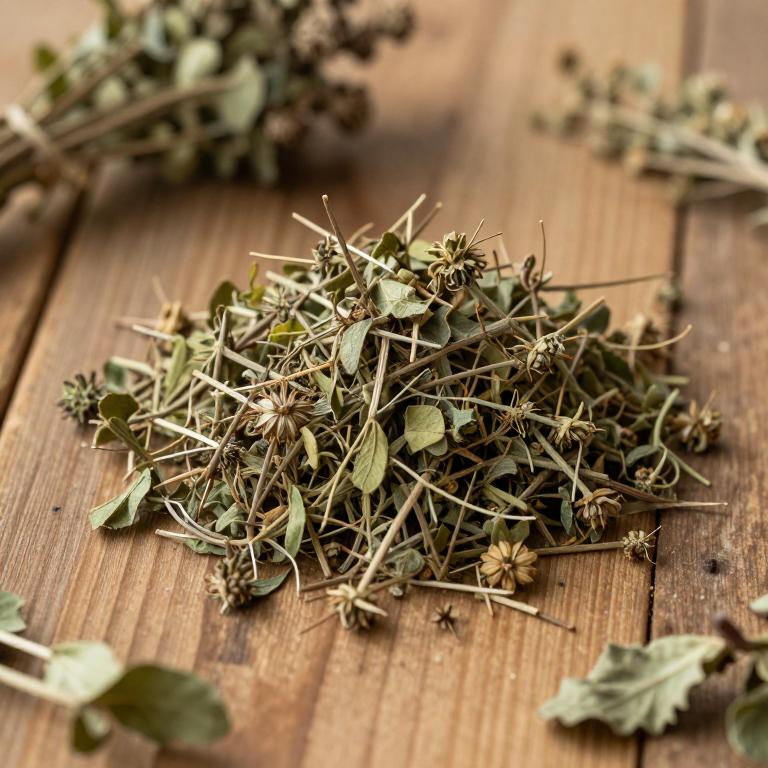
Names and Synonyms
Common Names
- Vietnamese-coriander
- Vietnamese coriander
Scientific Names
Accepted name
Persicaria odorataSynonyms
- Polygonum odoratum
Regional and Traditional Names
German:
- Polygonum odoratum
French:
- Rau ram
- renouée odorante
- Basilic chinois
- Coriandre vietnamienne
- Menthe vietnamienne
- Rau ram
Sources: Wikidata, Catalogue of Life
Taxonomical Classification
This plant belongs to the kingdom Plantae within the phylum Streptophyta and the class Equisetopsida. Falling under the subclass Magnoliidae and the order Caryophyllales, it is a member of the family Polygonaceae. Finally, its taxonomic classification is completed within the genus Persicaria.
| Rank | Classification |
|---|---|
| Kingdom | Plantae |
| Phylum | Streptophyta |
| Class | Equisetopsida |
| Subclass | Magnoliidae |
| Order | Caryophyllales |
| Family | Polygonaceae |
| Genus | Persicaria |
Sources: The World Checklist of Vascular Plants (WCVP)
Distribution
This plant exhibits a broad geographical range that spans across multiple regions of Asia and Europe. In the European continent, its presence is specifically noted within Great Britain. Moving toward Asia, it is widely distributed throughout several distinct provinces of China. This includes significant coverage in China South-Central, China North-Central, and China Southeast. Additionally, the species can be found growing in the tropical climate of Hainan.
| Region | Area |
|---|---|
| Northern Europe | Great Britain |
| China | China South-Central |
| China | Hainan |
| China | China North-Central |
| China | China Southeast |
| Eastern Asia | Japan |
| Eastern Asia | Korea |
| Eastern Asia | Nansei-shoto |
| Eastern Asia | Taiwan |
| Indo-China | Cambodia |
Sources: The World Checklist of Vascular Plants (WCVP)
Botanical Identification
Ecology
The ecology of Persicaria odorata is characterized by its ability to thrive across a diverse range of altitudinal gradients, demonstrating significant environmental adaptability. It is distributed from low-lying coastal or riverine areas at a minimum elevation of 20 m AMSL up to montane regions reaching a maximum elevation of 1500 m AMSL. The species maintains a mean elevational presence of approximately 760 m AMSL, suggesting a preference for mid-elevation habitats that balance tropical warmth with more temperate montane conditions. This broad vertical distribution allows the plant to colonize various ecological niches within its geographic range, transitioning from humid lowland environments to higher, potentially cooler elevations.
- Elevational range max:
- 1500 m AMSL
- Elevational range mean:
- 760 m AMSL
- Elevational range min:
- 20 m AMSL
Life history
The life history of Persicaria odorata is characterized by its status as a perennial plant, demonstrating a variable growth cycle that allows it to persist through multiple seasons. In terms of its structural development and survival strategy, the species is classified as a hemicryptophyte, meaning its perennial buds are located at or just below the soil surface, protected by leaf litter or soil during unfavorable conditions. This life form, categorized both as a hemicryptophyte and more broadly within the hemicryptophyte growth habit, enables the plant to endure environmental fluctuations while maintaining the capacity for seasonal regrowth from its subterranean structures.
- Life form :
- hemicryptophyte
- Lifecycle :
- perennial
Morphology
The morphology of Persicaria odorata is characterized by its growth form as a non-woody herb. It functions as a self-supporting plant rather than a climber and maintains a terrestrial existence. In terms of stature, the plant typically reaches a mean height of 0.2 m, though it can grow to a maximum height of 1 m.
- Climber :
- self-supporting
- Epiphyte :
- terrestrial
- Growth form :
- herb
- Plant height max:
- 1 m
- Plant height mean:
- 0.2 m
- Woodiness :
- non-woody
Physiology
The physiology of Persicaria odorata is characterized by its metabolic processes as a perennial herbaceous plant, primarily focused on efficient nutrient uptake and rapid vegetative growth in semi-aquatic or moist environments. Its physiological framework is built around a robust photosynthetic capacity, utilizing C3 carbon fixation to convert sunlight into chemical energy, which supports its sprawling growth habit. Regarding its nutrient cycling capabilities, the plant does not engage in symbiotic relationships with diazotrophic bacteria to convert atmospheric nitrogen into organic forms; therefore, it is not a nitrogen fixer (nitrogen_fix_1: no). Instead, it relies on the absorption of nitrates and ammonium from the soil through its extensive root system to satisfy its nitrogen requirements for protein synthesis and chlorophyll production. The plant's transpiration rates are highly influenced by its preference for high-moisture substrates, where it maintains turgor pressure and facilitates the transport of essential minerals through its vascular tissues. Furthermore, its physiological profile includes the synthesis of volatile aromatic compounds, which are secondary metabolites produced through specialized metabolic pathways to serve ecological functions such as herbivore deterrence.
- Nitrogen fixer :
- no
Sources: Global Inventory of Floras and Traits (GIFT)
Plant Parts
Persicaria odorata has 1 reported plant parts identified across 2 scientific publications and several other databases that are studied for medicinal purposes. The most consistently reported plant part include leaf.
| Plant part | Supporting sources | Consensus |
|---|---|---|
| Leaf | 2 supporting sources | ★☆☆☆☆ |
Leaf
- Pakistan journal of pharmaceutical sciences
- Animals : an open access journal from MDPI
Chemicals
Persicaria odorata has 6 reported phytochemicals identified across 2 scientific publications and several other databases. The most consistently reported chemicals include CA, CATECHIN, Flavonoids, MG, MN.
| Chemical | Supporting sources | Consensus |
|---|---|---|
| CA | 1 supporting sources | ★☆☆☆☆ |
| CATECHIN | 1 supporting sources | ★☆☆☆☆ |
| Flavonoids | 1 supporting sources | ★☆☆☆☆ |
| MG | 1 supporting sources | ★☆☆☆☆ |
| MN | 1 supporting sources | ★☆☆☆☆ |
| quercetin | 1 supporting sources | ★☆☆☆☆ |
CA
- International journal of food sciences and nutrition
CATECHIN
- Animals : an open access journal from MDPI
Flavonoids
- Animals : an open access journal from MDPI
MG
- International journal of food sciences and nutrition
MN
- International journal of food sciences and nutrition
quercetin
- Animals : an open access journal from MDPI
Activities
Persicaria odorata has 2 reported activities identified across 2 scientific publications and several other databases. The most consistently reported activities include Antibacterial, Antioxidant.
| Activity | Supporting sources | Consensus |
|---|---|---|
| Antibacterial | 1 supporting sources | ★☆☆☆☆ |
| Antioxidant | 1 supporting sources | ★☆☆☆☆ |
Antibacterial
- Animals : an open access journal from MDPI
Antioxidant
- Animals : an open access journal from MDPI
Conditions
Persicaria odorata has 2 reported investigations on conditions identified across 2 scientific publications and several other databases. The most consistently reported conditions include disease resistance, fungi.
| Condition | Supporting sources | Consensus |
|---|---|---|
| Disease resistance | 1 supporting sources | ★☆☆☆☆ |
| Fungi | 1 supporting sources | ★☆☆☆☆ |
Disease resistance
- Animals : an open access journal from MDPI
Fungi
- Pakistan journal of pharmaceutical sciences
Preparations
Persicaria odorata has 3 reported preparations identified across 2 scientific publications and several other databases. The most consistently reported preparations include ethanolic leaf extract, leaves, used to season fish.
| Preparation | Supporting sources | Consensus |
|---|---|---|
| Ethanolic leaf extract | 1 supporting sources | ★☆☆☆☆ |
| Leaves | 1 supporting sources | ★☆☆☆☆ |
| Used to season fish | 1 supporting sources | ★☆☆☆☆ |
Ethanolic leaf extract
- Animals : an open access journal from MDPI
Leaves
- Pakistan journal of pharmaceutical sciences
Used to season fish
- International journal of food sciences and nutrition