Nepal smartweed
Persicaria nepalensis · Accepted scientific name
Scientific literature: Very Sparse (45 studies) · ★☆☆☆☆
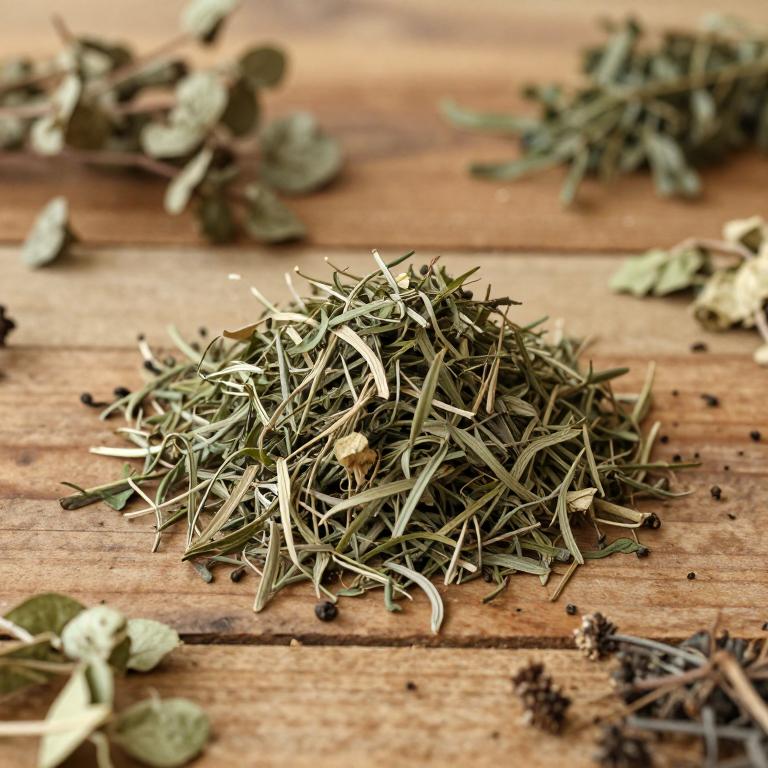
Nepal smartweed, scientifically known as Persicaria nepelynensis, is a resilient perennial herb native to the Himalayan regions. Valued in traditional medicine, this plant is recognized for its unique flowering patterns and potent bioactive compounds. It serves as a vital resource for treating various ailments and supporting regional ecological biodiversity.
Names and Synonyms
Common Names
- Nepal smartweed
- Nepalese knotweed
- Nepalese smartweed
- Nepal Persicaria
- Nepal knotweed
Scientific Names
Accepted name
Persicaria nepalensisSynonyms
- Persicaria nepalensis var. kumaona
- Polygonum nepalense var. kumaonum
- Polygonum nepalense
- Polygonum nepalense var. adenothrix
- Cephalophilon nepalense
- Persicaria alata var. violascens
- Polygonum punctatum var. alatum
- Persicaria perforata
- Persicaria alata
- Polygonum alatum var. nepalense
- Polygonum perforatum var. laevigatum
- Persicaria lyrata
- Polygonum alatum var. tenuicaule
- Polygonum alatum var. metzianum
- Polygonum perforatum
- Polygonum alatum var. parviflorum
- Polygonum lyratum
- Polygonum alatum var. arenarium
- Polygonum guttuliferum
- Polygonum alatum var. rigidulum
- Polygonum kumaonum
- Polygonum alatum var. adenothrix
- Polygonum metzianum
- Persicaria nepalensis f. adenothrix
- Truellum nepalense
Regional and Traditional Names
German:
- Polygonum nepalense
- Nepal-Knöterich
French:
- renouée du Népal
Sources: Wikidata, Catalogue of Life
Taxonomical Classification
This plant belongs to the kingdom Plantae and is classified under the phylum Streptophyta within the class Equisetopsida. Following its placement in the subclass Magnoliidae and the order Caryophyllales, it is a member of the family Polygonaceae. Ultimately, its scientific identity is defined by its genus, Persicaria.
| Rank | Classification |
|---|---|
| Kingdom | Plantae |
| Phylum | Streptophyta |
| Class | Equisetopsida |
| Subclass | Magnoliidae |
| Order | Caryophyllales |
| Family | Polygonaceae |
| Genus | Persicaria |
Sources: The World Checklist of Vascular Plants (WCVP)
Distribution
This plant exhibits a diverse geographical distribution across several regions of the European continent. In Northern Europe, its presence can be observed within the borders of Great Britain. Moving into Middle Europe, the species is found in Belgium, Germany, and Poland. Additionally, its range extends into Southeastern Europe, specifically within Italy. These locations highlight the varying habitats where this medicinal species thrives.
| Region | Area |
|---|---|
| Northern Europe | Great Britain |
| Middle Europe | Belgium |
| Middle Europe | Germany |
| Middle Europe | Poland |
| Southeastern Europe | Italy |
| West-Central Tropical Africa | Burundi |
| West-Central Tropical Africa | Cameroon |
| West-Central Tropical Africa | Gulf of Guinea Is. |
| West-Central Tropical Africa | Rwanda |
| West-Central Tropical Africa | DR Congo |
Sources: The World Checklist of Vascular Plants (WCVP)
Botanical Identification
Ecology
The ecology of Persicaria nepalesis is characterized by its ability to thrive across a broad altitudinal gradient, ranging from low-lying areas at 200 m AMSL to high-altitude environments reaching a maximum of 4000 m AMSL. It maintains a mean elevational presence around 2100 m AMSL, suggesting a preference for mid-altitude zones within its mountainous distribution. Regarding its preferred substrate and environment, the plant is typically found inhabiting forest ecosystems and can also be found growing in sandy soil conditions, reflecting a versatile adaptability to varying moisture levels and forest floor compositions.
- Elevational range max:
- 4000 m AMSL
- Elevational range mean:
- 2100 m AMSL
- Elevational range min:
- 200 m AMSL
- Habitat :
- forest, sand
Life history
The life history of Persicaria nepalenis is characterized by an annual lifecycle, meaning it completes its entire developmental process from germination to seed production within a single growing season. As a therophyte, it exists primarily in a seed state during unfavorable environmental conditions, emerging as a fast-growing plant only when seasonal conditions are optimal for growth. This life form strategy allows the species to rapidly exploit available resources and complete its reproductive cycle before the onset of dormant periods, ensuring survival through the dispersal of resilient seeds.
- Life form :
- therophyte
- Lifecycle :
- annual
Morphology
The morphology of Persicaria nepalenis is characterized by its growth form as a non-woody herb and specifically a forb. It is a self-supporting plant that does not function as a climber or a liana, maintaining an independent lifestyle without being a parasite. As a terrestrial species, it is neither aquatic nor an epiphyte. In terms of physical dimensions, the plant typically exhibits a modest stature, with a plant height ranging from a minimum of 0.1 m to a maximum of 0.5 m, maintaining an average height of approximately 0.3 m.
- Aquatic :
- terrestrial
- Climber :
- self-supporting
- Epiphyte :
- terrestrial
- Growth form :
- herb
- Growth form :
- forb
- Parasite :
- independent
- Plant height max:
- 0.5 m
- Plant height mean:
- 0.3 m
- Plant height min:
- 0.1 m
- Woodiness :
- non-woody
Physiology
The physiological structure of the foliage in Persicaria nepalesis is characterized by distinct morphological variations in leaf dimensions that support its vegetative growth. The leaves exhibit a measurable range in longitudinal development, with a minimum length of 3 cm, a mean length of 4 cm, and reaching a maximum length of 5 cm. Complementing this longitudinal growth is a transverse expansion that varies in width, ranging from a minimum of 2 cm to a maximum width of 4 cm. These specific dimensional parameters reflect the plant's capacity for surface area optimization, which is critical for its photosynthetic efficiency and metabolic processes.
- Leaf length max:
- 5 cm
- Leaf length mean:
- 4 cm
- Leaf length min:
- 3 cm
- Leaf width max:
- 4 cm
- Leaf width min:
- 2 cm
Reproduction
The reproduction of Persicaria nepalensis is characterized by a specific phenological window and distinct morphological traits of its progeny. The flowering period typically commences in April and concludes in July, though the timing can be variable throughout the year. Following pollination, the plant produces small fruits that exhibit a mean length of 0.225 cm, ranging from a minimum of 0.2 cm to a maximum of 0.25 cm. The resulting seeds are extremely lightweight, with a mean mass of 0.001145 g, falling within a narrow range between a minimum of 0.00114 g and a maximum of 0.00115 g. Regarding its dispersal strategy, the species utilizes an unspecialized dispersal syndrome, which encompasses various mechanisms such as anemochory, zoochory, autochory, and hydrochory to facilitate the spread of its seeds.
- Dispersal syndrome :
- unspecialized
- Flowering time :
- Apr
- Flowering time :
- Jul
- Fruit length max:
- 0.25 cm
- Fruit length mean:
- 0.225 cm
- Fruit length min:
- 0.2 cm
- Seed mass max:
- 0.00115 g
- Seed mass mean:
- 0.001145 g
- Seed mass min:
- 0.00114 g
Sources: Global Inventory of Floras and Traits (GIFT)
Plant Parts
Persicaria nepalensis has 2 reported plant parts identified across 2 scientific publications and several other databases that are studied for medicinal purposes. The most consistently reported plant part include leaf, stem.
| Plant part | Supporting sources | Consensus |
|---|---|---|
| Leaf | 1 supporting sources | ★☆☆☆☆ |
| Stem | 1 supporting sources | ★☆☆☆☆ |
Leaf
- Planta medica
Stem
- Planta medica
Chemicals
Persicaria nepalensis has 23 reported phytochemicals identified across 2 scientific publications and several other databases. The most consistently reported chemicals include Flavonoids, protocatechuic acid, quercetin, (-)-Isolariciresinol-2a-O-beta-D-xylopyranoside, BETA-SITOSTEROL.
| Chemical | Supporting sources | Consensus |
|---|---|---|
| Flavonoids | 2 supporting sources | ★☆☆☆☆ |
| protocatechuic acid | 2 supporting sources | ★☆☆☆☆ |
| quercetin | 2 supporting sources | ★☆☆☆☆ |
| (-)-Isolariciresinol-2a-O-beta-D-xylopyranoside | 1 supporting sources | ★☆☆☆☆ |
| BETA-SITOSTEROL | 1 supporting sources | ★☆☆☆☆ |
| Ellagitannin | 1 supporting sources | ★☆☆☆☆ |
| Gallic acid | 1 supporting sources | ★☆☆☆☆ |
| LEVOFLOXACIN | 1 supporting sources | ★☆☆☆☆ |
| Nimbecetin | 1 supporting sources | ★☆☆☆☆ |
| Phenols | 1 supporting sources | ★☆☆☆☆ |
Flavonoids
- Molecules (Basel, Switzerland)
- Planta medica
protocatechuic acid
- Zhong yao cai = Zhongyaocai = Journal of Chinese medicinal materials
- Molecules (Basel, Switzerland)
quercetin
- Zhong yao cai = Zhongyaocai = Journal of Chinese medicinal materials
- Molecules (Basel, Switzerland)
(-)-Isolariciresinol-2a-O-beta-D-xylopyranoside
- Zhong yao cai = Zhongyaocai = Journal of Chinese medicinal materials
BETA-SITOSTEROL
- Zhong yao cai = Zhongyaocai = Journal of Chinese medicinal materials
Ellagitannin
- Biological & pharmaceutical bulletin
Gallic acid
- Molecules (Basel, Switzerland)
LEVOFLOXACIN
- Evidence-based complementary and alternative medicine : eCAM
Nimbecetin
- Zhong yao cai = Zhongyaocai = Journal of Chinese medicinal materials
Phenols
- Molecules (Basel, Switzerland)
Activities
Persicaria nepalensis has 7 reported activities identified across 2 scientific publications and several other databases. The most consistently reported activities include Anticancer, Antioxidant, Analgesic, Antimicrobial, Diuretic.
| Activity | Supporting sources | Consensus |
|---|---|---|
| Anticancer | 2 supporting sources | ★☆☆☆☆ |
| Antioxidant | 2 supporting sources | ★☆☆☆☆ |
| Analgesic | 1 supporting sources | ★☆☆☆☆ |
| Antimicrobial | 1 supporting sources | ★☆☆☆☆ |
| Diuretic | 1 supporting sources | ★☆☆☆☆ |
| Hepatoprotective | 1 supporting sources | ★☆☆☆☆ |
| Hypothermic | 1 supporting sources | ★☆☆☆☆ |
Anticancer
- Molecules (Basel, Switzerland)
- Biological & pharmaceutical bulletin
Antioxidant
- Molecules (Basel, Switzerland)
- Chinese medicine
Analgesic
- Molecules (Basel, Switzerland)
Antimicrobial
- Molecules (Basel, Switzerland)
Diuretic
- Molecules (Basel, Switzerland)
Hepatoprotective
- Biological & pharmaceutical bulletin
Hypothermic
- Molecules (Basel, Switzerland)
Preparations
Persicaria nepalensis has 11 reported preparations identified across 2 scientific publications and several other databases. The most consistently reported preparations include Polygonum capitatum extract, Chinese herbal preparation derived from Polygonum capitatum, Polygonum capitatum Extract, Polygonum capitatum-based preparations, aqueous extract of dried whole Polygonum capitatum.
| Preparation | Supporting sources | Consensus |
|---|---|---|
| Polygonum capitatum extract | 2 supporting sources | ★☆☆☆☆ |
| Chinese herbal preparation derived from polygonum capitatum | 1 supporting sources | ★☆☆☆☆ |
| Polygonum capitatum extract | 1 supporting sources | ★☆☆☆☆ |
| Polygonum capitatum-based preparations | 1 supporting sources | ★☆☆☆☆ |
| Aqueous extract of dried whole polygonum capitatum | 1 supporting sources | ★☆☆☆☆ |
| Capsule | 1 supporting sources | ★☆☆☆☆ |
| Extracts of leaves and stems or whole plants | 1 supporting sources | ★☆☆☆☆ |
| Granules | 1 supporting sources | ★☆☆☆☆ |
| Tablet | 1 supporting sources | ★☆☆☆☆ |
| Water-soluble p. capitatum extracts | 1 supporting sources | ★☆☆☆☆ |
Polygonum capitatum extract
- Molecules (Basel, Switzerland)
- Evidence-based complementary and alternative medicine : eCAM
Chinese herbal preparation derived from polygonum capitatum
- Evidence-based complementary and alternative medicine : eCAM
Polygonum capitatum extract
- Molecules (Basel, Switzerland)
Polygonum capitatum-based preparations
- Evidence-based complementary and alternative medicine : eCAM
Aqueous extract of dried whole polygonum capitatum
- Journal of ethnopharmacology
Capsule
- Molecules (Basel, Switzerland)
Extracts of leaves and stems or whole plants
- Planta medica
Granules
- Molecules (Basel, Switzerland)
Tablet
- Molecules (Basel, Switzerland)
Water-soluble p. capitatum extracts
- Journal of pharmaceutical and biomedical analysis