Persicaria lapathifolia
Persicaria lapathifolia · Accepted scientific name
Scientific literature: Very Sparse (1 studies) · ★☆☆☆☆
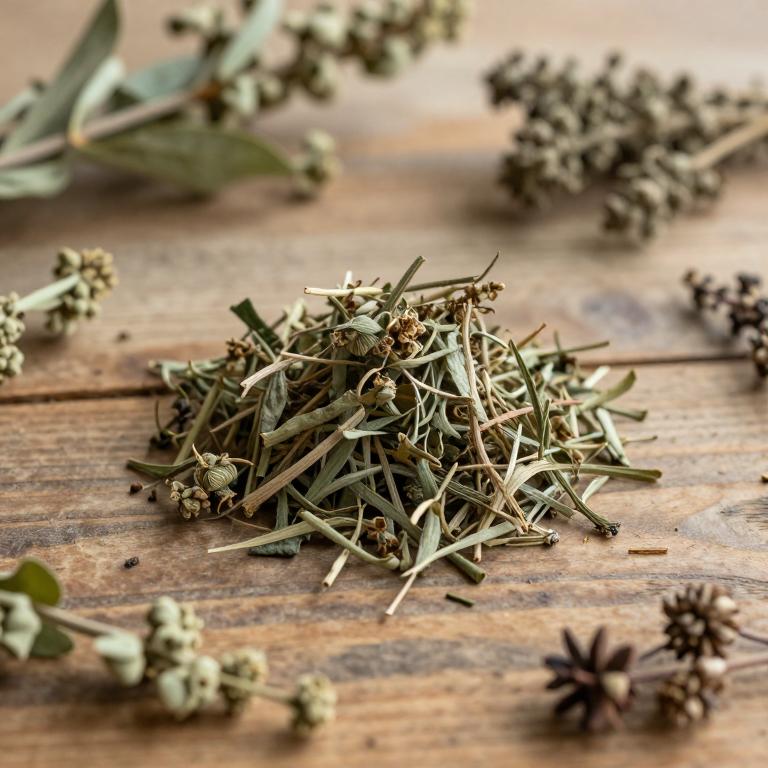
, scientifically known as Persicaria lapathifolia, is a resilient herbaceous perennial valued in traditional herbalism. Often found in damp habitats, this plant is recognized for its unique leaf structure and medicinal potential. Historically, various parts have been utilized to support digestive health and address inflammatory conditions in folk medicine.
- Family
- Not available
- Native range
- Europe
- Parts used
- Leaf
- Common names
- Not available
- Scientific synonyms
- Not available
Names and Synonyms
Scientific Names
Accepted name
Persicaria lapathifoliaDistribution
This plant exhibits a specific range across the northern regions of Europe. Within Northern Europe, its presence is documented in Denmark and Finland. The species can also be found in the Faroe Islands, known locally as Føroyar. Furthermore, its distribution extends to the island of Great Britain. Finally, it is recorded as being present in Ireland.
| Region | Area |
|---|---|
| Northern Europe | Denmark |
| Northern Europe | Finland |
| Northern Europe | Føroyar |
| Northern Europe | Great Britain |
| Northern Europe | Ireland |
| Northern Europe | Norway |
| Northern Europe | Sweden |
| Middle Europe | Austria |
| Middle Europe | Belgium |
| Middle Europe | Czechia-Slovakia |
Sources: The World Checklist of Vascular Plants (WCVP)
Botanical Identification
Ecology
The ecology of Persicaria lapathiifolia is characterized by its preference for highly moist environments, commonly colonizing habitats such as canals, lakes, shores, and roadsides. It exhibits a vast altitudinal plasticity, capable of thriving from sea level up to a maximum elevation of 3900 m AMSL. This wide distribution spans a significant vertical gradient, with a mean elevational range of approximately 1627.5 m AMSL, allowing the species to occupy diverse topographical niches ranging from lowland aquatic systems to high-altitude mountain environments.
- Elevational range max:
- 3900 m AMSL
- Elevational range mean:
- 1627.5 m AMSL
- Elevational range min:
- 0 m AMSL
- Habitat :
- canals, lakes, roadsides, shores
Life history
The life history of Persicaria lapathiifolia is characterized by a variable lifecycle that can function as an annual, biennial, or perennial, allowing it to adapt to fluctuating environmental conditions. In terms of its botanical growth habit, the species exhibits a dual classification of life forms, functioning as a helophyte due to its ability to thrive in wetland habitats with roots submerged in water or mud, while also being categorized as a therophyte, completing much of its biological cycle through a seasonal strategy.
- Life form :
- helophyte
- Life form :
- therophyte
- Lifecycle :
- annual
Morphology
The morphology of Persicaria lapathiifolia is characterized by a non-woody, herbaceous growth form, specifically classified as a forb. As a self-supporting plant, it does not function as a climber, liana, or vine, and it operates as an independent organism rather than a parasite. The species exhibits a highly variable stature, with plant heights ranging from a minimum of 0.03 m to a maximum of 3 m, maintaining a mean height of approximately 0.925 m. In terms of its ecological habit, the plant is terrestrial, though it may occupy semiaquatic environments, and it does not exhibit epiphyte tendencies, remaining strictly terrestrial in its growth habit.
- Aquatic :
- terrestrial
- Climber :
- self-supporting
- Epiphyte :
- terrestrial
- Growth form :
- herb
- Growth form :
- forb
- Parasite :
- independent
- Plant height max:
- 3 m
- Plant height mean:
- 0.925 m
- Plant height min:
- 0.03 m
- Woodiness :
- non-woody
Physiology
The physiology of Persicaria lapathiifolia is characterized by a C3 photosynthetic pathway, which dictates its carbon fixation process and metabolic efficiency in varying environmental conditions. As a non-carnivorous species, it relies entirely on soil-based nutrient uptake rather than the capture of insects, and it does not possess the biological mechanisms required to function as a nitrogen fixer. The plant's vegetative morphology is defined by its leaf dimensions, which exhibit significant variability; the leaves typically maintain a mean length of 10 cm, with measurements ranging from a minimum of 5 cm to a maximum of 21 cm. Correspondingly, the leaf width fluctuates between a minimum of 1 cm and a maximum of 4.5 cm, maintaining an average width of approximately 2 cm.
- Carnivory :
- non-carnivorous
- Leaf length max:
- 21 cm
- Leaf length mean:
- 10 cm
- Leaf length min:
- 5 cm
- Leaf width max:
- 4.5 cm
- Leaf width mean:
- 2 cm
- Leaf width min:
- 1 cm
- Nitrogen fixer :
- no
- Photosynthetic pathway :
- C3
Reproduction
The reproduction of Persicaria lapathiifolia is characterized by a sexual process through bisexual flowers, with asexual reproduction being notably absent. The flowering period typically commences in June and extends through August. Pollination is driven by biotic mechanisms, specifically via an insect pollination syndrome. Within the floral structure, self-fertilization is present, ensuring reproductive success. The plant produces dry, indehiscent fruits categorized as achenes. These fruits vary in size, with a mean length of 0.275 cm (ranging from a minimum of 0.2 cm to a maximum of 0.3 cm). Each fruit is prolific, containing between 101 and 1000 seeds. The seeds themselves are quite small, with a mean mass of approximately 0.00164730625 g (ranging from 0.00083 g to 0.0045338 g) and a consistent recorded volume of 5.6 mm³. Dispersal follows an unspecialized pattern, specifically utilizing epizoochory to spread seeds via attachment to animals.
- Dehiscence :
- indehiscent
- Dispersal syndrome :
- unspecialized
- Dispersal syndrome :
- epizoochorous
- Flowering time :
- Jun
- Flowering time :
- Aug
- Fruit dryness :
- dry
- Fruit length max:
- 0.3 cm
- Fruit length mean:
- 0.275 cm
- Fruit length min:
- 0.2 cm
- Fruit type :
- achene
- Pollination syndrome :
- insect
- Pollination syndrome :
- biotic
- Reproduction asexual :
- absent
- Reproduction sexual :
- bisexual
- Seed mass max:
- 0.0045338 g
- Seed mass mean:
- 0.00164730625 g
- Seed mass min:
- 0.00083 g
- Seed volume max:
- 5.6 mm³
- Seeds_per_fruit :
- 101-1000
- Self fertilization :
- present
Sources: Global Inventory of Floras and Traits (GIFT)
Plant Parts
Persicaria lapathifolia has 1 reported plant parts identified across 1 scientific publications and several other databases that are studied for medicinal purposes. The most consistently reported plant part include leaf.
| Plant part | Supporting sources | Consensus |
|---|---|---|
| Leaf | 1 supporting sources | ★☆☆☆☆ |
Leaf
- TheScientificWorldJournal
Preparations
Persicaria lapathifolia has 3 reported preparations identified across 1 scientific publications and several other databases. The most consistently reported preparations include Hydroethanolic Leaf Extract, aqueous ethanolic leaf extract, leaf extract.
| Preparation | Supporting sources | Consensus |
|---|---|---|
| Hydroethanolic leaf extract | 1 supporting sources | ★☆☆☆☆ |
| Aqueous ethanolic leaf extract | 1 supporting sources | ★☆☆☆☆ |
| Leaf extract | 1 supporting sources | ★☆☆☆☆ |
Hydroethanolic leaf extract
- TheScientificWorldJournal
Aqueous ethanolic leaf extract
- TheScientificWorldJournal
Leaf extract
- TheScientificWorldJournal