Persea major
Persea major · Accepted scientific name
Scientific literature: Very Sparse (12 studies) · ★☆☆☆☆
Persea major, scientifically known as Persea major, is a versatile medicinal plant valued for its diverse therapeutic properties. Renowned for its rich bioactive compounds, it is traditionally used to treat various ailments, ranging from skin conditions to digestive issues. Exploring its phytochemical potential offers promising insights into modern herbal pharmacology.
- Family
- Lauraceae
- Native range
- Southern America
- Parts used
- Not available
- Common names
- Not available
- Scientific synonyms
- Laurus Cordata · Persea Pyrifolia Var. Major · 2 more
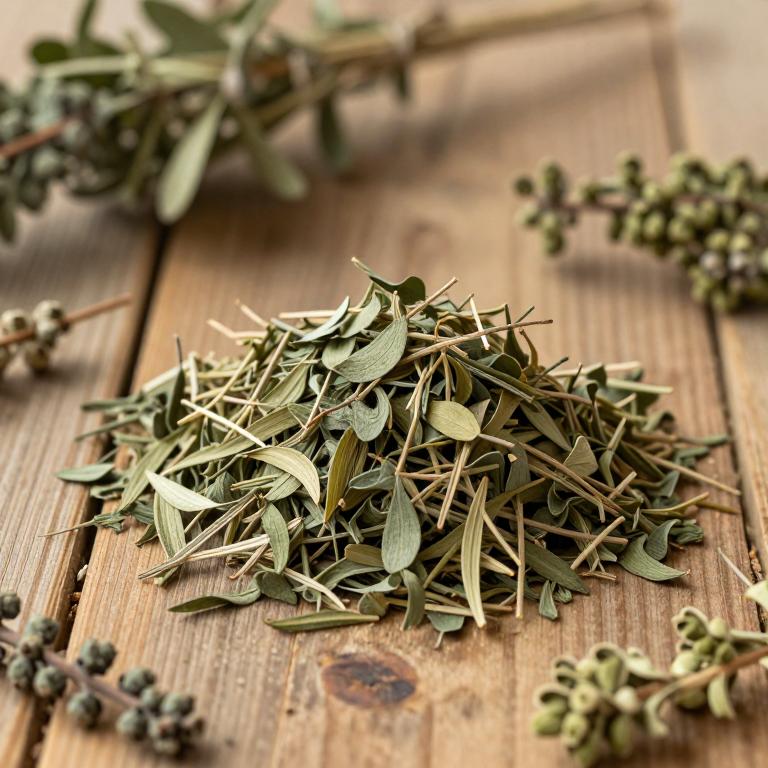
Names and Synonyms
Scientific Names
Accepted name
Persea majorSynonyms
- Laurus cordata
- Persea pyrifolia var. major
- Persea cordata var. major
- Mutisiopersea major
Sources: Wikidata, Catalogue of Life
Taxonomical Classification
This plant belongs to the kingdom Plantae and is classified under the phylum Streptophyta and the class Equisetopsida. Within the subclass Magnoliidae, it is organized under the order Laurales and the family Lauraceae. Finally, it is identified by the genus Persea.
| Rank | Classification |
|---|---|
| Kingdom | Plantae |
| Phylum | Streptophyta |
| Class | Equisetopsida |
| Subclass | Magnoliidae |
| Order | Laurales |
| Family | Lauraceae |
| Genus | Persea |
Sources: The World Checklist of Vascular Plants (WCVP)
Distribution
This plant exhibits a broad presence across several key regions within the country of Brazil. It is widely distributed throughout the Northeast region, where it adapts to local environmental conditions. Furthermore, the species can be found extensively throughout the Southeast of Brazil. Its range also extends significantly into the southern part of the country. Overall, these patterns confirm that the plant is well-established across multiple Brazilian territories.
| Region | Area |
|---|---|
| Brazil | Brazil Northeast |
| Brazil | Brazil Southeast |
| Brazil | Brazil South |
Sources: The World Checklist of Vascular Plants (WCVP)
Botanical Identification
Ecology
The ecology of Persea major is characterized by its presence across diverse Brazilian biomes, demonstrating a significant capacity for adaptation to varying moisture regimes and vegetation structures. It is commonly found inhabiting the Cerrado (latu sensu), where it must contend with more seasonal water availability and distinct dry periods, as well as within the Floresta Estacional Semi-decidual, where its growth patterns align with the seasonal shedding of leaves. Furthermore, its distribution extends into the more humid and stable environments of the Floresta Ombrófila (also known as Floresta Pluvial), where high precipitation and consistent moisture levels support its physiological requirements. This broad ecological range allows the species to occupy multiple successional stages and environmental niches, ranging from more open, fire-adapted landscapes to dense, closed-canopy tropical rainforests.
- Habitat :
- Cerrado (lato sensu), Floresta Estacional Semidecidual, Floresta Ombrófila (= Floresta Pluvial)
Morphology
The morphology of Persea major is characterized by its growth form as a woody tree, reaching a maximum plant height of 16 m. It functions as an independent organism, lacking any parasitic nature, and maintains a terrestrial lifestyle rather than being aquatic or semiaquatic. As a self-supporting species, it does not exhibit climbing behaviors such as liana or vine growth, nor does it function as an obligatory or facultative climber. Furthermore, the plant is strictly terrestrial, showing no epiphytic tendencies such as holoepiphytic, hemiepiphytic, or facultative epiphytic growth.
- Aquatic :
- terrestrial
- Climber :
- self-supporting
- Epiphyte :
- terrestrial
- Growth form :
- tree
- Parasite :
- independent
- Plant height max:
- 16 m
- Woodiness :
- woody
Sources: Global Inventory of Floras and Traits (GIFT)
Chemicals
Persea major has 2 reported phytochemicals identified across 0 scientific publications and several other databases. The most consistently reported chemicals include Majorenolide, Majorynolide.
| Chemical | Supporting sources | Consensus |
|---|---|---|
| Majorenolide | 1 supporting sources | ★☆☆☆☆ |
| Majorynolide | 1 supporting sources | ★☆☆☆☆ |
Majorenolide
- Journal of natural products
Majorynolide
- Journal of natural products
Activities
Persea major has 3 reported activities identified across 0 scientific publications and several other databases. The most consistently reported activities include Antiulcer, Cytotoxic, Gastroprotective.
| Activity | Supporting sources | Consensus |
|---|---|---|
| Antiulcer | 1 supporting sources | ★☆☆☆☆ |
| Cytotoxic | 1 supporting sources | ★☆☆☆☆ |
| Gastroprotective | 1 supporting sources | ★☆☆☆☆ |
Antiulcer
- Journal of ethnopharmacology
Cytotoxic
- Journal of natural products
Gastroprotective
- Journal of ethnopharmacology
Conditions
Persea major has 6 reported investigations on conditions identified across 0 scientific publications and several other databases. The most consistently reported conditions include Enterococcus faecalis, analgesic, gastric ulcer, ulcers, wound healing.
| Condition | Supporting sources | Consensus |
|---|---|---|
| Enterococcus faecalis | 1 supporting sources | ★☆☆☆☆ |
| Analgesic | 1 supporting sources | ★☆☆☆☆ |
| Gastric ulcer | 1 supporting sources | ★☆☆☆☆ |
| Ulcers | 1 supporting sources | ★☆☆☆☆ |
| Wound healing | 1 supporting sources | ★☆☆☆☆ |
| Wounds | 1 supporting sources | ★☆☆☆☆ |
Enterococcus faecalis
- BMC research notes
Analgesic
- BMC research notes
Gastric ulcer
- Journal of ethnopharmacology
Ulcers
- Journal of ethnopharmacology
Wound healing
- BMC research notes
Wounds
- Journal of ethnopharmacology
Preparations
Persea major has 1 reported preparations identified across 0 scientific publications and several other databases. The most consistently reported preparations include EtOH extract of the bark.
| Preparation | Supporting sources | Consensus |
|---|---|---|
| Etoh extract of the bark | 1 supporting sources | ★☆☆☆☆ |
Etoh extract of the bark
- Journal of natural products