false elder
Peronema canescens · Accepted scientific name
Scientific literature: Very Sparse (6 studies) · ★☆☆☆☆
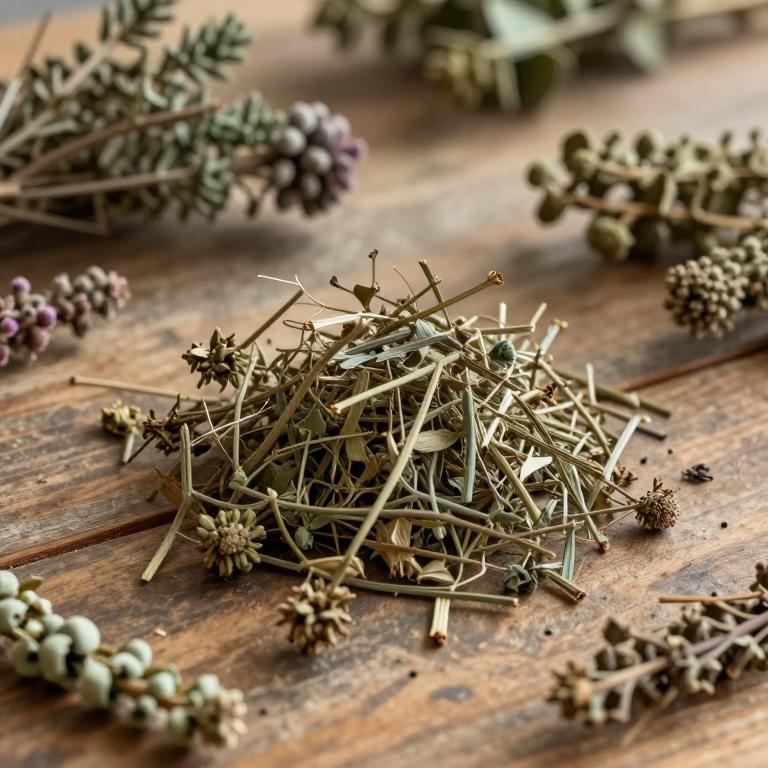
False elder, scientifically known as Peronema canescens, is a versatile medicinal shrub native to Southeast Asia. Renowned for its potent bioactive compounds, this plant is traditionally utilized to treat fever, inflammation, and skin ailments. Its leaves and bark serve as vital resources in various holistic and herbal healing practices.
- Family
- Lamiaceae
- Native range
- Asia-Tropical
- Parts used
- Leaf
- Common names
- False Elder
- Scientific synonyms
- Peronema Heterophyllum
Names and Synonyms
Common Names
- false elder
Scientific Names
Accepted name
Peronema canescensSynonyms
- Peronema heterophyllum
Sources: Wikidata, Catalogue of Life
Taxonomical Classification
This plant, Peronema canescens, belongs to the kingdom Plantae and the phylum Streptophyta. It is classified under the class Equisetopsida and subclass Magnoliidae, falling within the order Lamiales and the family Lamiaceae. Finally, it is identified by its specific genus, Peronema.
| Rank | Classification |
|---|---|
| Kingdom | Plantae |
| Phylum | Streptophyta |
| Class | Equisetopsida |
| Subclass | Magnoliidae |
| Order | Lamiales |
| Family | Lamiaceae |
| Genus | Peronema |
Sources: The World Checklist of Vascular Plants (WCVP)
Distribution
This plant exhibits a wide distribution across several key regions in Southeast Asia. Within the Indo-China zone, it can be found growing in Thailand. Its presence extends significantly into the Malesia region, where it inhabits the island of Borneo. Furthermore, the species is documented throughout the Malay Peninsula. Finally, it is also distributed across the island of Sumatera.
| Region | Area |
|---|---|
| Indo-China | Thailand |
| Malesia | Borneo |
| Malesia | Malaya |
| Malesia | Sumatera |
Sources: The World Checklist of Vascular Plants (WCVP)
Botanical Identification
Life history
The life history of Peronema canescens is characterized by its status as a perennial species, allowing it to persist in its environment over multiple growing seasons. As a phanerophyte, the plant maintains its photosynthetic organs on elevated branches, a growth habit that defines its structural presence within its ecological niche. It exhibits an evergreen deciduousness, ensuring that it retains its foliage throughout the year to maximize energy production. This combination of a long-term lifecycle and a persistent, elevated life form allows the plant to establish a stable and continuous presence in its habitat.
- Deciduousness :
- evergreen
- Life form :
- phanerophyte
- Lifecycle :
- perennial
Morphology
The morphology of Peronema canescens is characterized by a woody growth form, primarily manifesting as a tree. This species exhibits a significant vertical stature, with a mean plant height of approximately 15 m and reaching a maximum height of up to 18 m. In terms of its habit, the plant is categorized as a self-supporting climber, capable of functioning as a liana or vine while maintaining its own structural integrity. It is a terrestrial species, rather than an epiphyte, and maintains an independent existence as a non-parasitic organism.
- Climber :
- self-supporting
- Epiphyte :
- terrestrial
- Growth form :
- tree
- Parasite :
- independent
- Plant height max:
- 18 m
- Plant height mean:
- 15 m
- Woodiness :
- woody
Physiology
The physiology of Peronema canescens is characterized by complex metabolic processes that support its growth in tropical forest ecosystems, though it lacks the specialized symbiotic mechanisms required for atmospheric nitrogen assimilation. Specifically, this species is not a nitrogen fixer, meaning it does not possess the ability to engage in symbiotic relationships with nitrogen-fixing bacteria to convert atmospheric nitrogen into usable forms. Instead, its physiological survival and nutritional requirements depend entirely on the uptake of dissolved nitrates and ammonium ions from the soil through its root system. The plant's metabolic activity is heavily centered around the biosynthesis of various secondary metabolites, particularly quinones and terpenoids, which are produced through specialized enzymatic pathways to serve as chemical defense mechanisms. These physiological processes, including photosynthesis and nutrient absorption, are finely tuned to the environmental conditions of its native habitat, ensuring efficient energy production and resource management despite its inability to fix its own nitrogen.
- Nitrogen fixer :
- no
Sources: Global Inventory of Floras and Traits (GIFT)
Plant Parts
Peronema canescens has 1 reported plant parts identified across 1 scientific publications and several other databases that are studied for medicinal purposes. The most consistently reported plant part include leaf.
| Plant part | Supporting sources | Consensus |
|---|---|---|
| Leaf | 1 supporting sources | ★☆☆☆☆ |
Leaf
- Chemical & pharmaceutical bulletin
Chemicals
Peronema canescens has 2 reported phytochemicals identified across 1 scientific publications and several other databases. The most consistently reported chemicals include apigenin, kaempferol.
| Chemical | Supporting sources | Consensus |
|---|---|---|
| apigenin | 1 supporting sources | ★☆☆☆☆ |
| kaempferol | 1 supporting sources | ★☆☆☆☆ |
apigenin
- F1000Research
kaempferol
- International journal of molecular sciences
Activities
Peronema canescens has 1 reported activities identified across 1 scientific publications and several other databases. The most consistently reported activities include Immunostimulant.
| Activity | Supporting sources | Consensus |
|---|---|---|
| Immunostimulant | 1 supporting sources | ★☆☆☆☆ |
Immunostimulant
- F1000Research
Conditions
Peronema canescens has 2 reported investigations on conditions identified across 1 scientific publications and several other databases. The most consistently reported conditions include Plasmodium falciparum, malaria.
| Condition | Supporting sources | Consensus |
|---|---|---|
| Plasmodium falciparum | 1 supporting sources | ★☆☆☆☆ |
| Malaria | 1 supporting sources | ★☆☆☆☆ |
Plasmodium falciparum
- Journal of ethnopharmacology
Malaria
- Journal of ethnopharmacology