Hallab
Periploca laevigata · Accepted scientific name
Scientific literature: Very Sparse (12 studies) · ★☆☆☆☆
Hallab, scientifically known as Periploca laevigatura, is a significant medicinal shrub valued in traditional herbal medicine. Renowned for its diverse pharmacological properties, this plant is frequently utilized to treat various ailments, including skin conditions and digestive issues, offering a natural approach to wellness through its unique bioactive compounds.
- Family
- Apocynaceae
- Native range
- Africa
- Parts used
- Not available
- Common names
- Hallab
- Scientific synonyms
- Periploca Laevigata F. Anomalis · Periploca Laevigata F. Obovata · 2 more
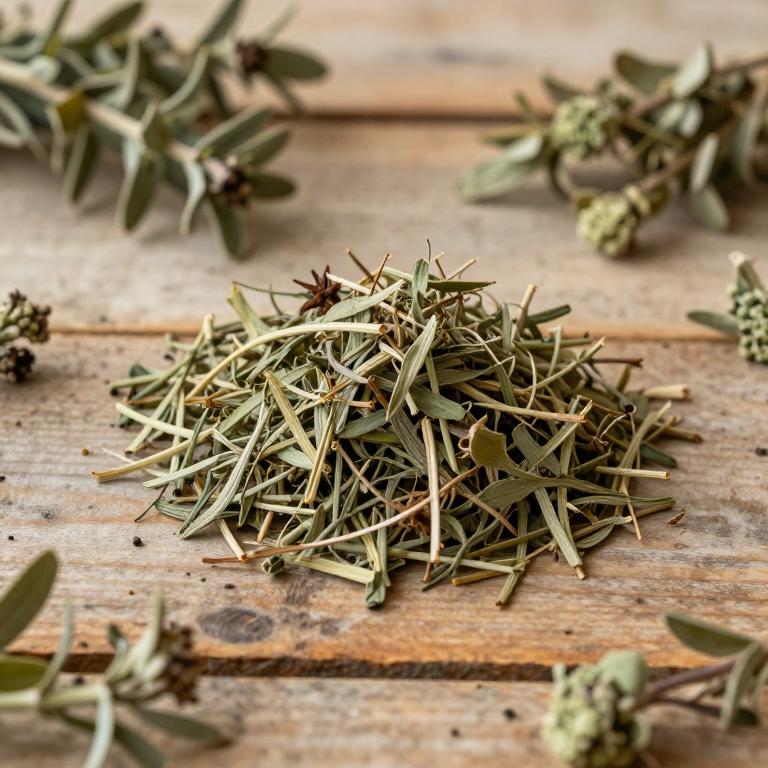
Names and Synonyms
Common Names
- Hallab
Scientific Names
Accepted name
Periploca laevigataSynonyms
- Periploca laevigata f. anomalis
- Periploca laevigata f. obovata
- Periploca laevigata f. undulata
- Periploca punicifolia
Regional and Traditional Names
Spanish:
- Cornical
German:
- Glatte Baumschlinge
- Glatte Baumschlinge
French:
- Périploca lisse
Sources: Wikidata, Catalogue of Life
Taxonomical Classification
This plant, known scientifically as Periploca laevigata, belongs to the kingdom Plantae and the phylum Streptophyta. Within the class Equisetopsida and subclass Magnoliidae, it is classified under the order Gentianaales and the family Apocynaceae. Ultimately, it is categorized under the genus Periploca.
| Rank | Classification |
|---|---|
| Kingdom | Plantae |
| Phylum | Streptophyta |
| Class | Equisetopsida |
| Subclass | Magnoliidae |
| Order | Gentianales |
| Family | Apocynaceae |
| Genus | Periploca |
Sources: The World Checklist of Vascular Plants (WCVP)
Distribution
This plant is a notable species within the Macaronesian botanical region. Its natural distribution is specifically concentrated within certain island territories. Most notably, it can be found growing across the Canary Islands. Additionally, its range extends to the Selvagens Islands. These specific locations define its unique geographical presence in the Atlantic.
| Region | Area |
|---|---|
| Macaronesia | Canary Is. |
| Macaronesia | Selvagens |
Sources: The World Checklist of Vascular Plants (WCVP)
Botanical Identification
Ecology
The ecology of Periploca laeviata is characterized by its specific adaptation to distinct altitudinal zones and habitat structures. This species typically inhabits mid-elevation landscapes, with its distribution strictly bounded by an elevational range that reaches a maximum of 700 m AMSL. Within this vertical limit, the plant thrives in specific environmental niches that support its growth patterns, often interacting with local soil compositions and microclimates found at these moderate heights. Its presence is closely tied to the availability of resources within these lower-to-mid altitude belts, where it plays a role in the local vegetative structure and ecological stability of its native terrain.
- Elevational range max:
- 700 m AMSL
Life history
The life history of Periploca laeviagata is characterized by its status as a perennial species, allowing the plant to persist through multiple growing seasons. As a perennial woody climber or shrub, it establishes a long-term presence within its ecosystem, often developing extensive climbing structures to navigate through competing vegetation. Its lifecycle involves seasonal vegetative growth phases and reproductive periods where it produces flowers and seeds to ensure the continuation of the species. Because it is not limited to a single season of growth like annuals or a two-year cycle like biennials, its developmental strategy focuses on long-term survival and the ability to recover from environmental fluctuations over several years.
- Lifecycle :
- perennial
Morphology
The morphology of Periploca laeviagata is characterized by a woody growth form, specifically manifesting as a shrub. This plant typically reaches a height ranging from a minimum of 1 meter to a maximum of 2 meters.
- Growth form :
- shrub
- Plant height max:
- 2 m
- Plant height min:
- 1 m
- Woodiness :
- woody
Physiology
The physiological structure of Periploca laeviagata is characterized by a distinct leaf morphology and arrangement that facilitate its metabolic processes. The foliage exhibits an elliptic leaf form, providing a specific surface area optimized for light interception and gas exchange. These leaves are distributed along the stem in an opposite arrangement, though the species may also display alternate, whorled, or rosette patterns depending on developmental stages or environmental adaptations. In terms of dimensions, the leaf length is variable, typically ranging from a minimum of 2 cm to a maximum of 6 cm, a range that plays a critical role in the plant's overall photosynthetic capacity and transpiration rates.
- Leaf arrangement :
- opposite
- Leaf form :
- elliptic
- Leaf length max:
- 6 cm
- Leaf length min:
- 2 cm
Reproduction
The reproductive cycle of Periploca laeviagata is characterized by a specific flowering period that begins in September and concludes in April. During this phase, the plant produces brown flowers arranged in a panicle inflorescence, with individual flower widths ranging from a minimum of 1 cm to a maximum of 2 cm. Following successful pollination, the plant develops fruit categorized as a follicle, which reaches a consistent length of approximately 15 cm. The resulting seeds are quite lightweight, maintaining a uniform mass of 0.00751 g. Dispersal of these seeds is achieved through an anemochorous syndrome, meaning they are primarily dispersed by the wind.
- Dispersal syndrome :
- anemochorous
- Flower colour :
- brown
- Flower width max:
- 2 cm
- Flower width min:
- 1 cm
- Flowering time :
- Sep
- Flowering time :
- Apr
- Fruit length max:
- 15 cm
- Fruit type :
- follicle
- Inflorescence :
- panicle
- Seed mass mean:
- 0.00751 g
Sources: Global Inventory of Floras and Traits (GIFT)
Chemicals
Periploca laevigata has 3 reported phytochemicals identified across 0 scientific publications and several other databases. The most consistently reported chemicals include Condensed Tannins, Flavonoids, Tannins.
| Chemical | Supporting sources | Consensus |
|---|---|---|
| Condensed Tannins | 1 supporting sources | ★☆☆☆☆ |
| Flavonoids | 1 supporting sources | ★☆☆☆☆ |
| Tannins | 1 supporting sources | ★☆☆☆☆ |
Condensed Tannins
- Natural product research
Flavonoids
- Journal of diabetes and metabolic disorders
Tannins
- Journal of diabetes and metabolic disorders
Activities
Periploca laevigata has 1 reported activities identified across 0 scientific publications and several other databases. The most consistently reported activities include Antidiabetic.
| Activity | Supporting sources | Consensus |
|---|---|---|
| Antidiabetic | 1 supporting sources | ★☆☆☆☆ |
Antidiabetic
- Journal of diabetes and metabolic disorders
Conditions
Periploca laevigata has 3 reported investigations on conditions identified across 0 scientific publications and several other databases. The most consistently reported conditions include antidiabetic, diabetic complications, inflammation.
| Condition | Supporting sources | Consensus |
|---|---|---|
| Antidiabetic | 1 supporting sources | ★☆☆☆☆ |
| Diabetic complications | 1 supporting sources | ★☆☆☆☆ |
| Inflammation | 1 supporting sources | ★☆☆☆☆ |
Antidiabetic
- Journal of diabetes and metabolic disorders
Diabetic complications
- Journal of diabetes and metabolic disorders
Inflammation
- Journal of diabetes and metabolic disorders