Periploca aphylla
Periploca aphylla · Accepted scientific name
Scientific literature: Very Sparse (3 studies) · ★☆☆☆☆
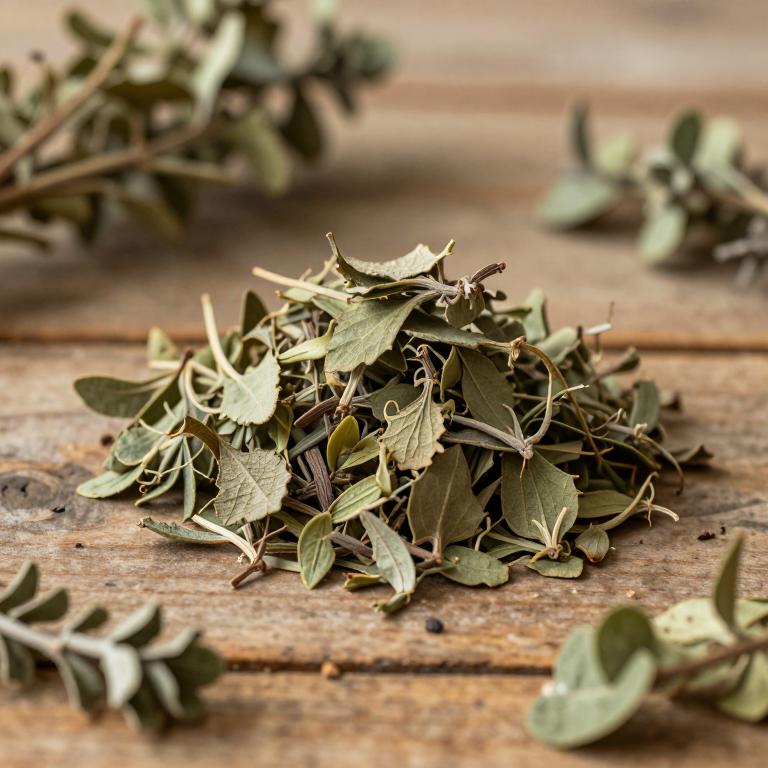
Periploca aphylla, scientifically known as Periploca aphylla, is a deciduous shrub native to parts of Asia. Renowned in traditional medicine, this plant is valued for its diverse therapeutic properties. It is frequently utilized to treat various ailments, including skin conditions, inflammation, and gastrointestinal issues, through its bioactive compounds.
- Family
- Apocynaceae
- Native range
- Africa
- Parts used
- Not available
- Common names
- Not available
- Scientific synonyms
- Not available
Names and Synonyms
Scientific Names
Accepted name
Periploca aphyllaSources: Wikidata, Catalogue of Life
Taxonomical Classification
This plant belongs to the kingdom Plantae within the phylum Streptophyta and the class Equisetopsida. As a member of the subclass Magnoliidae and order Gentianaales, it is further classified under the family Apocynaceae. Specifically, it is identified by the genus Periploca.
| Rank | Classification |
|---|---|
| Kingdom | Plantae |
| Phylum | Streptophyta |
| Class | Equisetopsida |
| Subclass | Magnoliidae |
| Order | Gentianales |
| Family | Apocynaceae |
| Genus | Periploca |
Sources: The World Checklist of Vascular Plants (WCVP)
Distribution
This plant exhibits a broad geographical distribution spanning across parts of Africa and Western Asia. In Northeast Tropical Africa, its presence is noted within the regions of Sudan and South Sudan. Moving into Western Asia, the species can be found growing in the country of Afghanistan. Its range continues through Iran and Iraq, covering significant portions of the Middle Eastern landscape. Finally, the distribution extends to the territory of Palestine, completing its spread across these diverse regions.
| Region | Area |
|---|---|
| Northeast Tropical Africa | Sudan-South Sudan |
| Western Asia | Afghanistan |
| Western Asia | Iran |
| Western Asia | Iraq |
| Western Asia | Palestine |
| Western Asia | Sinai |
| Arabian Peninsula | Gulf States |
| Arabian Peninsula | Oman |
| Arabian Peninsula | Saudi Arabia |
| Arabian Peninsula | Yemen |
Sources: The World Checklist of Vascular Plants (WCVP)
Botanical Identification
Ecology
The ecology of Periploca aphylla is characterized by its ability to thrive across diverse topographical gradients, specifically occupying an elevational range that spans from 800 m AMSL to a maximum of 2600 m AMSL. This broad altitudinal distribution allows the species to adapt to varying climatic conditions, ranging from warmer lowland environments to cooler, montane habitats. By inhabiting these specific vertical zones, the plant can exploit different microclimates, soil compositions, and moisture availability levels found throughout these altitudinal shifts.
- Elevational range max:
- 2600 m AMSL
- Elevational range min:
- 800 m AMSL
Life history
The life history of Periploca aphylla is characterized by its specialized growth habits and structural adaptations, categorized primarily as a phanerophyte due to its ability to maintain its buds above the ground level during unfavorable seasons. Depending on its environmental context and specific growth stage, the plant may also exhibit characteristics of a nanophanerophyte, reflecting its tendency toward smaller, shrubby forms. As a perennial woody species, it undergoes seasonal cycles of development, utilizing its robust stem structure to survive varied climatic conditions. Its lifecycle involves distinct vegetative and reproductive phases, where the phanerophyte status ensures the survival of its perennial woody architecture, allowing it to re-emerge and continue its growth cycle in its native habitat.
- Life form :
- nanophanerophyte
- Life form :
- phanerophyte
Morphology
The morphology of Periploca aphylla is characterized by a woody growth form, specifically developing as a shrub. As a terrestrial plant, it thrives in non-aquatic environments and does not exhibit aquatic or semiaquatic tendencies. Furthermore, the species functions as an independent organism, lacking any obligatory or facultative parasitic relationships.
- Aquatic :
- terrestrial
- Growth form :
- shrub
- Parasite :
- independent
- Woodiness :
- woody
Sources: Global Inventory of Floras and Traits (GIFT)
Chemicals
Periploca aphylla has 1 reported phytochemicals identified across 0 scientific publications and several other databases. The most consistently reported chemicals include OLEANOLIC ACID.
| Chemical | Supporting sources | Consensus |
|---|---|---|
| OLEANOLIC ACID | 1 supporting sources | ★☆☆☆☆ |
OLEANOLIC ACID
- Pakistan journal of pharmaceutical sciences
Preparations
Periploca aphylla has 4 reported preparations identified across 0 scientific publications and several other databases. The most consistently reported preparations include extracts, methanol extract, methanolic extract, methanolic extract of the whole plant.
| Preparation | Supporting sources | Consensus |
|---|---|---|
| Extracts | 1 supporting sources | ★☆☆☆☆ |
| Methanol extract | 1 supporting sources | ★☆☆☆☆ |
| Methanolic extract | 1 supporting sources | ★☆☆☆☆ |
| Methanolic extract of the whole plant | 1 supporting sources | ★☆☆☆☆ |
Extracts
- Molecules (Basel, Switzerland)
Methanol extract
- Molecules (Basel, Switzerland)
Methanolic extract
- Pakistan journal of pharmaceutical sciences
Methanolic extract of the whole plant
- Journal of natural products