Trellis-vine
Pergularia daemia · Accepted scientific name
Scientific literature: Very Sparse (37 studies) · ★☆☆☆☆
Trellis-vine, scientifically known as Pergularia daemia, is a perennial climbing shrub native to tropical regions. Renowned in traditional medicine, it contains bioactive alkaloids used to treat inflammation, skin ailments, and various infections. This versatile plant serves as a significant subject in pharmacological studies for its diverse therapeutic potential.
- Family
- Apocynaceae
- Native range
- Africa
- Parts used
- Leaf
- Common names
- Trellis-Vine · Pergularia
- Scientific synonyms
- Doemia Forskaolii
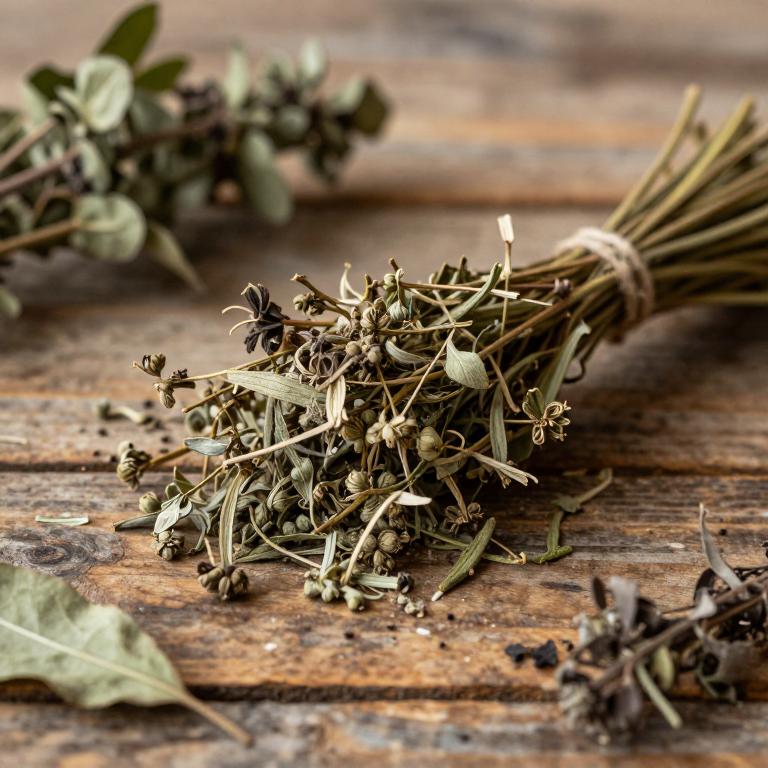
Names and Synonyms
Common Names
- Trellis-vine
- pergularia
Scientific Names
Accepted name
Pergularia daemiaSynonyms
- Doemia forskaolii
Sources: Wikidata, Catalogue of Life
Taxonomical Classification
This plant belongs to the kingdom Plantae and the phylum Streptophyta within the class Equisetopsida. Classified under the subclass Magnoliidae and the order Gentianaales, it is a member of the family Apocynaceae. Ultimately, its scientific identity is defined by the genus Pergularia, specifically the species Pergularia daemia.
| Rank | Classification |
|---|---|
| Kingdom | Plantae |
| Phylum | Streptophyta |
| Class | Equisetopsida |
| Subclass | Magnoliidae |
| Order | Gentianales |
| Family | Apocynaceae |
| Genus | Pergularia |
Sources: The World Checklist of Vascular Plants (WCVP)
Distribution
This plant exhibits a wide geographical distribution across several regions of the African continent. In Northern Africa, its presence is noted specifically within Algeria. Moving toward the West Tropical Africa region, the species can be found in Benin and Burkina. It also maintains a significant range within the territories of Gambia and Ghana. Consequently, these diverse locations highlight the plant's ability to thrive across varied West African landscapes.
| Region | Area |
|---|---|
| Northern Africa | Algeria |
| West Tropical Africa | Benin |
| West Tropical Africa | Burkina |
| West Tropical Africa | Gambia |
| West Tropical Africa | Ghana |
| West Tropical Africa | Guinea-Bissau |
| West Tropical Africa | Guinea |
| West Tropical Africa | Ivory Coast |
| West Tropical Africa | Liberia |
| West Tropical Africa | Mali |
Sources: The World Checklist of Vascular Plants (WCVP)
Botanical Identification
Ecology
The ecology of Pergularia daemia is characterized by its ability to thrive within specific altitudinal limits, predominantly occupying environments up to an elevational range maximum of 1200 m AMSL. While specific detailed habitat classifications for this species are often undocumented or not explicitly categorized in certain ecological datasets, its distribution is fundamentally governed by these vertical constraints. The plant's survival and proliferation are closely linked to the environmental conditions found within this specific altitudinal belt, which dictates the available moisture, temperature fluctuations, and soil composition necessary for its growth.
- Elevational range max:
- 1200 m AMSL
- Habitat :
- -
Life history
The life history of Pergularia daemia is characterized by its classification as a perennial plant, allowing it to persist through multiple growing seasons rather than completing its cycle in a single year. In terms of its structural growth habit and ecological positioning, the species exhibits a chamaephyte life form, meaning its perennating buds are located near or just above the soil surface, which influences its ability to survive varying environmental conditions and seasonal changes.
- Life form :
- chamaephyte
- Lifecycle :
- perennial
Morphology
The morphology of Pergularia daemia is characterized by its growth form as a non-woody herb that functions as an obligatory liana. This terrestrial plant exhibits a climbing habit, utilizing other structures for support rather than being self-supporting. In terms of stature, it is a significant climber with a height that typically ranges from a minimum of 1 meter to a maximum of 6 meters, maintaining an average plant height of approximately 3 meters. As an independent organism, it does not exhibit parasitic behavior and grows in terrestrial environments rather than aquatic or epiphytic habitats.
- Aquatic :
- terrestrial
- Climber :
- liana
- Climber :
- obligatory
- Epiphyte :
- terrestrial
- Growth form :
- herb
- Parasite :
- independent
- Plant height max:
- 6 m
- Plant height mean:
- 3 m
- Plant height min:
- 1 m
- Woodiness :
- non-woody
Physiology
The physiology of Pergularia daemia is characterized by its specialized metabolic processes and growth patterns, which are adapted to its specific ecological niches. As a climbing shrub, its physiological drive is directed toward rapid vertical elongation and the development of tendrils to facilitate light interception. The plant exhibits a complex secondary metabolism, primarily centered on the synthesis of cardiac glycosides, which serve as a chemical defense mechanism against herbivory. In terms of nutrient acquisition and soil interaction, the plant does not engage in symbiotic relationships with diazotrophic bacteria for atmospheric gas conversion; specifically, it is not a nitrogen fixer (trait_1: nitrogen fixer, trait_2: nitrogen_fix_1, trait_value: no). Its nutritional requirements are met through the uptake of inorganic nitrogen compounds, such as nitrates and ammonium, from the soil via its root system. Furthermore, its photosynthetic efficiency and water regulation are governed by stomatal movements and osmotic adjustments that allow it to maintain turgor pressure and metabolic activity under varying environmental stressors.
- Nitrogen fixer :
- no
Reproduction
The reproduction of Pergularia daemia is primarily characterized by the production of seeds that exhibit specific morphological and mass-related variations. The seed mass within this species shows a measurable range, with a recorded minimum value of 0.00609 g and a maximum value reaching 0.01188 g. When considering the overall population, the average seed mass is approximately 0.00830416666666667 g. These quantitative metrics reflect the biological investment in seed development, which is a critical component of the plant's life cycle and dispersal strategy.
- Seed mass max:
- 0.01188 g
- Seed mass mean:
- 0.00830416666666667 g
- Seed mass min:
- 0.00609 g
Sources: Global Inventory of Floras and Traits (GIFT)
Plant Parts
Pergularia daemia has 1 reported plant parts identified across 1 scientific publications and several other databases that are studied for medicinal purposes. The most consistently reported plant part include leaf.
| Plant part | Supporting sources | Consensus |
|---|---|---|
| Leaf | 1 supporting sources | ★☆☆☆☆ |
Leaf
- Malaria journal
Chemicals
Pergularia daemia has 12 reported phytochemicals identified across 1 scientific publications and several other databases. The most consistently reported chemicals include CHLOROFORM, CHLOROGENIC ACID, Chrysoeriol, ETHYL ACETATE, Evodiamine.
| Chemical | Supporting sources | Consensus |
|---|---|---|
| CHLOROFORM | 1 supporting sources | ★☆☆☆☆ |
| CHLOROGENIC ACID | 1 supporting sources | ★☆☆☆☆ |
| Chrysoeriol | 1 supporting sources | ★☆☆☆☆ |
| ETHYL ACETATE | 1 supporting sources | ★☆☆☆☆ |
| Evodiamine | 1 supporting sources | ★☆☆☆☆ |
| HEXANE | 1 supporting sources | ★☆☆☆☆ |
| TAXIFOLIN | 1 supporting sources | ★☆☆☆☆ |
| acetone | 1 supporting sources | ★☆☆☆☆ |
| formononetin | 1 supporting sources | ★☆☆☆☆ |
| methanol | 1 supporting sources | ★☆☆☆☆ |
CHLOROFORM
- Veterinary parasitology
CHLOROGENIC ACID
- Die Naturwissenschaften
Chrysoeriol
- Biomedicine & pharmacotherapy = Biomedecine & pharmacotherapie
ETHYL ACETATE
- Veterinary parasitology
Evodiamine
- Die Naturwissenschaften
HEXANE
- Veterinary parasitology
TAXIFOLIN
- Biomedicine & pharmacotherapy = Biomedecine & pharmacotherapie
acetone
- Veterinary parasitology
formononetin
- Biomedicine & pharmacotherapy = Biomedecine & pharmacotherapie
methanol
- Veterinary parasitology
Activities
Pergularia daemia has 2 reported activities identified across 1 scientific publications and several other databases. The most consistently reported activities include Antioxidant, Neuroprotective.
| Activity | Supporting sources | Consensus |
|---|---|---|
| Antioxidant | 1 supporting sources | ★☆☆☆☆ |
| Neuroprotective | 1 supporting sources | ★☆☆☆☆ |
Antioxidant
- Die Naturwissenschaften
Neuroprotective
- Journal of ethnopharmacology
Conditions
Pergularia daemia has 19 reported investigations on conditions identified across 1 scientific publications and several other databases. The most consistently reported conditions include arthritis, epilepsy, inflammation, Plasmodium falciparum, anemia.
| Condition | Supporting sources | Consensus |
|---|---|---|
| Arthritis | 2 supporting sources | ★☆☆☆☆ |
| Epilepsy | 2 supporting sources | ★☆☆☆☆ |
| Inflammation | 2 supporting sources | ★☆☆☆☆ |
| Plasmodium falciparum | 1 supporting sources | ★☆☆☆☆ |
| Anemia | 1 supporting sources | ★☆☆☆☆ |
| Cancer | 1 supporting sources | ★☆☆☆☆ |
| Cognitive impairment | 1 supporting sources | ★☆☆☆☆ |
| Cognitive impairments | 1 supporting sources | ★☆☆☆☆ |
| Fever | 1 supporting sources | ★☆☆☆☆ |
| Infections | 1 supporting sources | ★☆☆☆☆ |
Arthritis
- Biomedicine & pharmacotherapy = Biomedecine & pharmacotherapie
- Epilepsy & behavior : E&B
Epilepsy
- Journal of ethnopharmacology
- Epilepsy & behavior : E&B
Inflammation
- Journal of ethnopharmacology
- Epilepsy & behavior : E&B
Plasmodium falciparum
- Malaria journal
Anemia
- Journal of ethnopharmacology
Cancer
- Die Naturwissenschaften
Cognitive impairment
- Epilepsy & behavior : E&B
Cognitive impairments
- Journal of ethnopharmacology
Fever
- Epilepsy & behavior : E&B
Infections
- Epilepsy & behavior : E&B
Preparations
Pergularia daemia has 3 reported preparations identified across 1 scientific publications and several other databases. The most consistently reported preparations include EAEs from leaves, extract, methanolic extract.
| Preparation | Supporting sources | Consensus |
|---|---|---|
| Eaes from leaves | 1 supporting sources | ★☆☆☆☆ |
| Extract | 1 supporting sources | ★☆☆☆☆ |
| Methanolic extract | 1 supporting sources | ★☆☆☆☆ |
Eaes from leaves
- Malaria journal
Extract
- Hindustan antibiotics bulletin
Methanolic extract
- Biomedicine & pharmacotherapy = Biomedecine & pharmacotherapie