Canthium horridum
Peponidium horridum · Accepted scientific name
Scientific literature: Very Sparse (8 studies) · ★☆☆☆☆
Canthium horridum, scientifically known as Peponiidum horridum, is a resilient medicinal plant valued for its unique therapeutic properties. Often found in specialized ecological niches, this species is utilized in traditional medicine to address various ailments. Understanding its chemical composition and healing potential offers significant insights into natural pharmacology.
- Family
- Rubiaceae
- Native range
- Africa
- Parts used
- Not available
- Common names
- Canthium Horridum
- Scientific synonyms
- Not available
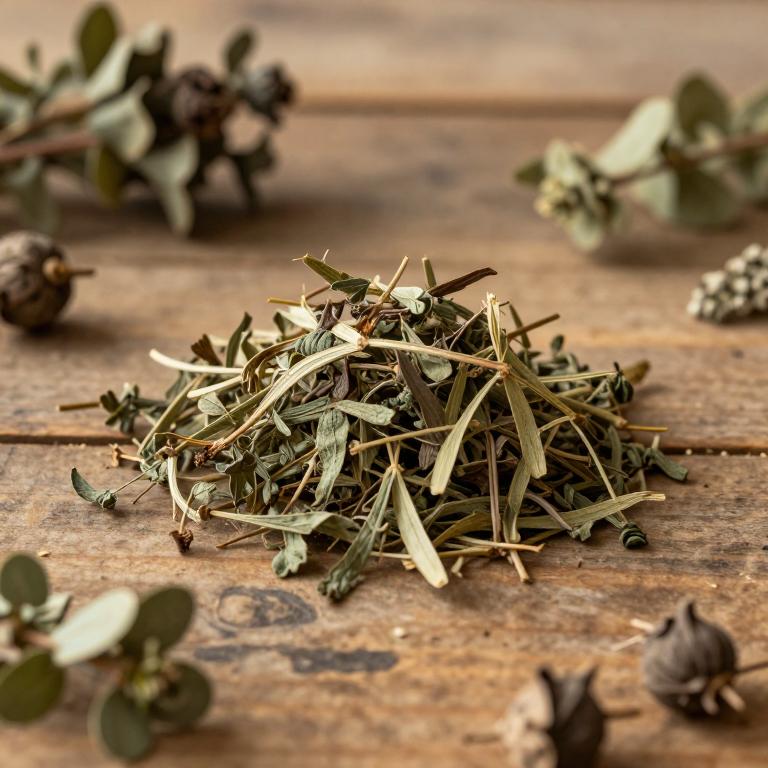
Names and Synonyms
Common Names
- Canthium horridum
Scientific Names
Accepted name
Peponidium horridumRegional and Traditional Names
Spanish:
- Canthium horridum
German:
- Canthium horridum
French:
- Canthium horridum
Sources: Wikidata, Catalogue of Life
Taxonomical Classification
This plant belongs to the kingdom Plantae and the phylum Streptophyta, falling under the class Equisetopsida and subclass Magnoliidae. Within the order Gentianaales, it is classified under the family Rubiaceae. It is specifically identified by the genus Peponiidium and the species Peponiidium horridum.
| Rank | Classification |
|---|---|
| Kingdom | Plantae |
| Phylum | Streptophyta |
| Class | Equisetopsida |
| Subclass | Magnoliidae |
| Order | Gentianales |
| Family | Rubiaceae |
| Genus | Peponidium |
Sources: The World Checklist of Vascular Plants (WCVP)
Distribution
This plant, known scientifically as Peponidium horridum, possesses a very specific and limited geographical range. Its natural habitat is primarily concentrated within the Western Indian Ocean region. Specifically, this medicinal species is found growing natively on the island of Madagascar. Due to this localized presence, it is considered an endemic element of the island's unique flora. Understanding this precise distribution is essential for researchers studying its ecological niche and conservation needs.
| Region | Area |
|---|---|
| Western Indian Ocean | Madagascar |
Sources: The World Checklist of Vascular Plants (WCVP)
Botanical Identification
Life history
The life history of Peponidium horridum is characterized by its distinct growth strategies and structural classification within various ecological niches. As a perennial species, its developmental trajectory is defined by its classification as a phanerophyte, indicating that its regenerative buds are located well above the ground level, allowing it to persist through seasonal changes. Within this framework, the plant exhibits a dual life form complexity, functioning as both a phanerophyte and a nanophanerophyte. This suggests that while it can maintain elevated, visible photosynthetic structures, it also possesses the capacity to maintain much smaller, more compact growth forms depending on environmental stressors. This flexibility in life form—ranging from the more robust phanerophyte stage to the diminutive nanophanerophyte stage—enables the plant to optimize its resource acquisition and survival across varying microhabitats, ensuring long-term persistence in its native ecosystem.
- Life form :
- nanophanerophyte
- Life form :
- phanerophyte
Morphology
The morphology of Peponidium horridum is characterized by a complex growth habit and structural composition. It functions as a self-supporting climber, exhibiting characteristics of both a liana and a vine, while also maintaining a self-supporting nature in its developmental stages. Although it can present a growth form consistent with a shrub or even a tree, its primary structural identity is defined by its woody nature, possessing significant woodiness in its stems and branches. This plant is strictly terrestrial, neither functioning as an epiphyte nor as an aquatic or semiaquatic organism. Furthermore, it maintains a completely independent biological existence, categorized as an independent organism rather than an obligatory or facultative parasite.
- Aquatic :
- terrestrial
- Climber :
- self-supporting
- Epiphyte :
- terrestrial
- Growth form :
- shrub
- Growth form :
- tree
- Parasite :
- independent
- Woodiness :
- woody
Sources: Global Inventory of Floras and Traits (GIFT)
Chemicals
Peponidium horridum has 8 reported phytochemicals identified across 0 scientific publications and several other databases. The most consistently reported chemicals include (+)-Syringaresinol, BETA-SITOSTEROL, SYRINGIC ACID, Scoparone, Sinapic aldehyde.
| Chemical | Supporting sources | Consensus |
|---|---|---|
| (+)-Syringaresinol | 1 supporting sources | ★☆☆☆☆ |
| BETA-SITOSTEROL | 1 supporting sources | ★☆☆☆☆ |
| SYRINGIC ACID | 1 supporting sources | ★☆☆☆☆ |
| Scoparone | 1 supporting sources | ★☆☆☆☆ |
| Sinapic aldehyde | 1 supporting sources | ★☆☆☆☆ |
| Vanillic acid 4-O-beta-D-glucopyranoside | 1 supporting sources | ★☆☆☆☆ |
| beta-Daucosterol | 1 supporting sources | ★☆☆☆☆ |
| mannitol | 1 supporting sources | ★☆☆☆☆ |
(+)-Syringaresinol
- Natural product communications
BETA-SITOSTEROL
- Natural product communications
SYRINGIC ACID
- Natural product communications
Scoparone
- Natural product communications
Sinapic aldehyde
- Natural product communications
Vanillic acid 4-O-beta-D-glucopyranoside
- Natural product communications
beta-Daucosterol
- Natural product communications
mannitol
- Natural product communications