slender peperomia
Peperomia leptostachya · Accepted scientific name
Scientific literature: Very Sparse (12 studies) · ★☆☆☆☆
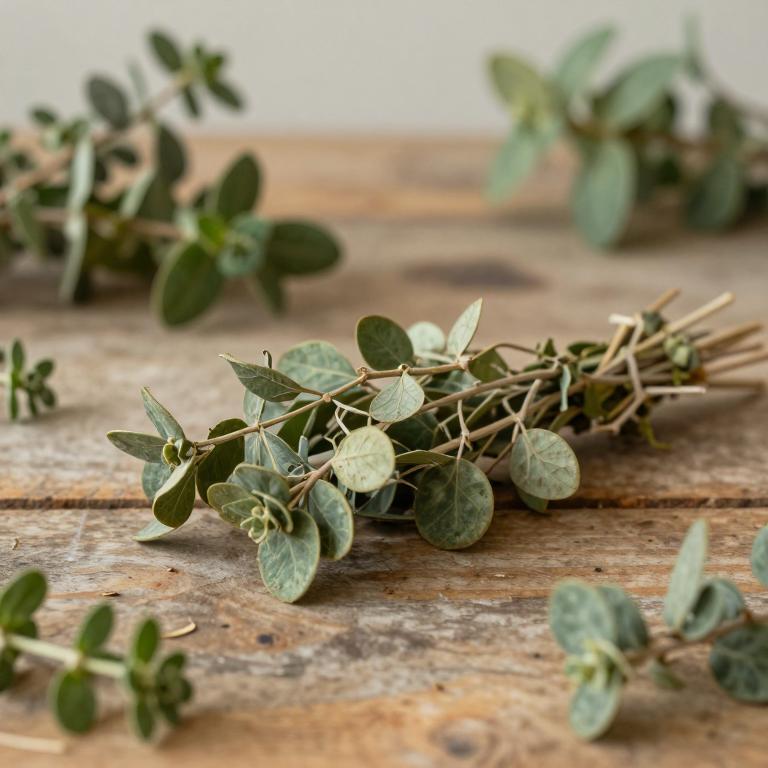
Slender peperomia, scientifically known as Peperomia leptostachya, is a captivating medicinal plant prized for its delicate, upright growth. Native to tropical regions, it is valued in traditional herbal practices for its diverse therapeutic properties. This resilient species offers a unique blend of ornamental beauty and potential pharmacological benefits.
- Family
- Piperaceae
- Native range
- Africa
- Parts used
- Not available
- Common names
- Peperomia Heyneana · Aridland Peperomia
- Scientific synonyms
- Peperomia Wightiana · Peperomia Moerenhoutii Var. Mangarevensis · 30 more
Names and Synonyms
Common Names
- Peperomia heyneana
- Aridland peperomia
Scientific Names
Accepted name
Peperomia leptostachyaSynonyms
- Peperomia wightiana
- Peperomia moerenhoutii var. mangarevensis
- Peperomia leptostachya f. cambodiana
- Peperomia leptostachya var. marquesensis
- Peperomia baueriana var. brisbaniana
- Peperomia moerenhoutii var. petiolata
- Peperomia kyimbilana
- Peperomia moerenhoutii var. macrophylla
- Peperomia leptostachya var. laxiflora
- Peperomia insularum
- Peperomia moerenhoutii
- Peperomia candollei
- Peperomia leptostachya var. attenuapica
- Peperomia dindygulensis var. hirsuta
- Peperomia arabica var. floribunda
- Piper australe
- Peperomia leptostachya f. carnosior
- Peperomia leptostachya var. nodosa
- Peperomia arabica var. parvifolia
- Peperomia esquirolii
- Peperomia brachytrichoides
- Peperomia blanda var. leptostachya
- Peperomia afra
- Peperomia bequaertii
- Peperomia arabica
- Peperomia leptostachya var. macrophylla
- Peperomia leptostachya var. cambodiana
- Peperomia blanda var. floribunda
- Peperomia recurvata var. philippinensis
- Peperomia dindygulensis
- Peperomia thwaitesii
- Peperomia sui
Regional and Traditional Names
Spanish:
- Peperomia heyneana
German:
- Peperomia heyneana
French:
- Peperomia heyneana
Sources: Wikidata, Catalogue of Life
Taxonomical Classification
This plant belongs to the kingdom Plantae and the phylum Streptophyta, specifically classified within the class Equisetopsida and subclass Magnoliidae. It is organized under the order Piperales and the family Piperaceae. Finally, it is identified by its genus name, Peperomia.
| Rank | Classification |
|---|---|
| Kingdom | Plantae |
| Phylum | Streptophyta |
| Class | Equisetopsida |
| Subclass | Magnoliidae |
| Order | Piperales |
| Family | Piperaceae |
| Genus | Peperomia |
Sources: The World Checklist of Vascular Plants (WCVP)
Distribution
This plant exhibits a broad presence across several distinct regions of the African continent. Within West-Central Tropical Africa, its range extends from the Democratic Republic of the Congo to the island territories of the Gulf of Guinea. It can also be found in the landlocked areas of Burundi and Rwanda within the same West-Central zone. Furthermore, the species reaches into Northeast Tropical Africa, specifically documented in Ethiopia. This distribution highlights the plant's ability to inhabit diverse ecological settings across both central and eastern regions.
| Region | Area |
|---|---|
| West-Central Tropical Africa | Burundi |
| West-Central Tropical Africa | Gulf of Guinea Is. |
| West-Central Tropical Africa | Rwanda |
| West-Central Tropical Africa | DR Congo |
| Northeast Tropical Africa | Ethiopia |
| Northeast Tropical Africa | Socotra |
| East Tropical Africa | Kenya |
| East Tropical Africa | Tanzania |
| East Tropical Africa | Uganda |
| South Tropical Africa | Malawi |
Sources: The World Checklist of Vascular Plants (WCVP)
Botanical Identification
Ecology
The ecology of Peperomia leptostachya is characterized by its preference for the humid, shaded environments of the rain forest. This species exhibits a broad vertical distribution across various topographical gradients, occupying an elevational range that spans from as low as 150 m AMSL to as high as 2300 m AMSL. While specific local populations may be found within narrower belts, such as between 800 m and 1600 m AMSL, the species maintains a significant presence across diverse altitudes, with a calculated mean elevation of approximately 1400 m AMSL.
- Elevational range max:
- 1600 m AMSL
- Elevational range max:
- 2300 m AMSL
- Elevational range mean:
- 1400 m AMSL
- Elevational range min:
- 150 m AMSL
- Elevational range min:
- 800 m AMSL
- Habitat :
- rain forest
Life history
The life history of Peperomia leptostachya is characterized by its classification as a perennial species, allowing it to persist through multiple growing seasons rather than completing its cycle in a single year. As a perennial, the plant maintains its vegetative structure over time, often establishing a stable presence within its specific ecological niche. Its development involves a continuous cycle of growth, maturation, and reproduction, where it can survive environmental fluctuations to emerge and flourish in subsequent seasons. This perennial nature ensures a long-term contribution to its habitat, facilitating sustained biological processes and consistent reproductive potential over a prolonged lifespan.
- Lifecycle :
- annual
Morphology
The morphology of Peperomia leptostachya is characterized by its stature as a small, non-woody herb and forb, typically reaching a plant height between 0.15 m and 0.3 m. As a self-supporting plant, it exhibits a growth habit that is primarily terrestrial, though it can function as a facultative epiphyte in certain environments. While it possesses the structural capacity to be self-supporting rather than acting as an obligatory climber or liana, its delicate, non-woody stems define its herbaceous form. Furthermore, the species is an independent organism, functioning without parasitic dependencies, and its ecological niche spans a range of moisture levels including aquatic, semiaquatic, and terrestrial habitats.
- Aquatic :
- terrestrial
- Climber :
- self-supporting
- Epiphyte :
- facultative
- Epiphyte :
- terrestrial
- Growth form :
- herb
- Growth form :
- forb
- Parasite :
- independent
- Plant height max:
- 0.3 m
- Plant height min:
- 0.15 m
- Woodiness :
- non-woody
Physiology
The physiology of Peperomia leptostachya is characterized by specific leaf morphological dimensions and a non-succulent structural composition. The foliage exhibits a measurable range of size, with leaf lengths varying from a minimum of 1.5 cm to a maximum of 4 cm. Correspondingly, the leaf width fluctuates between a minimum of 1.2 cm and a maximum of 2.5 cm, defining its overall leaf architecture. Unlike many other members of its genus, this particular species does not exhibit succulence, indicating a physiological strategy that lacks the specialized thickened tissues typically used for significant water storage within the leaf structure.
- Leaf length max:
- 4 cm
- Leaf length min:
- 1.5 cm
- Leaf width max:
- 2.5 cm
- Leaf width min:
- 1.2 cm
- Succulence :
- no
Reproduction
The reproduction of Peperomia leptostachya is characterized by the production of minute fruits classified as drupes, which are notably small in stature. These fruits typically measure between 0.09 cm and 0.1 cm in length. The seeds contained within these fruits are exceptionally lightweight, exhibiting a mean mass of 0.00033 g, with individual seed masses ranging from a minimum of 0.00022 g to a maximum of 0.00044 g. Regarding the release of seeds, the fruit is indehiscent, meaning it does not naturally split open at maturity to release its contents. The dispersal of the species is categorized as anthropochorous, indicating that human activity plays a role in the movement and distribution of its reproductive units.
- Dehiscence :
- indehiscent
- Dispersal syndrome :
- anthropochorous
- Fruit length max:
- 0.1 cm
- Fruit length min:
- 0.09 cm
- Fruit type :
- drupe
- Seed mass max:
- 0.00044 g
- Seed mass mean:
- 0.00033 g
- Seed mass min:
- 0.00022 g
Sources: Global Inventory of Floras and Traits (GIFT)
Chemicals
Peperomia leptostachya has 4 reported phytochemicals identified across 0 scientific publications and several other databases. The most consistently reported chemicals include Peperomin E, peperomin A, peperomin B, peperomin C.
| Chemical | Supporting sources | Consensus |
|---|---|---|
| Peperomin E | 3 supporting sources | ★★☆☆☆ |
| peperomin A | 1 supporting sources | ★☆☆☆☆ |
| peperomin B | 1 supporting sources | ★☆☆☆☆ |
| peperomin C | 1 supporting sources | ★☆☆☆☆ |
Peperomin E
- Pakistan journal of pharmaceutical sciences
- Phytomedicine : international journal of phytotherapy and phytopharmacology
- Journal of natural products
peperomin A
- Journal of natural products
peperomin B
- Journal of natural products
peperomin C
- Journal of natural products
Activities
Peperomia leptostachya has 2 reported activities identified across 0 scientific publications and several other databases. The most consistently reported activities include Anticancer, Antiproliferative.
| Activity | Supporting sources | Consensus |
|---|---|---|
| Anticancer | 3 supporting sources | ★★☆☆☆ |
| Antiproliferative | 1 supporting sources | ★☆☆☆☆ |
Anticancer
- Pakistan journal of pharmaceutical sciences
- Phytomedicine : international journal of phytotherapy and phytopharmacology
- Natural product research
Antiproliferative
- Phytomedicine : international journal of phytotherapy and phytopharmacology
Preparations
Peperomia leptostachya has 5 reported preparations identified across 0 scientific publications and several other databases. The most consistently reported preparations include whole plant, EtOAc extract, EtOAc fraction, ethyl acetate extract, petroleum ether fraction.
| Preparation | Supporting sources | Consensus |
|---|---|---|
| Whole plant | 2 supporting sources | ★☆☆☆☆ |
| Etoac extract | 1 supporting sources | ★☆☆☆☆ |
| Etoac fraction | 1 supporting sources | ★☆☆☆☆ |
| Ethyl acetate extract | 1 supporting sources | ★☆☆☆☆ |
| Petroleum ether fraction | 1 supporting sources | ★☆☆☆☆ |
Whole plant
- Cellular physiology and biochemistry : international journal of experimental cellular physiology, biochemistry, and pharmacology
- Natural product research
Etoac extract
- Journal of natural products
Etoac fraction
- Journal of natural products
Ethyl acetate extract
- Journal of natural products
Petroleum ether fraction
- Journal of natural products