needle-leaf wax plant
Peperomia galioides · Accepted scientific name
Scientific literature: Very Sparse (25 studies) · ★☆☆☆☆
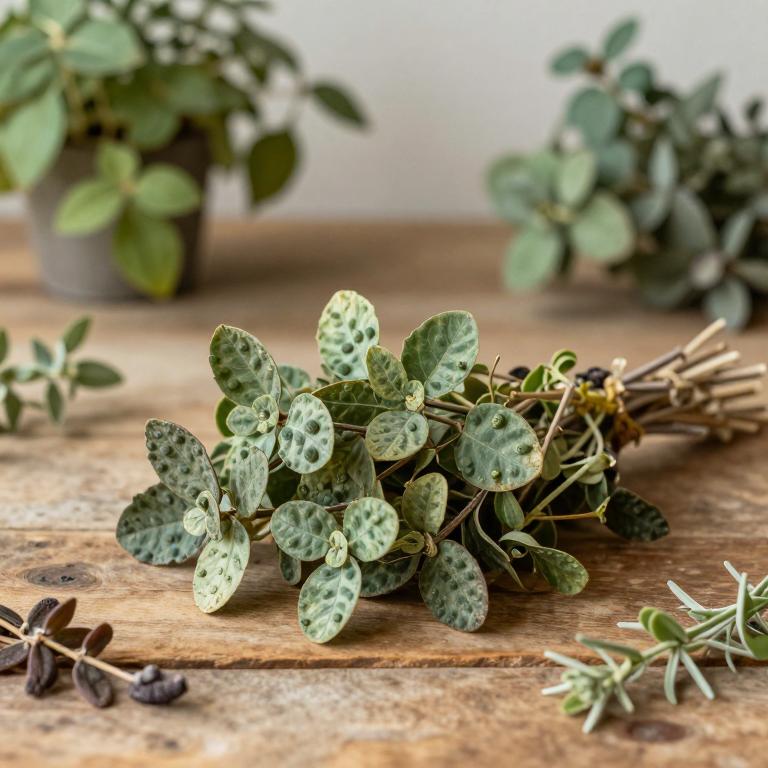
needle-leaf wax plant, scientifically known as Peperomia galioides, is a charming perennial native to the rocky terrains of East Africa. Characterized by its succulent, pointed leaves and compact growth, this resilient species is valued in traditional medicine for its diverse therapeutic properties and unique botanical beauty in ornamental collections.
- Family
- Piperaceae
- Native range
- Northern America
- Parts used
- Leaf · Stem
- Common names
- Needle-Leaf Wax Plant
- Scientific synonyms
- Peperomia Redondoana · Peperomia Okarana · 38 more
Names and Synonyms
Common Names
- needle-leaf wax plant
Scientific Names
Accepted name
Peperomia galioidesSynonyms
- Peperomia redondoana
- Peperomia okarana
- Peperomia novella
- Peperomia oblongifolia
- Peperomia galioides var. aprica
- Peperomia ceapanana
- Peperomia galioides var. umbrosa
- Peperomia chillonensis
- Peperomia gallitoensis
- Piper suaveolens
- Peperomia galiifolia
- Peperomia galioides var. aromatica
- Peperomia garrapatilla
- Peperomia galioides var. saxicola
- Peperomia granata
- Peperomia galioides var. nigropunctulata
- Peperomia artatiflora
- Peperomia galioides var. menkeana
- Peperomia guayabillosana
- Peperomia galioides var. longifolia
- Peperomia anisophylla
- Peperomia amphoterophylla var. glutineofructa
- Peperomia agapatensis
- Peperomia brachyiula
- Peperomia distractiflora
- Peperomia san-buenaventurana
- Peperomia subcorymbosa
- Peperomia trullifolia
- Piper galioides
- Peperomia menkeana
- Peperomia medianiana
- Peperomia jamesonii
- Peperomia muscisedens
- Peperomia dendroides
- Peperomia dendromorphis
- Peperomia longispica
- Peperomia inaequalifolia var. galioides
- Peperomia amphoterophylla
- Peperomia apoda
- Peperomia suaveolens
Regional and Traditional Names
Spanish:
- congona
Sources: Wikidata, Catalogue of Life
Taxonomical Classification
This plant belongs to the kingdom Plantae and the phylum Streptophyta, falling under the class Equisetopsida and subclass Magnoliidae. Within the order Piperales, it is classified under the family Piperaceae. Finally, it is identified by the genus Peperomia, specifically as the species Peperomia galioides.
| Rank | Classification |
|---|---|
| Kingdom | Plantae |
| Phylum | Streptophyta |
| Class | Equisetopsida |
| Subclass | Magnoliidae |
| Order | Piperales |
| Family | Piperaceae |
| Genus | Peperomia |
Sources: The World Checklist of Vascular Plants (WCVP)
Distribution
This plant exhibits a widespread presence across various regions within the country of Mexico. It can be found growing throughout the central part of the nation, specifically within Mexico Central. Its distribution also extends into the northeastern territories, encompassing Mexico Northeast. Furthermore, the species is established in the coastal and interior areas of Mexico Gulf. Finally, its geographical range reaches the western portions of the country, including both Mexico Northwest and Mexico Southwest.
| Region | Area |
|---|---|
| Mexico | Mexico Central |
| Mexico | Mexico Northeast |
| Mexico | Mexico Gulf |
| Mexico | Mexico Northwest |
| Mexico | Mexico Southwest |
| Mexico | Mexico Southeast |
| Central America | Costa Rica |
| Central America | El Salvador |
| Central America | Guatemala |
| Central America | Honduras |
Sources: The World Checklist of Vascular Plants (WCVP)
Botanical Identification
Ecology
The ecology of Peperomia galioides is characterized by its presence across diverse and specialized ecosystems, ranging from the high-altitude specialized environments of Campo de Altitude and Campo Rupestre to more humid and seasonally variable biomes such as Floresta Estacional Semidecidual and Floresta Ombrófila (Pluvial). This species demonstrates a significant vertical distribution within its landscape, occupying an elevational range that begins at 700 m AMSL and reaches a maximum altitude of 3700 m AMSL. On average, the plant thrives at a mean elevation of approximately 2000 m AMSL, reflecting its ability to adapt to both montane and forest habitats across varying topographical gradients.
- Elevational range max:
- 3700 m AMSL
- Elevational range mean:
- 2000 m AMSL
- Elevational range min:
- 700 m AMSL
- Habitat :
- Campo de Altitude, Campo Rupestre, Floresta Estacional Semidecidual, Floresta Ombrófila (= Floresta Pluvial)
Life history
The life history of Peperomia galioides is characterized by its classification as a perennial plant, allowing it to persist through multiple growing seasons within its ecological niche. As a lithophyte, it has specialized to complete its life cycle by growing directly on or in the crevices of rocks, where it manages moisture and nutrient uptake in often challenging, stony substrates. This specialized life form enables the species to establish stable populations in rocky environments, maintaining its presence over long durations through its perennial nature.
- Life form :
- lithophyte
- Lifecycle :
- perennial
Morphology
The morphology of Peperomia galioides is characterized by its growth form as a non-woody herb. It functions as an independent organism, lacking any parasitic tendencies, and is classified as a terrestrial plant rather than an aquatic, semiaquatic, or epiphytic species. Although it possesses a self-supporting structural habit, it does not exhibit climbing characteristics such as a liana or vine, instead maintaining a stable, upright presence as a forb. Its physical structure is entirely non-woody, distinguishing it from shrubs or trees.
- Aquatic :
- terrestrial
- Climber :
- self-supporting
- Epiphyte :
- terrestrial
- Growth form :
- herb
- Parasite :
- independent
- Woodiness :
- non-woody
Reproduction
Reproduction in Peperomia galioides is characterized by a diverse range of dispersal strategies that ensure its propagation across varied environments. The plant utilizes a complex dispersal syndrome that incorporates multiple mechanisms, including anemochorous, zoochorous, autochorous, hydrochorous, and unspecialized methods. While its primary dispersal syndrome is identified as zoochorous, meaning seeds or propagules are moved by animals, it simultaneously benefits from wind (anemochory), water (hydrochory), and self-dispersal (autochory) to maximize its colonizing potential. This multi-modal approach allows the species to spread through both specialized biological vectors and general environmental forces, facilitating its survival in fluctuating habitats.
- Dispersal syndrome :
- zoochorous
Sources: Global Inventory of Floras and Traits (GIFT)
Plant Parts
Peperomia galioides has 3 reported plant parts identified across 5 scientific publications and several other databases that are studied for medicinal purposes. The most consistently reported plant part include leaf, stem, flower.
| Plant part | Supporting sources | Consensus |
|---|---|---|
| Leaf | 2 supporting sources | ★☆☆☆☆ |
| Stem | 2 supporting sources | ★☆☆☆☆ |
| Flower | 1 supporting sources | ★☆☆☆☆ |
Leaf
- Natural product research
- Journal of ethnopharmacology
Stem
- Natural product research
- Journal of ethnopharmacology
Flower
- Natural product research
Chemicals
Peperomia galioides has 7 reported phytochemicals identified across 5 scientific publications and several other databases. The most consistently reported chemicals include Grifolic acid, Grifolin, (+)-epi-alpha-bisabolol, Hydropiperone, Piperogalin.
| Chemical | Supporting sources | Consensus |
|---|---|---|
| Grifolic acid | 2 supporting sources | ★☆☆☆☆ |
| Grifolin | 2 supporting sources | ★☆☆☆☆ |
| (+)-epi-alpha-bisabolol | 1 supporting sources | ★☆☆☆☆ |
| Hydropiperone | 1 supporting sources | ★☆☆☆☆ |
| Piperogalin | 1 supporting sources | ★☆☆☆☆ |
| Piperogalone | 1 supporting sources | ★☆☆☆☆ |
| epi-alpha-Bisabolol | 1 supporting sources | ★☆☆☆☆ |
Grifolic acid
- Dr. Duke
- Journal of ethnopharmacology
Grifolin
- Dr. Duke
- Journal of ethnopharmacology
(+)-epi-alpha-bisabolol
- Journal of natural products
Hydropiperone
- Dr. Duke
Piperogalin
- Dr. Duke
Piperogalone
- Dr. Duke
epi-alpha-Bisabolol
- Journal of natural products
Activities
Peperomia galioides has 1 reported activities identified across 5 scientific publications and several other databases. The most consistently reported activities include Sedative.
| Activity | Supporting sources | Consensus |
|---|---|---|
| Sedative | 1 supporting sources | ★☆☆☆☆ |
Sedative
- Natural product research
Conditions
Peperomia galioides has 7 reported investigations on conditions identified across 5 scientific publications and several other databases. The most consistently reported conditions include Staphylococcus aureus, Staphylococcus epidermidis, gastric ulcers, inflammation, sedative.
| Condition | Supporting sources | Consensus |
|---|---|---|
| Staphylococcus aureus | 1 supporting sources | ★☆☆☆☆ |
| Staphylococcus epidermidis | 1 supporting sources | ★☆☆☆☆ |
| Gastric ulcers | 1 supporting sources | ★☆☆☆☆ |
| Inflammation | 1 supporting sources | ★☆☆☆☆ |
| Sedative | 1 supporting sources | ★☆☆☆☆ |
| Wound | 1 supporting sources | ★☆☆☆☆ |
| Wound-healing | 1 supporting sources | ★☆☆☆☆ |
Staphylococcus aureus
- Journal of ethnopharmacology
Staphylococcus epidermidis
- Journal of ethnopharmacology
Gastric ulcers
- Journal of ethnopharmacology
Inflammation
- Natural product research
Sedative
- Natural product research
Wound
- Journal of natural products
Wound-healing
- Journal of ethnopharmacology
Preparations
Peperomia galioides has 2 reported preparations identified across 5 scientific publications and several other databases. The most consistently reported preparations include ethanol extract, extract.
| Preparation | Supporting sources | Consensus |
|---|---|---|
| Ethanol extract | 1 supporting sources | ★☆☆☆☆ |
| Extract | 1 supporting sources | ★☆☆☆☆ |
Ethanol extract
- Journal of natural products
Extract
- Natural product research