Christ's-eye
Pentanema oculus-christi · Accepted scientific name
Scientific literature: Very Sparse (3 studies) · ★☆☆☆☆
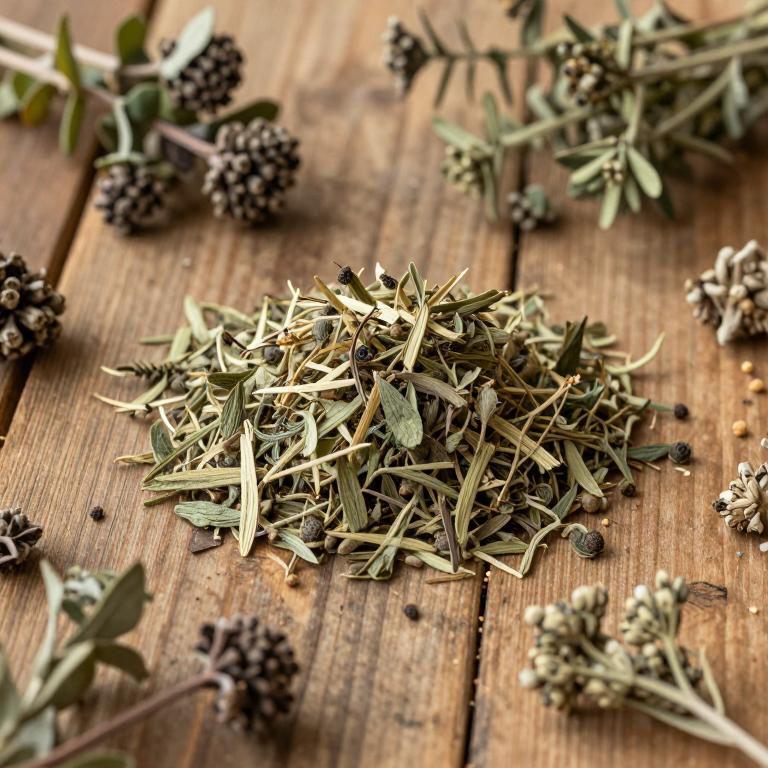
Christ's-eye, scientifically known as Pentanema oculus-christi, is a rare medicinal botanical celebrated for its striking, eye-like blooms. Renowned in traditional healing practices, this plant offers potent therapeutic properties. Understanding its unique phytochemical profile is essential for exploring its potential applications in modern pharmacology and holistic wellness treatments.
Names and Synonyms
Common Names
- Christ's-eye
- Hairy Fleabane
- Christ's Eye
Scientific Names
Accepted name
Pentanema oculus-christiSynonyms
- Inula sericea
- Helenium oculus-christi
- Inula oculus
- Aster oculus-christi
- Inula oculus-christi
- Inula campestris
- Helenium kanitzii
Regional and Traditional Names
German:
- Christusauge
- Christusaugen-Alant
French:
- Inule oeil du Christ
Sources: Wikidata, Catalogue of Life
Taxonomical Classification
This plant belongs to the kingdom Plantae and is classified under the phylum Streptophyta within the class Equisetopsida. As a member of the subclass Magnoliidae and order Asterales, it is further organized into the family Asteraceae. Ultimately, its taxonomic identity is defined by its placement within the genus Pentanema.
| Rank | Classification |
|---|---|
| Kingdom | Plantae |
| Phylum | Streptophyta |
| Class | Equisetopsida |
| Subclass | Magnoliidae |
| Order | Asterales |
| Family | Asteraceae |
| Genus | Pentanema |
Sources: The World Checklist of Vascular Plants (WCVP)
Distribution
This plant exhibits a specific geographical range that spans across several European regions. In Northern Europe, its presence is noted within the borders of Great Britain. Moving into Middle Europe, the species can be found inhabiting the landscapes of Austria. It also maintains a distribution across the territories of Germany and Hungary. Furthermore, the plant is documented to grow within the Czechia-Slovakia region.
| Region | Area |
|---|---|
| Northern Europe | Great Britain |
| Middle Europe | Austria |
| Middle Europe | Czechia-Slovakia |
| Middle Europe | Germany |
| Middle Europe | Hungary |
| Southeastern Europe | Albania |
| Southeastern Europe | Bulgaria |
| Southeastern Europe | Greece |
| Southeastern Europe | Romania |
| Southeastern Europe | Türkiye-in-Europe |
Sources: The World Checklist of Vascular Plants (WCVP)
Botanical Identification
Ecology
The ecology of Pentaemum oculus-christi is defined by its preference for diverse high-altitude terrains, ranging from montane meadows and shrubberies to rugged, stony places. This medicinal plant thrives within a specific altitudinal gradient, occurring at elevations starting from a minimum of 1100 m AMSL and extending up to a maximum of 2600 m AMSL. Its ability to colonize both vegetated meadowlands and more austere, rocky environments suggests an adaptation to varied soil compositions and varying levels of moisture found across these mountainous landscapes.
- Elevational range max:
- 2600 m AMSL
- Elevational range min:
- 1100 m AMSL
- Habitat :
- meadows, mountains, shrubberies, stony places
Life history
The life history of Pentema oculus-christi is characterized by its classification as a perennial organism, meaning it maintains its biological functions and structures over multiple growing seasons rather than completing its cycle in a single year. In terms of its morphological survival strategy and growth habit, the plant is identified as a hemicryophyte. This life form indicates that its perennable buds are located at or just below the soil surface, protected by the remains of previous seasons' foliage or the substrate itself, allowing it to endure unfavorable environmental conditions before resuming active growth in subsequent cycles.
- Life form :
- hemicryptophyte
- Lifecycle :
- perennial
Morphology
The morphology of Pentaema oculus-christi is characterized by a growth form classified as a herb, exhibiting a non-woody structure throughout its development. This plant displays a versatile ecological adaptation, capable of thriving in aquatic, semiaquatic, and terrestrial habitats. In terms of stature, it is a relatively low-growing species, with a plant height that typically ranges from a minimum of 0.2 m to a maximum of 0.5 m.
- Aquatic :
- terrestrial
- Growth form :
- herb
- Plant height max:
- 0.5 m
- Plant height min:
- 0.2 m
- Woodiness :
- non-woody
Physiology
The physiology of Pentaema oculus-christi is characterized by a standard C3 photosynthetic pathway, which dictates its metabolic processes and carbon fixation strategies. In this pathway, the initial fixation of atmospheric carbon dioxide occurs via the enzyme RuBisCO, resulting in the formation of a three-carbon compound, 3-phosphoglycerate. This reliance on the C3 cycle influences the plant's resource management, particularly regarding its transpiration rates and water-use efficiency, as it lacks the specialized anatomical adaptations found in C4 or CAM species. Consequently, its physiological performance and carbon assimilation rates are closely tied to environmental variables such as light intensity, temperature, and moisture availability, which directly impact the efficiency of its photosynthetic machinery.
- Photosynthetic pathway :
- C3
Reproduction
The reproduction of Pentaema oculus-christi is closely tied to its seasonal flowering cycle, which serves as the primary stage for its reproductive processes. The plant's flowering period is specifically timed within the warmer months, with the flowering start occurring in June. This reproductive phase continues through the mid-summer season until the flowering end is reached in August. While the specific timing of these biological milestones can be variable depending on environmental conditions, the plant follows this general seasonal progression to facilitate its life cycle.
- Flowering time :
- Jun
- Flowering time :
- Aug
Sources: Global Inventory of Floras and Traits (GIFT)
Activities
Pentanema oculus-christi has 2 reported activities identified across 0 scientific publications and several other databases. The most consistently reported activities include Antioxidant, Antimicrobial.
| Activity | Supporting sources | Consensus |
|---|---|---|
| Antioxidant | 2 supporting sources | ★☆☆☆☆ |
| Antimicrobial | 1 supporting sources | ★☆☆☆☆ |
Antioxidant
- Bioprocess and biosystems engineering
- Membranes
Antimicrobial
- Bioprocess and biosystems engineering
Preparations
Pentanema oculus-christi has 3 reported preparations identified across 0 scientific publications and several other databases. The most consistently reported preparations include PP extracts, flavonoid glycosides (FGs), phenolic acids (PAs).
| Preparation | Supporting sources | Consensus |
|---|---|---|
| Pp extracts | 1 supporting sources | ★☆☆☆☆ |
| Flavonoid glycosides (fgs) | 1 supporting sources | ★☆☆☆☆ |
| Phenolic acids (pas) | 1 supporting sources | ★☆☆☆☆ |
Pp extracts
- Molecules (Basel, Switzerland)
Flavonoid glycosides (fgs)
- Molecules (Basel, Switzerland)
Phenolic acids (pas)
- Molecules (Basel, Switzerland)