Mountain Inula
Pentanema montanum · Accepted scientific name
Scientific literature: Very Sparse (1 studies) · ★☆☆☆☆
Mountain Inula, scientifically known as Pentanema montanum, is a resilient medicinal herb native to high-altitude ecosystems. Renowned for its potent bioactive compounds, this plant has long been utilized in traditional healing to alleviate inflammation and support respiratory health. Its unique chemical profile offers promising potential for modern pharmacological research.
- Family
- Asteraceae
- Native range
- Europe
- Parts used
- Not available
- Common names
- Mountain Inula · Berg-Alant
- Scientific synonyms
- Pulicaria Calycina · Inula Montana Var. Lanata · 2 more
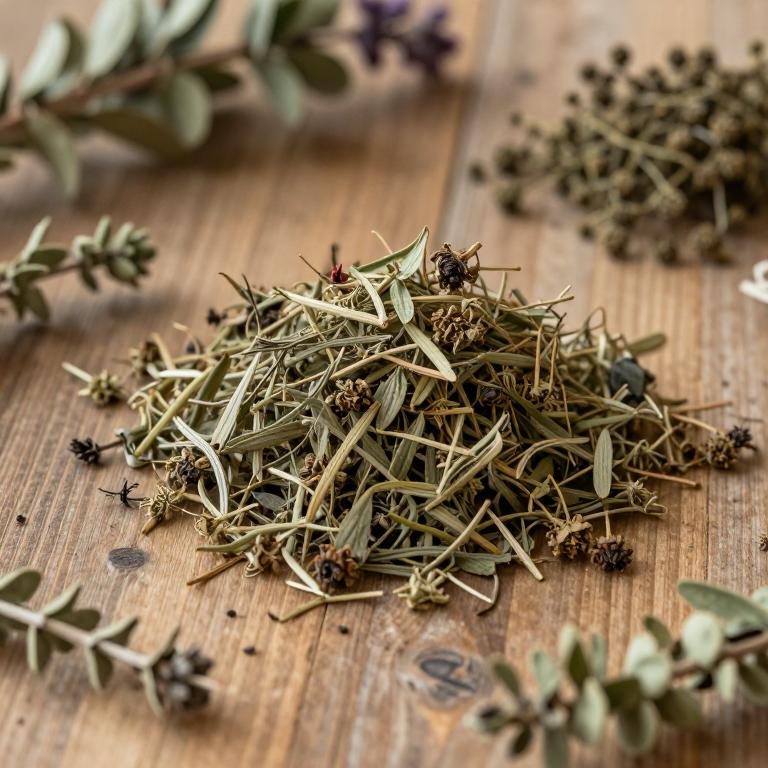
Names and Synonyms
Common Names
- Mountain Inula
- Berg-Alant
Scientific Names
Accepted name
Pentanema montanumSynonyms
- Pulicaria calycina
- Inula montana var. lanata
- Inula calycina
- Aster montanus
Regional and Traditional Names
Spanish:
- árnica pulguera
French:
- Aunée des montagnes
- Inule des montagnes
Sources: Wikidata, Catalogue of Life
Taxonomical Classification
This plant belongs to the kingdom Plantae and the phylum Streptophyta, placing it within the class Equisetopsida and subclass Magnoliidae. It is further classified under the order Asterales and the family Asteraceae. Finally, its specific taxonomic designation falls under the genus Pentanema.
| Rank | Classification |
|---|---|
| Kingdom | Plantae |
| Phylum | Streptophyta |
| Class | Equisetopsida |
| Subclass | Magnoliidae |
| Order | Asterales |
| Family | Asteraceae |
| Genus | Pentanema |
Sources: The World Checklist of Vascular Plants (WCVP)
Distribution
This plant exhibits a diverse presence across several regions of the European continent. In Middle Europe, its range extends into the mountainous landscapes of Switzerland. Moving toward the western coast, it can be found throughout Southwestern Europe, specifically in France, Portugal, and Spain. Additionally, the species is distributed across Southeastern Europe, where it inhabits parts of Italy. Together, these locations highlight a broad geographical footprint spanning from the Alps to the Mediterranean.
| Region | Area |
|---|---|
| Middle Europe | Switzerland |
| Southwestern Europe | France |
| Southwestern Europe | Portugal |
| Southwestern Europe | Spain |
| Southeastern Europe | Italy |
| Southeastern Europe | Sicilia |
| Northern Africa | Algeria |
| Northern Africa | Morocco |
| Northern Africa | Tunisia |
Sources: The World Checklist of Vascular Plants (WCVP)
Botanical Identification
Life history
The life history of Pentaema montanum is characterized by a perennial lifecycle, allowing the plant to persist across multiple growing seasons. In terms of its structural development and survival strategy, it is classified as a hemicryptophyte, meaning its perennating buds are located at or just below the soil surface, protected by leaf litter or soil during unfavorable environmental conditions.
- Life form :
- hemicryptophyte
- Lifecycle :
- perennial
Morphology
The morphology of Pentanema montanum is characterized by its specific growth habit and ecological positioning. It functions as a self-supporting climber, utilizing its structural development to ascend without the need for external host support. In terms of its nutritional strategy, the plant is independent, meaning it does not rely on other organisms for sustenance as a parasite would. Furthermore, despite its climbing nature, it is a terrestrial plant rather than an epiphyte, establishing its primary root system and growth within the soil of its natural habitat.
- Climber :
- self-supporting
- Epiphyte :
- terrestrial
- Parasite :
- independent
Sources: Global Inventory of Floras and Traits (GIFT)
Activities
Pentanema montanum has 1 reported activities identified across 0 scientific publications and several other databases. The most consistently reported activities include Antioxidant.
| Activity | Supporting sources | Consensus |
|---|---|---|
| Antioxidant | 1 supporting sources | ★☆☆☆☆ |
Antioxidant
- Molecules (Basel, Switzerland)