Peniocereus greggii
Peniocereus greggii · Accepted scientific name
Scientific literature: Very Sparse (1 studies) · ★☆☆☆☆
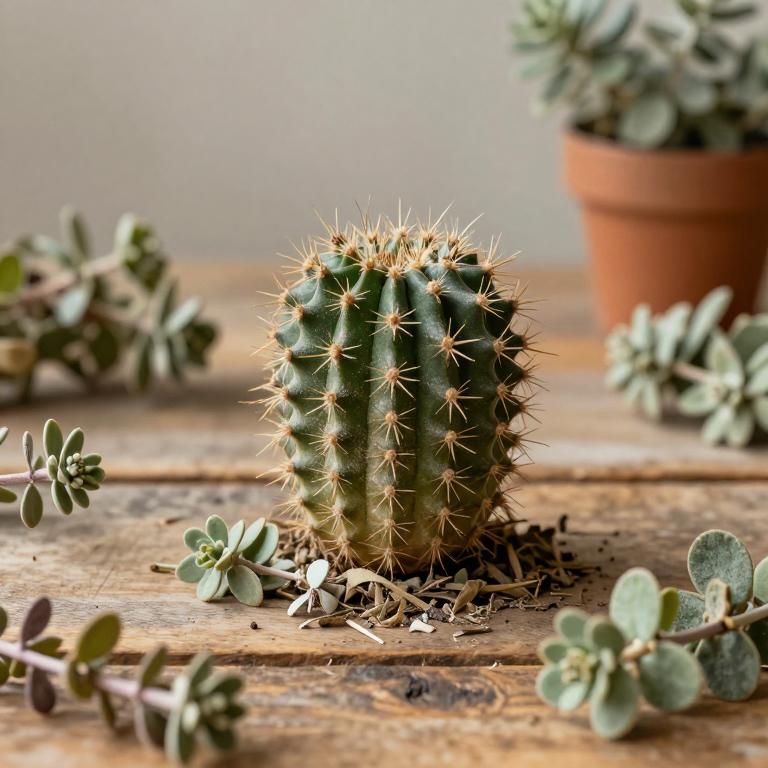
Peniocereus greggii, scientifically known as Peniocereus greggii, is a rare, nocturnal cactus native to the Sonoran Desert. Known for its dramatic, night-blooming flowers, this elusive plant holds significant ethnobotanical value. Its unique life cycle and specialized adaptations make it a fascinating subject for both botanical study and traditional medicine.
- Family
- Not available
- Native range
- Northern America
- Parts used
- Root
- Common names
- Not available
- Scientific synonyms
- Not available
Names and Synonyms
Scientific Names
Accepted name
Peniocereus greggiiDistribution
This plant exhibits a widespread distribution across several key regions in North America. In the Southwestern United States, it can be found growing within the state of Arizona. Its range extends into the South-Central United States, specifically covering parts of New Mexico and Texas. Moving into Mexico, the species is present throughout the northeastern territories. Additionally, the plant is distributed across the northwestern regions of Mexico.
| Region | Area |
|---|---|
| Southwestern U.S.A. | Arizona |
| South-Central U.S.A. | New Mexico |
| South-Central U.S.A. | Texas |
| Mexico | Mexico Northeast |
| Mexico | Mexico Northwest |
Sources: The World Checklist of Vascular Plants (WCVP)
Botanical Identification
Life history
The life history of Peniocereus greggii is characterized by a perennial lifecycle, allowing the plant to persist through multiple growing seasons within its arid habitat. As a long-lived succulent, it does not follow the rapid turnover of annuals or the two-year cycle of biennials, but rather maintains a continuous presence by utilizing stored moisture within its specialized stem structures. This perennial nature enables the plant to endure prolonged periods of drought, waiting for infrequent rainfall to trigger metabolic activity and reproductive phases. Throughout its extended lifespan, the plant undergoes seasonal cycles of growth and dormancy, strategically managing its energy reserves to support its complex reproductive processes, including the production of nocturnal blooms and subsequent seed development.
- Lifecycle :
- perennial
Morphology
The morphology of Peniocereus greggii is characterized by a woody structure that functions as a self-supporting growth form. Although it exhibits characteristics typical of a shrub, its development is primarily terrestrial rather than aquatic or semiaquatic, and it does not function as an epiphyte or a climber, such as a liana or vine. The plant is an independent organism, meaning it does not operate as a parasite, and its structural integrity is maintained through its robust, woody tissue.
- Aquatic :
- terrestrial
- Climber :
- self-supporting
- Epiphyte :
- terrestrial
- Growth form :
- shrub
- Parasite :
- independent
- Woodiness :
- woody
Sources: Global Inventory of Floras and Traits (GIFT)
Plant Parts
Peniocereus greggii has 1 reported plant parts identified across 1 scientific publications and several other databases that are studied for medicinal purposes. The most consistently reported plant part include root.
| Plant part | Supporting sources | Consensus |
|---|---|---|
| Root | 1 supporting sources | ★☆☆☆☆ |
Root
- ACS omega
Preparations
Peniocereus greggii has 2 reported preparations identified across 1 scientific publications and several other databases. The most consistently reported preparations include alkalinized chloroform extract, decoction.
| Preparation | Supporting sources | Consensus |
|---|---|---|
| Alkalinized chloroform extract | 1 supporting sources | ★☆☆☆☆ |
| Decoction | 1 supporting sources | ★☆☆☆☆ |
Alkalinized chloroform extract
- ACS omega
Decoction
- ACS omega