Weeping wattle
Peltophorum africanum · Accepted scientific name
Scientific literature: Very Sparse (46 studies) · ★☆☆☆☆
Weeping wattle, scientifically known as Peltophorum africanum, is a striking, fast-growing tree prized for its vibrant yellow blooms. Beyond its ornamental beauty, it holds significant ethnobotanical value. Various parts of the plant are utilized in traditional medicine to treat ailments ranging from skin infections to inflammatory conditions and digestive issues.
- Family
- Fabaceae
- Native range
- Africa
- Parts used
- Leaf · Stem
- Common names
- African Black Wattle · African Blackwood · 16 more
- Scientific synonyms
- Brasilettia Africana · Baryxylum Africanum
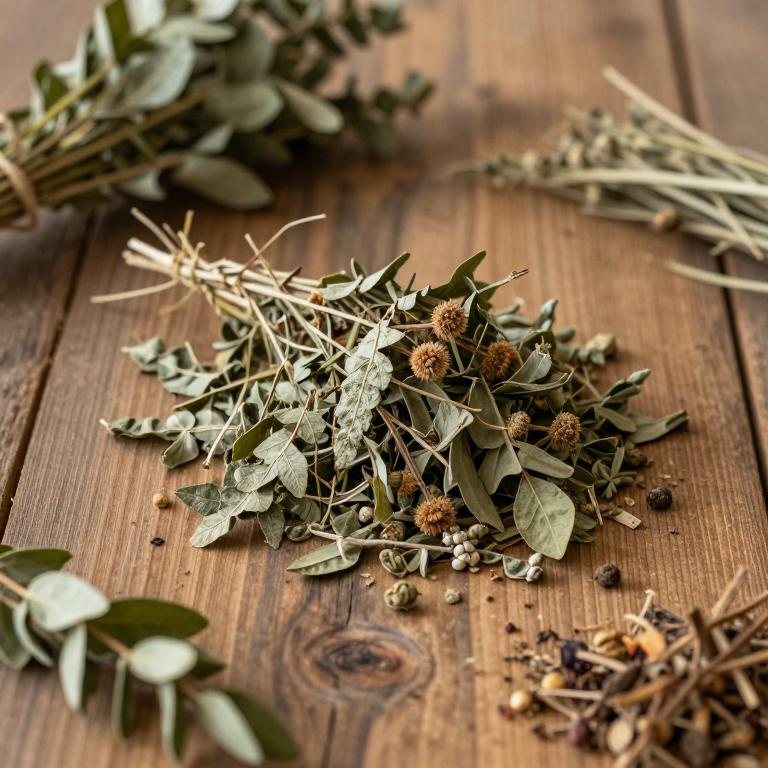
Names and Synonyms
Common Names
- African Black Wattle
- African Blackwood
- African Wattle
- Black Wattle
- Natal Wattle
- Rhodesian Black Wattle
- Rhodesian Wattle
- Weeping Wattle
- African-wattle
- African Weeping-Wattle
- African-Blackwattle
- False Black Wattle
- False-Blackwattle
- Rhodesian-Wattle
- The Rhodesian Wattle
- Transvaal Black Wattle
- Weeping-Wattle
- Rhodeian wattle
Scientific Names
Accepted name
Peltophorum africanumSynonyms
- Brasilettia africana
- Baryxylum africanum
Regional and Traditional Names
German:
- Afrikanische Trauerakazie
Sources: Wikidata, Catalogue of Life
Taxonomical Classification
This plant belongs to the kingdom Plantae and the phylum Streptophyta, falling under the class Equisetopsida and subclass Magnoliidae. Within the order Fabales, it is a member of the Fabaceae family. Its taxonomic classification is completed by its placement in the genus Peltophorum.
| Rank | Classification |
|---|---|
| Kingdom | Plantae |
| Phylum | Streptophyta |
| Class | Equisetopsida |
| Subclass | Magnoliidae |
| Order | Fabales |
| Family | Fabaceae |
| Genus | Peltophorum |
Sources: The World Checklist of Vascular Plants (WCVP)
Distribution
This plant exhibits a broad geographical distribution across various tropical regions of the African continent. In West Tropical Africa, it can be found specifically within the borders of Nigeria. Its range extends into West-Central Tropical Africa, where it inhabits the Democratic Republic of the Congo. Moving toward the east, the species is documented in the East Tropical Africa regions of both Kenya and Tanzania. Finally, its distribution reaches into South Tropical Africa, notably within the nation of Angola.
| Region | Area |
|---|---|
| West Tropical Africa | Nigeria |
| West-Central Tropical Africa | DR Congo |
| East Tropical Africa | Kenya |
| East Tropical Africa | Tanzania |
| South Tropical Africa | Angola |
| South Tropical Africa | Malawi |
| South Tropical Africa | Mozambique |
| South Tropical Africa | Zambia |
| South Tropical Africa | Zimbabwe |
| Southern Africa | Botswana |
Sources: The World Checklist of Vascular Plants (WCVP)
Botanical Identification
Ecology
The ecology of Peltophorum africanum is characterized by its adaptability to diverse topographical settings, spanning a broad altitudinal gradient. It is found across an elevational range that begins as low as 60 m AMSL and extends to a maximum of 1950 m AMSL. This wide vertical distribution allows the species to inhabit various ecological niches, from lowland coastal or riverine areas to more temperate montane environments. Its ability to thrive across these varying heights suggests a robust tolerance for different temperature regimes and atmospheric pressures, enabling it to integrate into multiple forest types and woodland ecosystems within its natural range.
- Elevational range max:
- 1950 m AMSL
- Elevational range min:
- 60 m AMSL
Life history
The life history of Peltophorum africanum is characterized by its status as a perennial species, allowing it to establish a long-term presence within its ecosystem. As it progresses through its life cycle, the plant transitions from an initial seedling stage through several years of vegetative growth, eventually reaching maturity where it can produce prolific yellow blooms. Unlike annuals or biennials that complete their cycle in a single or double season, this perennial maintains its structural integrity and reproductive capacity over many years, often growing into a large, spreading tree. Its longevity is supported by a robust root system and a continuous cycle of growth and seasonal flowering, which enables it to persist and adapt to its environment across multiple life stages.
- Lifecycle :
- perennial
Morphology
The morphology of Peltophorum africanum is characterized by a woody growth form, functioning as a self-supporting tree rather than a climber or a vine. As a terrestrial species, it does not exhibit aquatic, semiaquatic, or epiphytic lifestyles, maintaining an independent existence without being a parasite. The plant's stature is highly variable, with heights ranging from a minimum of 0.5 m to a maximum of 18 m, though it reaches a mean height of approximately 8 m.
- Aquatic :
- terrestrial
- Climber :
- self-supporting
- Epiphyte :
- terrestrial
- Growth form :
- tree
- Parasite :
- independent
- Plant height max:
- 18 m
- Plant height mean:
- 8 m
- Plant height min:
- 0.5 m
- Woodiness :
- woody
Physiology
The physiology of Peltophorum africanum is characterized by its specific metabolic and nutrient-acquisition strategies. The plant utilizes the C3 photosynthetic pathway, a common mechanism in many woody tropical species where carbon fixation occurs primarily through the enzyme RuBisCO during the Calvin cycle. In terms of its relationship with soil nutrients, Peltophorum africanum is not a nitrogen fixer, meaning it lacks the symbiotic relationship with rhizobia or actinomycetes required to convert atmospheric nitrogen into a usable form, and instead relies on the uptake of available nitrogen from the soil through its root system.
- Nitrogen fixer :
- no
- Photosynthetic pathway :
- C3
Reproduction
The reproduction of Peltophorum africanum is driven by a biotic pollination syndrome, specifically relying on biological agents to facilitate fertilization. Within this system, the plant utilizes insect-mediated pollination, with bees serving as a primary pollinator type. Following successful pollination, the plant produces seeds that exhibit a notable range of variability in size. The individual seed mass ranges from a minimum of 0.06953 g to a maximum of 0.30303 g, with the population maintaining an average seed mass of 0.202775 g.
- Pollination syndrome :
- insect
- Pollination syndrome :
- bee
- Pollination syndrome :
- biotic
- Seed mass max:
- 0.30303 g
- Seed mass mean:
- 0.202775 g
- Seed mass min:
- 0.06953 g
Sources: Global Inventory of Floras and Traits (GIFT)
Plant Parts
Peltophorum africanum has 3 reported plant parts identified across 5 scientific publications and several other databases that are studied for medicinal purposes. The most consistently reported plant part include leaf, stem, root.
| Plant part | Supporting sources | Consensus |
|---|---|---|
| Leaf | 2 supporting sources | ★☆☆☆☆ |
| Stem | 2 supporting sources | ★☆☆☆☆ |
| Root | 1 supporting sources | ★☆☆☆☆ |
Leaf
- Molecules (Basel, Switzerland)
- Journal of evidence-based complementary & alternative medicine
Stem
- The Tohoku journal of experimental medicine
- Journal of ethnopharmacology
Root
- Journal of ethnopharmacology
Chemicals
Peltophorum africanum has 6 reported phytochemicals identified across 5 scientific publications and several other databases. The most consistently reported chemicals include bergenin, (+)-catechin, 6-Hydroxydelphinidin 3-glucoside, CATECHIN, betulinic acid.
| Chemical | Supporting sources | Consensus |
|---|---|---|
| bergenin | 2 supporting sources | ★☆☆☆☆ |
| (+)-catechin | 1 supporting sources | ★☆☆☆☆ |
| 6-Hydroxydelphinidin 3-glucoside | 1 supporting sources | ★☆☆☆☆ |
| CATECHIN | 1 supporting sources | ★☆☆☆☆ |
| betulinic acid | 1 supporting sources | ★☆☆☆☆ |
| flavonols | 1 supporting sources | ★☆☆☆☆ |
bergenin
- The Tohoku journal of experimental medicine
- Journal of ethnopharmacology
(+)-catechin
- The Tohoku journal of experimental medicine
6-Hydroxydelphinidin 3-glucoside
- BMC complementary medicine and therapies
CATECHIN
- Journal of ethnopharmacology
betulinic acid
- The Tohoku journal of experimental medicine
flavonols
- Plants (Basel, Switzerland)
Activities
Peltophorum africanum has 8 reported activities identified across 5 scientific publications and several other databases. The most consistently reported activities include Antimicrobial, Antioxidant, Antibacterial, Anticancer, Antidiabetic.
| Activity | Supporting sources | Consensus |
|---|---|---|
| Antimicrobial | 2 supporting sources | ★☆☆☆☆ |
| Antioxidant | 2 supporting sources | ★☆☆☆☆ |
| Antibacterial | 1 supporting sources | ★☆☆☆☆ |
| Anticancer | 1 supporting sources | ★☆☆☆☆ |
| Antidiabetic | 1 supporting sources | ★☆☆☆☆ |
| Antiproliferative | 1 supporting sources | ★☆☆☆☆ |
| Antiviral | 1 supporting sources | ★☆☆☆☆ |
| Repellent | 1 supporting sources | ★☆☆☆☆ |
Antimicrobial
- BMC complementary medicine and therapies
- Plants (Basel, Switzerland)
Antioxidant
- Letters in applied microbiology
- Plants (Basel, Switzerland)
Antibacterial
- Letters in applied microbiology
Anticancer
- Plants (Basel, Switzerland)
Antidiabetic
- Plants (Basel, Switzerland)
Antiproliferative
- Iranian journal of pharmaceutical research : IJPR
Antiviral
- Journal of evidence-based complementary & alternative medicine
Repellent
- PloS one
Conditions
Peltophorum africanum has 19 reported investigations on conditions identified across 5 scientific publications and several other databases. The most consistently reported conditions include Enterococcus faecalis, Escherichia coli, HIV-1, Klebsiella pneumoniae, Shigella flexneri.
| Condition | Supporting sources | Consensus |
|---|---|---|
| Enterococcus faecalis | 1 supporting sources | ★☆☆☆☆ |
| Escherichia coli | 1 supporting sources | ★☆☆☆☆ |
| Hiv-1 | 1 supporting sources | ★☆☆☆☆ |
| Klebsiella pneumoniae | 1 supporting sources | ★☆☆☆☆ |
| Shigella flexneri | 1 supporting sources | ★☆☆☆☆ |
| Staphylococcus aureus | 1 supporting sources | ★☆☆☆☆ |
| Ureaplasma urealyticum | 1 supporting sources | ★☆☆☆☆ |
| Antiviral | 1 supporting sources | ★☆☆☆☆ |
| Arthritis | 1 supporting sources | ★☆☆☆☆ |
| Dysentery | 1 supporting sources | ★☆☆☆☆ |
Enterococcus faecalis
- Letters in applied microbiology
Escherichia coli
- Letters in applied microbiology
Hiv-1
- The Tohoku journal of experimental medicine
Klebsiella pneumoniae
- Letters in applied microbiology
Shigella flexneri
- BMC complementary medicine and therapies
Staphylococcus aureus
- Letters in applied microbiology
Ureaplasma urealyticum
- Journal of ethnopharmacology
Antiviral
- Journal of evidence-based complementary & alternative medicine
Arthritis
- BMC complementary and alternative medicine
Dysentery
- The Tohoku journal of experimental medicine
Preparations
Peltophorum africanum has 15 reported preparations identified across 5 scientific publications and several other databases. The most consistently reported preparations include acetone extracts, Catechin, Crude methanol and water extracts, Isolated Compounds, Semipurified Fraction.
| Preparation | Supporting sources | Consensus |
|---|---|---|
| Acetone extracts | 2 supporting sources | ★☆☆☆☆ |
| Catechin | 1 supporting sources | ★☆☆☆☆ |
| Crude methanol and water extracts | 1 supporting sources | ★☆☆☆☆ |
| Isolated compounds | 1 supporting sources | ★☆☆☆☆ |
| Semipurified fraction | 1 supporting sources | ★☆☆☆☆ |
| Butanol and ethyl acetate extracts of the stem bark | 1 supporting sources | ★☆☆☆☆ |
| Crude acetone extracts | 1 supporting sources | ★☆☆☆☆ |
| Ethyl acetate and butanol extracts of the stem bark | 1 supporting sources | ★☆☆☆☆ |
| Ethyl acetate extract | 1 supporting sources | ★☆☆☆☆ |
| Ethyl acetate extracts | 1 supporting sources | ★☆☆☆☆ |
Acetone extracts
- BMC complementary and alternative medicine
- BMC complementary medicine and therapies
Catechin
- Journal of ethnopharmacology
Crude methanol and water extracts
- Fitoterapia
Isolated compounds
- Journal of evidence-based complementary & alternative medicine
Semipurified fraction
- Journal of evidence-based complementary & alternative medicine
Butanol and ethyl acetate extracts of the stem bark
- The Tohoku journal of experimental medicine
Crude acetone extracts
- BMC complementary and alternative medicine
Ethyl acetate and butanol extracts of the stem bark
- The Tohoku journal of experimental medicine
Ethyl acetate extract
- Iranian journal of pharmaceutical research : IJPR
Ethyl acetate extracts
- BMC complementary and alternative medicine