geranium
Pelargonium zonale · Accepted scientific name
Scientific literature: Very Sparse (7 studies) · ★☆☆☆☆
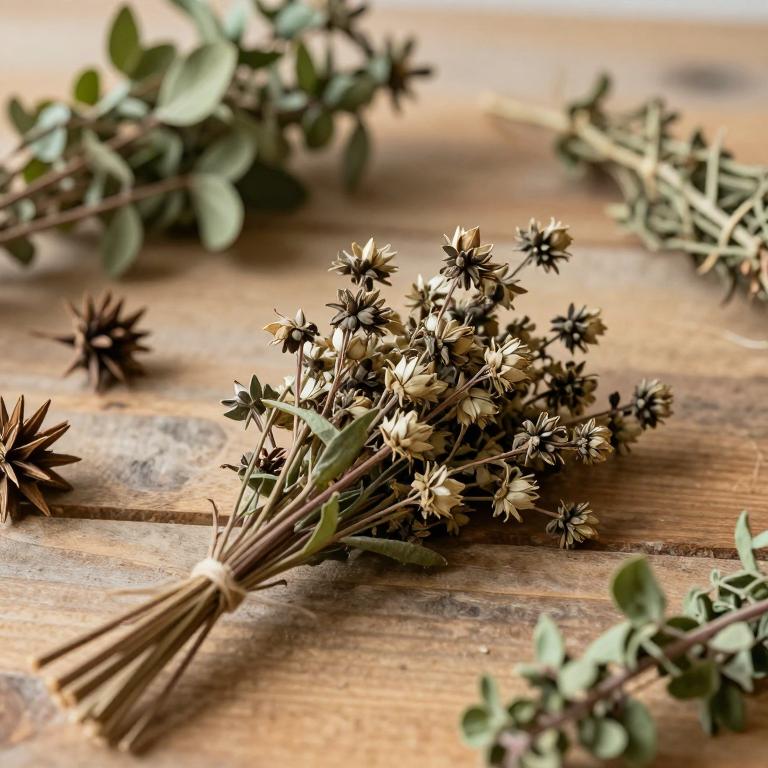
Geranium, scientifically known as Pelargonium zonale, is a versatile perennial celebrated for its vibrant, zonal-patterned foliage and colorful blooms. Beyond its ornamental beauty in gardens, this plant holds significant medicinal value, traditionally used for its antimicrobial, anti-inflammatory, and wound-healing properties, making it a staple in holistic herbal remedies.
Names and Synonyms
Common Names
- Horse-shoe Pelargonium
- Horseshoe Pelargonium
- Horseshoe Storksbill
- horseshoe geranium
Scientific Names
Accepted name
Pelargonium zonaleSynonyms
- Hoarea marginata
- Geranium stenopetalum
- Hoarea amoena
- Geraniospermum zonale
- Pelargonium stenopetalum
- Geranium marginatum
- Pelargonium siccifolium
- Pelargonium placidum
- Campylia variegata
- Pelargonium rosula
- Pelargonium zonale var. quadricolor
- Pelargonium leptopetalum
- Pelargonium leucanthum
- Pelargonium novum
- Pelargonium crenatum
- Pelargonium clarum
- Pelargonium densiflorum
- Pelargonium amoenum
- Ciconium marginatum
- Ciconium leptopetalum
- Ciconium leucanthum
- Ciconium placidum
- Ciconium clarum
- Ciconium cocciniflorum
- Ciconium crenatum
- Ciconium densiflorum
- Ciconium zonale
- Ciconium siccifolium
- Ciconium stenopetalum
- Pelargonium zonale var. marginatum
- Geranium quadricolor
- Pelargonium zonale var. lacunosum
- Geranium zonale
- Ciconium rosula
Regional and Traditional Names
Spanish:
- Geranio de herradura
- Novios
German:
- Zonal-Pelargonie
French:
- Géranium zonal
- Géranium à feuilles zonées
- Pélargonium zonal
- Pélargonium à feuilles zonées
Sources: Wikidata, Catalogue of Life
Taxonomical Classification
This plant belongs to the kingdom Plantae and the phylum Streptophyta, falling under the class Equisetopsida and subclass Magnoliidae. Within the order Geraniales and the family Geraniaceae, it is classified under the genus Pelargonium.
| Rank | Classification |
|---|---|
| Kingdom | Plantae |
| Phylum | Streptophyta |
| Class | Equisetopsida |
| Subclass | Magnoliidae |
| Order | Geraniales |
| Family | Geraniaceae |
| Genus | Pelargonium |
Sources: The World Checklist of Vascular Plants (WCVP)
Distribution
This plant exhibits a specific geographical distribution primarily concentrated around the Mediterranean and Atlantic regions. In Southwestern Europe, its presence is notably recorded in Spain. The species also extends into Northern Africa, where it can be found in Morocco. Furthermore, it is widely distributed across Macaronesia, including the Canary Islands and Madeira. Finally, its range reaches as far as the Cape Verde archipelago.
| Region | Area |
|---|---|
| Southwestern Europe | Spain |
| Northern Africa | Morocco |
| Macaronesia | Canary Is. |
| Macaronesia | Cape Verde |
| Macaronesia | Madeira |
| Southern Africa | Cape Provinces |
| Southern Africa | KwaZulu-Natal |
| Central Asia | Uzbekistan |
| Eastern Asia | Korea |
| Indian Subcontinent | East Himalaya |
Sources: The World Checklist of Vascular Plants (WCVP)
Botanical Identification
Ecology
The ecology of Pelargonium zonale is characterized by its ability to thrive across a diverse altitudinal gradient, demonstrating significant adaptability to varying topographic conditions. This species occupies a broad ecological niche, with its distribution spanning from low-lying areas at a minimum elevation of 61 m AMSL to high-altitude environments reaching a maximum of 2620 m AMSL. Such an expansive elevational range suggests that the plant can tolerate a wide spectrum of temperature regimes, atmospheric pressures, and moisture availability found across different mountain profiles. This vertical distribution facilitates its presence in various microclimates, allowing it to persist in both subtropical lowland habitats and cooler, montane ecological zones.
- Elevational range max:
- 2620 m AMSL
- Elevational range min:
- 61 m AMSL
Life history
The life history of Pelargonium zonale is characterized by its classification as a perennial plant, although its developmental trajectory can be variable depending on environmental conditions and cultivation practices. As a perennial, the species is capable of living for multiple years, often maintaining its growth through successive seasons if provided with adequate moisture and warmth. While it primarily follows a long-term survival strategy, its lifecycle can occasionally manifest as annual or biennial in response to harsh climatic stressors or specific growing cycles. The plant typically begins its life through seed germination or vegetative propagation, establishing a robust root system that supports its upright, bushy growth habit. Throughout its lifespan, it undergoes seasonal cycles of vegetative expansion and flowering, with its longevity being heavily influenced by the stability of its habitat and the presence of regular growing seasons.
- Lifecycle :
- perennial
Morphology
The morphology of Pelargonium zonale is characterized by a growth form categorized as both a herb and a forb, exhibiting a woody texture in its structure. This terrestrial plant, which functions as an independent organism rather than a parasite or epiphyte, maintains an erect shoot orientation. As a self-supporting species, it does not function as a climber, liana, or vine. The plant typically reaches a height ranging from a minimum of 0.4 m to a maximum of 3 m.
- Aquatic :
- terrestrial
- Climber :
- self-supporting
- Epiphyte :
- terrestrial
- Growth form :
- herb
- Growth form :
- forb
- Parasite :
- independent
- Plant height max:
- 3 m
- Plant height min:
- 0.4 m
- Shoot orientation :
- erect
- Woodiness :
- woody
Physiology
The physiology of Pelargonium zonale is characterized by a C3 photosynthetic pathway, which governs its carbon fixation processes. The plant exhibits morphological adaptations such as orbicular leaf forms that vary in dimension, typically maintaining a leaf width ranging from a minimum of 5 cm to a maximum of 8 cm. Additionally, the species demonstrates physiological succulence, a trait that facilitates water storage and enhances its ability to manage moisture levels within its tissues.
- Leaf form :
- orbicular
- Leaf width max:
- 8 cm
- Leaf width min:
- 5 cm
- Photosynthetic pathway :
- C3
- Succulence :
- yes
Reproduction
The reproduction of Pelargonium zonale is characterized by a diverse flowering cycle that can occur throughout the entire year, with flowering periods typically spanning from January to December, though this timing can remain variable depending on environmental conditions. The plant produces flowers in an umbel inflorescence, featuring blossoms that range in length from a minimum of 1.5 cm to a maximum of 2 cm. These flowers are typically pink in color. Following pollination, the plant produces seeds with a highly consistent mass, recorded at a mean, minimum, and maximum value of 0.00472 g, facilitating its dispersal and subsequent propagation.
- Flower colour :
- pink
- Flower length max:
- 2 cm
- Flower length min:
- 1.5 cm
- Flowering time :
- Jan
- Flowering time :
- Dec
- Inflorescence :
- umbel
- Seed mass mean:
- 0.00472 g
Sources: Global Inventory of Floras and Traits (GIFT)
Chemicals
Pelargonium zonale has 4 reported phytochemicals identified across 0 scientific publications and several other databases. The most consistently reported chemicals include Anthocyanins, Gallotannins, kaempferol, quercetin.
| Chemical | Supporting sources | Consensus |
|---|---|---|
| Anthocyanins | 1 supporting sources | ★☆☆☆☆ |
| Gallotannins | 1 supporting sources | ★☆☆☆☆ |
| kaempferol | 1 supporting sources | ★☆☆☆☆ |
| quercetin | 1 supporting sources | ★☆☆☆☆ |
Anthocyanins
- PloS one
Gallotannins
- PloS one
kaempferol
- PloS one
quercetin
- PloS one
Activities
Pelargonium zonale has 1 reported activities identified across 0 scientific publications and several other databases. The most consistently reported activities include Antibacterial.
| Activity | Supporting sources | Consensus |
|---|---|---|
| Antibacterial | 1 supporting sources | ★☆☆☆☆ |
Antibacterial
- PloS one