mutifid-leaf pelargonium
Pelargonium radens · Accepted scientific name
Scientific literature: Extensive (151 studies) · ★★★★☆
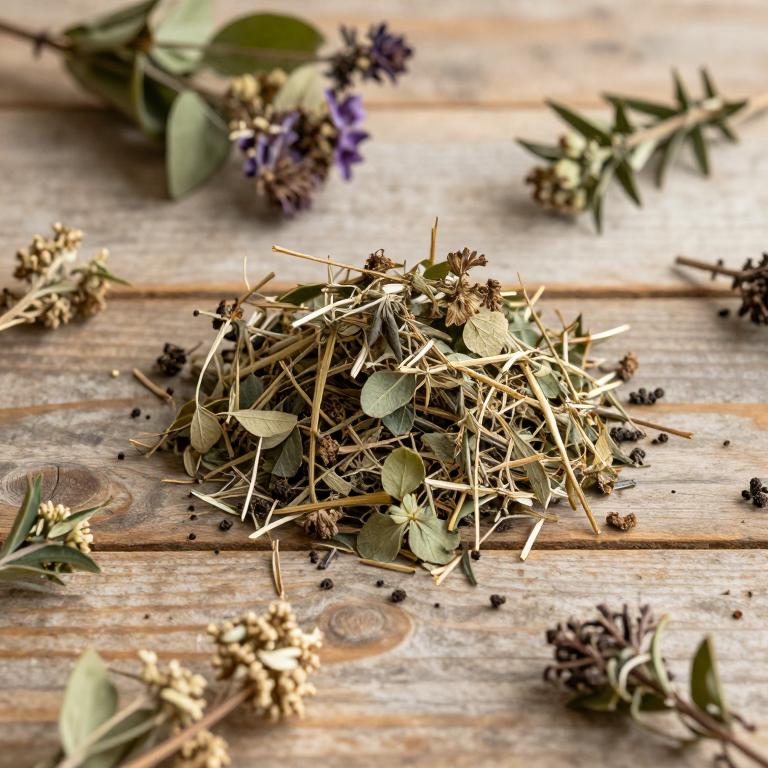
Multifid-leaf pelargonium, scientifically known as Pelargonium radens, is a striking ornamental plant celebrated for its deeply lobed, fragrant foliage. Beyond its aesthetic appeal, this species holds significant medicinal value, traditionally utilized in herbal remedies for its antiseptic and soothing properties, making it a versatile treasure in botanical studies.
Names and Synonyms
Common Names
- mutifid-leaf pelargonium
- rasp-leaf pelargonium
- Multifid-Leaved Storksbill
- Rasp -Leaved Storksbill
- Raspleaf Storksbill
- multifid-leaved pelargonium
- rasp-leaved pelargonium
Scientific Names
Accepted name
Pelargonium radensSynonyms
- Pelargonium asperifolium
- Geraniospermum revolutum
- Geraniospermum roseum
- Pelargonium rosodorum
- Geranium asperifolium
- Pelargonium raduloides
- Pelargonium radula var. roseum
Sources: Wikidata, Catalogue of Life
Taxonomical Classification
This plant belongs to the kingdom Plantae and the phylum Streptophyta, falling under the class Equisetopsida and subclass Magnoliidae. Within the order Geraniales, it is classified under the family Geraniaceae. It is further identified by the genus Pelargonium, specifically as the species Pelargonium radens.
| Rank | Classification |
|---|---|
| Kingdom | Plantae |
| Phylum | Streptophyta |
| Class | Equisetopsida |
| Subclass | Magnoliidae |
| Order | Geraniales |
| Family | Geraniaceae |
| Genus | Pelargonium |
Sources: The World Checklist of Vascular Plants (WCVP)
Distribution
This plant is native to the specific region of Southern Africa. Its primary habitat is located within the Cape Provinces. Within this area, it thrives in unique ecological niches suited to its needs. The geographical range is relatively concentrated rather than being widespread across the continent. Consequently, its natural distribution remains closely tied to these southern coastal and inland environments.
| Region | Area |
|---|---|
| Southern Africa | Cape Provinces |
Sources: The World Checklist of Vascular Plants (WCVP)
Botanical Identification
Ecology
The ecology of Pelargonium radens is characterized by its adaptability to a wide vertical distribution within its native habitat, thriving across a diverse topographical gradient. This species inhabits environments ranging from low-lying areas at an elevation of 61 m AMSL to more elevated terrains reaching a maximum of 1372 m AMSL. This broad elevational range suggests that the plant is capable of tolerating varying atmospheric pressures, temperature fluctuations, and moisture levels associated with different altitudinal zones. Such ecological plasticity allows it to occupy various niches within its ecosystem, potentially ranging from coastal or lowland scrublands to more temperate mid-altitude slopes.
- Elevational range max:
- 1372 m AMSL
- Elevational range min:
- 61 m AMSL
Life history
The life history of Pelargonium radens is characterized by its status as a perennial plant, allowing it to persist through multiple growing seasons rather than completing its cycle in a single year. As a perennial species, it undergoes various developmental stages, including vegetative growth, flowering, and seed production, often exhibiting a variable lifecycle depending on environmental conditions and resource availability. This longevity enables the plant to establish robust root systems and accumulate energy reserves, which facilitate survival during unfavorable periods and support repeated reproductive efforts over time.
- Lifecycle :
- perennial
Morphology
The morphology of Pelargonium radens is characterized by a growth form classified as a herb, exhibiting a non-woody structure. It is a self-supporting plant that does not function as a climber, liana, or vine, and it maintains an independent existence as it is not a parasite. In terms of its ecological positioning, the plant is strictly terrestrial, lacking any epiphytic or aquatic tendencies. The physical stature of the species is relatively low, with a plant height ranging from a minimum of 0.2 m to a maximum of 1 m.
- Aquatic :
- terrestrial
- Climber :
- self-supporting
- Epiphyte :
- terrestrial
- Growth form :
- herb
- Parasite :
- independent
- Plant height max:
- 1 m
- Plant height min:
- 0.2 m
- Woodiness :
- non-woody
Reproduction
Reproduction in Pelargonium radens occurs through the development of specialized fruit structures that follow successful pollination. The plant produces distinct fruits that serve as the primary vessel for seed dispersal. Based on morphological observations, the fruit exhibits a highly consistent size profile, with a measured fruit length that shows no significant variation across different specimens. Specifically, the fruit length is characterized by a constant value, where the minimum, mean, and maximum measurements all converge at exactly 2 cm. This uniformity in fruit length suggests a stable reproductive development pattern within the species, ensuring that the seeds are contained within a standardized structure optimized for the plant's life cycle.
- Fruit length max:
- 2 cm
Sources: Global Inventory of Floras and Traits (GIFT)
Plant Parts
Pelargonium radens has 1 reported plant parts identified across 1 scientific publications and several other databases that are studied for medicinal purposes. The most consistently reported plant part include flower.
| Plant part | Supporting sources | Consensus |
|---|---|---|
| Flower | 1 supporting sources | ★☆☆☆☆ |
Flower
- Radiobiologiia
Chemicals
Pelargonium radens has 23 reported phytochemicals identified across 1 scientific publications and several other databases. The most consistently reported chemicals include Citronellol, GERANIOL, Linalool, Citronellyl formate, l-MENTHONE.
| Chemical | Supporting sources | Consensus |
|---|---|---|
| Citronellol | 4 supporting sources | ★★☆☆☆ |
| GERANIOL | 3 supporting sources | ★★☆☆☆ |
| Linalool | 3 supporting sources | ★★☆☆☆ |
| Citronellyl formate | 2 supporting sources | ★☆☆☆☆ |
| l-MENTHONE | 2 supporting sources | ★☆☆☆☆ |
| (E)-Rose oxide | 1 supporting sources | ★☆☆☆☆ |
| (Z)-Rose oxide | 1 supporting sources | ★☆☆☆☆ |
| (Z)-linalool oxide | 1 supporting sources | ★☆☆☆☆ |
| ALPHA-PINENE | 1 supporting sources | ★☆☆☆☆ |
| BETA-PINENE | 1 supporting sources | ★☆☆☆☆ |
Citronellol
- Dr. Duke
- Pharmaceuticals (Basel, Switzerland)
- PloS one
- Malaria journal
GERANIOL
- Dr. Duke
- PloS one
- Malaria journal
Linalool
- Dr. Duke
- PloS one
- Malaria journal
Citronellyl formate
- Dr. Duke
- Malaria journal
l-MENTHONE
- PloS one
- Malaria journal
(E)-Rose oxide
- Dr. Duke
(Z)-Rose oxide
- Dr. Duke
(Z)-linalool oxide
- Dr. Duke
ALPHA-PINENE
- Dr. Duke
BETA-PINENE
- Dr. Duke
Activities
Pelargonium radens has 110 reported activities identified across 1 scientific publications and several other databases. The most consistently reported activities include Antibacterial, Antimicrobial, Acaricide, Allelochemic, Allelopathic.
| Activity | Supporting sources | Consensus |
|---|---|---|
| Antibacterial | 3 supporting sources | ★★☆☆☆ |
| Antimicrobial | 2 supporting sources | ★☆☆☆☆ |
| Acaricide | 1 supporting sources | ★☆☆☆☆ |
| Allelochemic | 1 supporting sources | ★☆☆☆☆ |
| Allelopathic | 1 supporting sources | ★☆☆☆☆ |
| Allergenic | 1 supporting sources | ★☆☆☆☆ |
| Analgesic | 1 supporting sources | ★☆☆☆☆ |
| Anesthetic | 1 supporting sources | ★☆☆☆☆ |
| Anthelmintic | 1 supporting sources | ★☆☆☆☆ |
| AntiEBV | 1 supporting sources | ★☆☆☆☆ |
Antibacterial
- Dr. Duke
- Advanced pharmaceutical bulletin
- PloS one
Antimicrobial
- Pharmaceuticals (Basel, Switzerland)
- Advanced pharmaceutical bulletin
Acaricide
- Dr. Duke
Allelochemic
- Dr. Duke
Allelopathic
- Dr. Duke
Allergenic
- Dr. Duke
Analgesic
- Dr. Duke
Anesthetic
- Dr. Duke
Anthelmintic
- Dr. Duke
AntiEBV
- Dr. Duke
Preparations
Pelargonium radens has 12 reported preparations identified across 1 scientific publications and several other databases. The most consistently reported preparations include essential oils, Essential oils, PREO-based formulations, Pelargonium essential oil, anthocyan preparation isolated from flower petals.
| Preparation | Supporting sources | Consensus |
|---|---|---|
| Essential oils | 3 supporting sources | ★★☆☆☆ |
| Essential oils | 1 supporting sources | ★☆☆☆☆ |
| Preo-based formulations | 1 supporting sources | ★☆☆☆☆ |
| Pelargonium essential oil | 1 supporting sources | ★☆☆☆☆ |
| Anthocyan preparation isolated from flower petals | 1 supporting sources | ★☆☆☆☆ |
| Commercially available pelargonium oils | 1 supporting sources | ★☆☆☆☆ |
| Essential oil (preo) | 1 supporting sources | ★☆☆☆☆ |
| Ethanol extracts | 1 supporting sources | ★☆☆☆☆ |
| Nanoemulsions | 1 supporting sources | ★☆☆☆☆ |
| Nanoformulations | 1 supporting sources | ★☆☆☆☆ |
Essential oils
- Advanced pharmaceutical bulletin
- Veterinary parasitology
- Malaria journal
Essential oils
- Pharmaceuticals (Basel, Switzerland)
Preo-based formulations
- PloS one
Pelargonium essential oil
- Advanced pharmaceutical bulletin
Anthocyan preparation isolated from flower petals
- Radiobiologiia
Commercially available pelargonium oils
- Advanced pharmaceutical bulletin
Essential oil (preo)
- PloS one
Ethanol extracts
- Pharmaceuticals (Basel, Switzerland)
Nanoemulsions
- PloS one
Nanoformulations
- PloS one