Geranium peltatum L.
Pelargonium peltatum · Accepted scientific name
Scientific literature: Very Sparse (8 studies) · ★☆☆☆☆
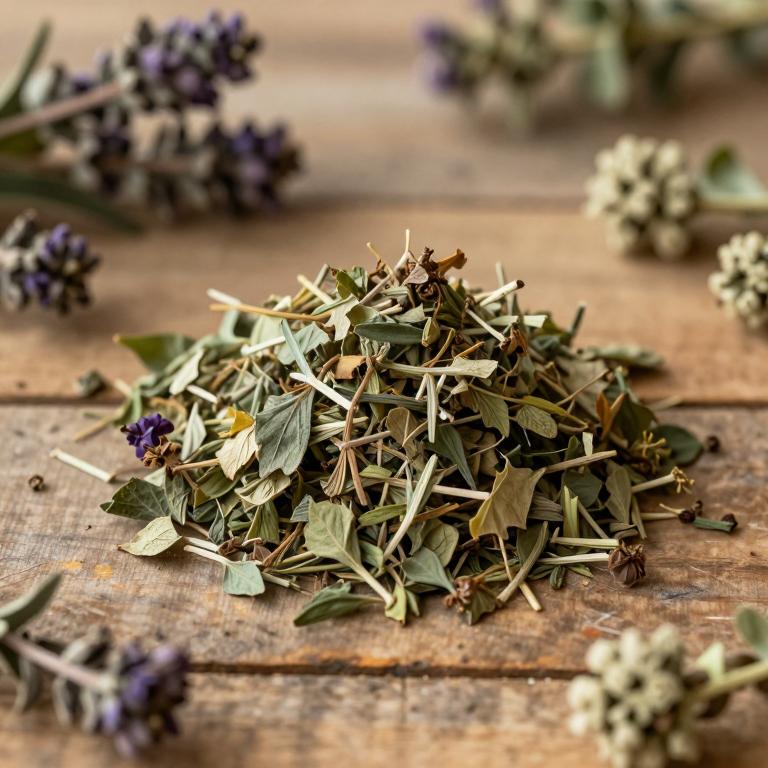
Pelargonium peltatum L., scientifically known as Pelargonium peltatum, is a versatile, trailing subshrub celebrated for its ornamental beauty and therapeutic potential. Often used in traditional medicine for its antimicrobial and anti-inflammatory properties, this hardy plant thrives in sunny climates, offering both aesthetic charm and diverse medicinal applications.
Names and Synonyms
Common Names
- Peltated Geranium
- hanging geranium
- ivy geranium
- ivy-leaved pelargonium
- ivyleaf geranium
Scientific Names
Accepted name
Pelargonium peltatumSynonyms
- Dibrachya clypeata
- Geraniospermum peltatum
- Geranium peltatum
- Pelargonium scutatum
- Pelargonium peltatum var. glabrum
- Pelargonium bachmannii
- Pelargonium clypeatum
- Dibrachya peltata
- Pelargonium peltatum var. clypeatum
- Dibrachya scutata
- Pelargonium peltatum var. scutatum
Sources: Wikidata, Catalogue of Life
Taxonomical Classification
This plant belongs to the kingdom Plantae and is classified under the phylum Streptophyta and class Equisetopsida. Within the subclass Magnoliidae, it is organized under the order Geraniales and the family Geraniaceae. Finally, it is identified by its specific genus, Pelargonium.
| Rank | Classification |
|---|---|
| Kingdom | Plantae |
| Phylum | Streptophyta |
| Class | Equisetopsida |
| Subclass | Magnoliidae |
| Order | Geraniales |
| Family | Geraniaceae |
| Genus | Pelargonium |
Sources: The World Checklist of Vascular Plants (WCVP)
Distribution
This plant exhibits a diverse geographical distribution that spans several continents and distinct climate zones. In Northern Africa, it can be found growing in the region of Morocco. Its range extends to Macaronesia, specifically within the Canary Islands. The species also thrives in the Cape Provinces of Southern Africa. Finally, its presence reaches the Americas, stretching from the Southwest of Mexico to the state of California in the Southwestern U.S.A.
| Region | Area |
|---|---|
| Northern Africa | Morocco |
| Macaronesia | Canary Is. |
| Southern Africa | Cape Provinces |
| Southwestern U.S.A. | California |
| Mexico | Mexico Southwest |
| Caribbean | Puerto Rico |
| Western South America | Ecuador |
Sources: The World Checklist of Vascular Plants (WCVP)
Botanical Identification
Ecology
The ecology of Pelargonium peltatum is characterized by its ability to thrive across a broad altitudinal spectrum, ranging from sea level at an elevation of 6 m AMSL to as high as 2800 m AMSL. This plant is particularly well-adapted to coastal habitats, where it occupies niches shaped by maritime influences. Its wide elevational range suggests a high degree of environmental plasticity, allowing it to persist in diverse topographical settings from low-lying shorelines to significant montane elevations.
- Elevational range max:
- 2800 m AMSL
- Elevational range min:
- 6 m AMSL
- Habitat :
- Coastal
Life history
The life history of Pelargonium peltatum is characterized by its status as a perennial plant, allowing it to persist through multiple growing seasons. In terms of its botanical architecture and survival strategy, it is classified as a phanerophyte, specifically exhibiting traits consistent with a phanerophyte life form where the buds are elevated above the ground level. This growth habit enables the plant to maintain its structural integrity and reproductive capacity over an extended period, adapting to its environmental niche through its enduring perennial nature.
- Life form :
- phanerophyte
- Lifecycle :
- perennial
Morphology
The morphology of Pelargonium peltatum is characterized by a growth form categorized as both a herb and a forb, exhibiting a non-woody structure. As a terrestrial plant, it is neither aquatic nor an epiphyte, maintaining an independent existence as a non-parasitic organism. The plant typically reaches a height ranging from a minimum of 0.1 m to a maximum of 2 m. Its shoot orientation is described as scandent, and while it possesses self-supporting climbing capabilities, it functions as a self-supporting entity rather than an obligatory or facultative climber.
- Aquatic :
- terrestrial
- Climber :
- self-supporting
- Epiphyte :
- terrestrial
- Growth form :
- herb
- Growth form :
- forb
- Parasite :
- independent
- Plant height max:
- 2 m
- Plant height min:
- 0.1 m
- Shoot orientation :
- scandent
- Woodiness :
- non-woody
Physiology
The physiology of Pelargonium peltatum is characterized by a C3 photosynthetic pathway, which dictates its carbon fixation processes and metabolic efficiency. The plant exhibits morphological adaptations in its foliage, featuring lobed leaf forms that typically reach a maximum leaf length of 10 cm. The leaf dimensions are consistent, with a mean, minimum, and maximum width all measured at 8 cm. Furthermore, the plant displays physiological succulence, indicating a specialized capacity for water storage within its tissues to manage hydration. Notably, Pelargonium peltatum does not function as a nitrogen fixer, relying instead on external soil nitrogen sources for its nutritional requirements.
- Leaf form :
- lobed
- Leaf length max:
- 10 cm
- Leaf width mean:
- 8 cm
- Nitrogen fixer :
- no
- Photosynthetic pathway :
- C3
- Succulence :
- yes
Reproduction
The reproduction of Pelargonium peltatum is characterized by a versatile reproductive strategy that includes both sexual and asexual methods, with asexual reproduction being present. The plant produces pink flowers arranged in an umbel inflorescence. The flowering period is highly flexible and can occur throughout the entire year, spanning from January to December, though the timing is noted as variable. In terms of its sexual progeny, the seeds are quite small, with a mean seed mass of 0.00625 g, ranging from a minimum of 0 g to a maximum of 0.0125 g. While specific measurements for seed length, seed width, fruit length, and fruit width are recorded as 0, the plant utilizes an unspecialized dispersal syndrome, employing various methods such as anemochory, zoochory, autochory, and hydrochory to spread its seeds.
- Dispersal syndrome :
- unspecialized
- Flower colour :
- pink
- Flowering time :
- Jan
- Flowering time :
- Dec
- Fruit length mean:
- 0 cm
- Fruit width mean:
- 0 cm
- Inflorescence :
- umbel
- Reproduction asexual :
- present
- Seed length mean:
- 0 mm
- Seed mass max:
- 0.0125 g
- Seed mass mean:
- 0.00625 g
- Seed mass min:
- 0 g
- Seed width mean:
- 0 mm
Sources: Global Inventory of Floras and Traits (GIFT)
Chemicals
Pelargonium peltatum has 5 reported phytochemicals identified across 0 scientific publications and several other databases. The most consistently reported chemicals include CAMPHENE, Germacrene D, Linalool, MYRCENE, PIPERITONE.
| Chemical | Supporting sources | Consensus |
|---|---|---|
| CAMPHENE | 1 supporting sources | ★☆☆☆☆ |
| Germacrene D | 1 supporting sources | ★☆☆☆☆ |
| Linalool | 1 supporting sources | ★☆☆☆☆ |
| MYRCENE | 1 supporting sources | ★☆☆☆☆ |
| PIPERITONE | 1 supporting sources | ★☆☆☆☆ |
CAMPHENE
- Molecules (Basel, Switzerland)
Germacrene D
- Molecules (Basel, Switzerland)
Linalool
- Molecules (Basel, Switzerland)
MYRCENE
- Molecules (Basel, Switzerland)
PIPERITONE
- Molecules (Basel, Switzerland)
Activities
Pelargonium peltatum has 1 reported activities identified across 0 scientific publications and several other databases. The most consistently reported activities include Analgesic.
| Activity | Supporting sources | Consensus |
|---|---|---|
| Analgesic | 1 supporting sources | ★☆☆☆☆ |
Analgesic
- Molecules (Basel, Switzerland)
Conditions
Pelargonium peltatum has 2 reported investigations on conditions identified across 0 scientific publications and several other databases. The most consistently reported conditions include inflammation, pain.
| Condition | Supporting sources | Consensus |
|---|---|---|
| Inflammation | 1 supporting sources | ★☆☆☆☆ |
| Pain | 1 supporting sources | ★☆☆☆☆ |
Inflammation
- Molecules (Basel, Switzerland)
Pain
- Molecules (Basel, Switzerland)