Scented Geramium
Pelargonium odoratissimum · Accepted scientific name
Scientific literature: Very Sparse (8 studies) · ★☆☆☆☆
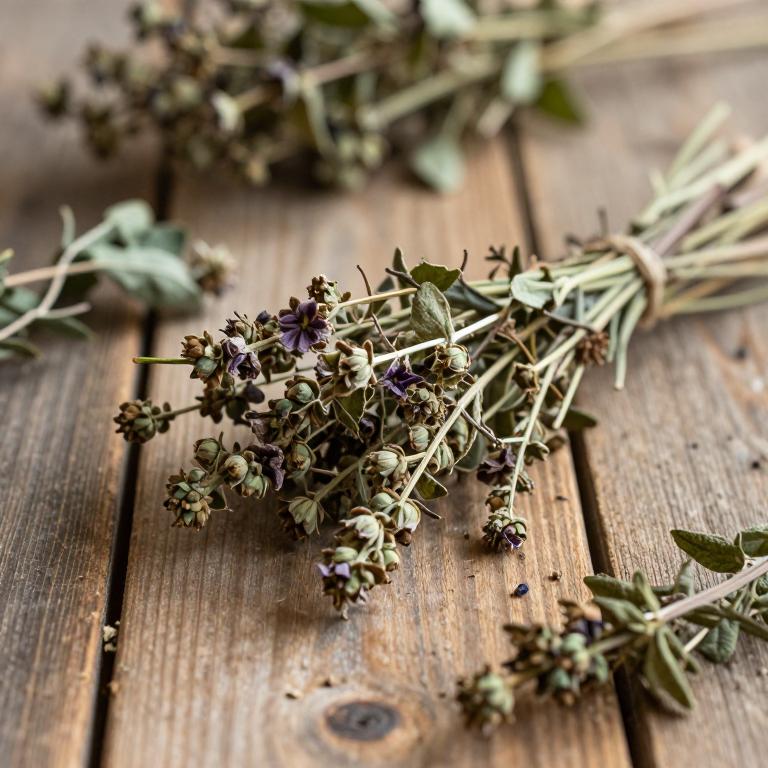
Scented Geranium, scientifically known as Pelargonium odoratismissum, is a fragrant perennial celebrated for its aromatic foliage. Renowned in herbal medicine, its essential oils possess antimicrobial and soothing properties. Often used in aromatherapy and topical remedies, this versatile plant offers a sensory experience while providing diverse therapeutic benefits.
Names and Synonyms
Common Names
- Apple Storksbill
- Scented Geramium
- apple-rose-scented geranium
- apple-scented pelargonium
- sweet-scented pelargonium
- apple geranium
Scientific Names
Accepted name
Pelargonium odoratissimumSynonyms
- Geranium odoratissimum
- Pelargonium odoratum
- Geranium odoratum
- Pelargonium odoriferum
- Geranium africanum
- Geraniospermum odoratissimum
- Cortusina odoratissima
Regional and Traditional Names
Spanish:
- Geranium odoratissimum
- Mentol
- Geranio de olor
German:
- Geranium odoratissimum
Sources: Wikidata, Catalogue of Life
Taxonomical Classification
This plant belongs to the kingdom Plantae and the phylum Streptophyta, specifically categorized under the class Equisetopsida and subclass Magnoliidae. Within the order Geraniales, it is a member of the family Geraniaceae. Finally, it is classified under the genus Pelargonium.
| Rank | Classification |
|---|---|
| Kingdom | Plantae |
| Phylum | Streptophyta |
| Class | Equisetopsida |
| Subclass | Magnoliidae |
| Order | Geraniales |
| Family | Geraniaceae |
| Genus | Pelargonium |
Sources: The World Checklist of Vascular Plants (WCVP)
Distribution
This plant exhibits a broad geographical distribution that spans across multiple regions. In the Macaronesian islands, it can be found specifically in Madeira. Its presence is also highly significant throughout Southern Africa, where it inhabits the Cape Provinces. Furthermore, the species is widely distributed across KwaZulu-Natal, the Northern Provinces, and Eswatini. Together, these locations highlight the diverse environments where the plant thrives.
| Region | Area |
|---|---|
| Macaronesia | Madeira |
| Southern Africa | Cape Provinces |
| Southern Africa | KwaZulu-Natal |
| Southern Africa | Eswatini |
| Southern Africa | Northern Provinces |
| Caribbean | Puerto Rico |
| Western South America | Ecuador |
Sources: The World Checklist of Vascular Plants (WCVP)
Botanical Identification
Ecology
The ecology of Pelargonium odoratissimum is characterized by a broad adaptive capacity across diverse topographical gradients, allowing it to inhabit a wide vertical span of landscapes. This species exhibits significant altitudinal plasticity, thriving in environments ranging from low-lying areas at an elevation of 15 m AMSL to high-altitude regions reaching up to 2517 m AMSL. This extensive elevational range suggests that the plant is capable of tolerating varied thermal regimes and atmospheric pressures, occupying niches that transition from subtropical lowland habitats to montane ecosystems. Such a wide distribution indicates a resilient ecological profile that can accommodate fluctuations in temperature, moisture availability, and light intensity across its vast altitudinal spectrum.
- Elevational range max:
- 2517 m AMSL
- Elevational range min:
- 15 m AMSL
Life history
The life history of Pelargonium odoratissimum is characterized by its nature as a perennial plant, allowing it to persist through multiple growing seasons rather than completing its cycle within a single year. Throughout its development, it maintains an evergreen status, retaining its foliage and characteristic aromatic leaves year-round regardless of seasonal shifts. This combination of a long-lived life cycle and continuous leaf retention enables the species to establish stable presence in its habitat, providing consistent vegetative cover and a sustained capacity for growth and reproduction over several years.
- Deciduousness :
- evergreen
- Lifecycle :
- perennial
Morphology
The morphology of Pelargonium odoratissimum is characterized by a growth form that can be described as both an herb and a shrub, exhibiting a non-woody structure. It is a terrestrial, independent plant that does not function as a parasite or an epiphyte. In terms of its physical stature, the plant is relatively low-growing, with a height that typically ranges from a minimum of 0.1 m to a maximum of 0.3 m, maintaining an average height of approximately 0.2 m. Furthermore, it is a self-supporting species rather than a climber, liana, or vine.
- Aquatic :
- terrestrial
- Climber :
- self-supporting
- Epiphyte :
- terrestrial
- Growth form :
- herb
- Growth form :
- shrub
- Parasite :
- independent
- Plant height max:
- 0.3 m
- Plant height mean:
- 0.2 m
- Plant height min:
- 0.1 m
- Woodiness :
- non-woody
Physiology
The physiology of Pelargonium odoratissimum is characterized by a robust metabolic framework designed to support its aromatic and succulent growth patterns. As a perennial herb, its physiological processes are heavily centered on the biosynthesis of volatile essential oils, primarily within specialized glandular trichomes located on the leaf surfaces. These trichomes facilitate the production and storage of complex terpenoids, which serve as both chemical defenses against herbivores and metabolic byproducts of secondary pathways. The plant exhibits efficient photosynthetic regulation to manage water loss in varied environments, utilizing a specialized stomatal control mechanism to balance gas exchange with transpiration. In terms of nutrient cycling, Pelargonium odoratissimum does not possess the symbiotic mechanisms required for atmospheric nitrogen assimilation; specifically, it is not a nitrogen fixer, as indicated by its lack of specialized root nodules or associated nitrogen-fixing bacteria. Consequently, its nitrogen metabolism is entirely dependent on the uptake of nitrates and ammonium ions from the soil through its root system to support protein synthesis and cellular development.
- Nitrogen fixer :
- no
Reproduction
Reproduction in Pelargonium odoratissimum primarily occurs through sexual processes mediated by flowers, though vegetative propagation is also a common method for maintaining genetic consistency. Regarding its sexual reproductive mechanisms, the plant exhibits specific breeding traits where self-fertilization is present, allowing the plant to produce seeds even in the absence of external pollinators. This capacity for self-fertilization ensures a level of reproductive autonomy, although cross-pollination by insects can still occur to increase genetic diversity. Once fertilization is successful, the plant develops seeds within its capsules, which can be dispersed to initiate new growth. In addition to seed production, the plant can be easily reproduced vegetatively through stem cuttings, which take advantage of its ability to develop adventitious roots from the nodes.
- Self fertilization :
- present
Sources: Global Inventory of Floras and Traits (GIFT)
Chemicals
Pelargonium odoratissimum has 6 reported phytochemicals identified across 0 scientific publications and several other databases. The most consistently reported chemicals include Citronellol, Citronellyl formate, Flavonoids, Gallic acid, nerol.
| Chemical | Supporting sources | Consensus |
|---|---|---|
| Citronellol | 1 supporting sources | ★☆☆☆☆ |
| Citronellyl formate | 1 supporting sources | ★☆☆☆☆ |
| Flavonoids | 1 supporting sources | ★☆☆☆☆ |
| Gallic acid | 1 supporting sources | ★☆☆☆☆ |
| nerol | 1 supporting sources | ★☆☆☆☆ |
| quercetin | 1 supporting sources | ★☆☆☆☆ |
Citronellol
- Foods (Basel, Switzerland)
Citronellyl formate
- Foods (Basel, Switzerland)
Flavonoids
- Molecules (Basel, Switzerland)
Gallic acid
- Molecules (Basel, Switzerland)
nerol
- Foods (Basel, Switzerland)
quercetin
- PloS one
Activities
Pelargonium odoratissimum has 1 reported activities identified across 0 scientific publications and several other databases. The most consistently reported activities include Antioxidant.
| Activity | Supporting sources | Consensus |
|---|---|---|
| Antioxidant | 1 supporting sources | ★☆☆☆☆ |
Antioxidant
- Foods (Basel, Switzerland)
Preparations
Pelargonium odoratissimum has 5 reported preparations identified across 0 scientific publications and several other databases. The most consistently reported preparations include essential oils, ethyl acetate extract, ethyl acetate fraction, horchata, solvent extracts.
| Preparation | Supporting sources | Consensus |
|---|---|---|
| Essential oils | 1 supporting sources | ★☆☆☆☆ |
| Ethyl acetate extract | 1 supporting sources | ★☆☆☆☆ |
| Ethyl acetate fraction | 1 supporting sources | ★☆☆☆☆ |
| Horchata | 1 supporting sources | ★☆☆☆☆ |
| Solvent extracts | 1 supporting sources | ★☆☆☆☆ |
Essential oils
- Foods (Basel, Switzerland)
Ethyl acetate extract
- Journal of food science
Ethyl acetate fraction
- Journal of food science
Horchata
- Molecules (Basel, Switzerland)
Solvent extracts
- Journal of food science