Pelargonium endlicherianum
Pelargonium endlicherianum · Accepted scientific name
Scientific literature: Very Sparse (4 studies) · ★☆☆☆☆
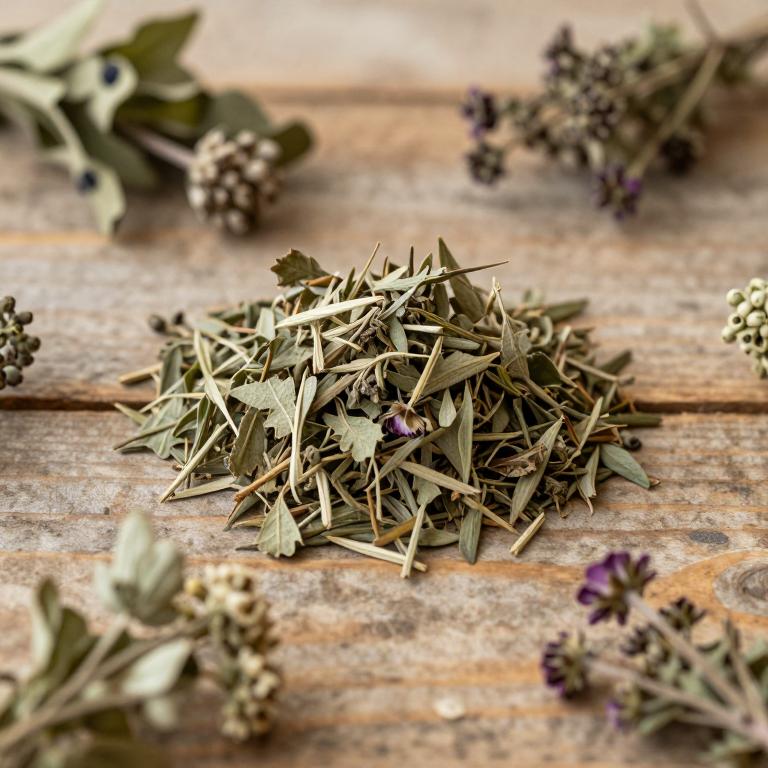
, scientifically known as Pelargonium endlicherianum, is a vibrant medicinal shrub native to South Africa. Renowned for its fragrant foliage and striking blooms, this plant offers diverse therapeutic benefits. It is frequently utilized in traditional practices for its antimicrobial, anti-inflammatory, and soothing properties, making it a valuable botanical resource.
- Family
- Geraniaceae
- Native range
- Asia-Temperate
- Parts used
- Not available
- Common names
- Not available
- Scientific synonyms
- Geraniospermum Endlicherianum
Names and Synonyms
Scientific Names
Accepted name
Pelargonium endlicherianumSynonyms
- Geraniospermum endlicherianum
Sources: Wikidata, Catalogue of Life
Taxonomical Classification
This plant belongs to the kingdom Plantae within the phylum Streptophyta and is classified under the class Equisetopsida and subclass Magnoliidae. It is further organized into the order Geraniales and the family Geraniaceae. Ultimately, it is identified by the genus Pelargonium.
| Rank | Classification |
|---|---|
| Kingdom | Plantae |
| Phylum | Streptophyta |
| Class | Equisetopsida |
| Subclass | Magnoliidae |
| Order | Geraniales |
| Family | Geraniaceae |
| Genus | Pelargonium |
Sources: The World Checklist of Vascular Plants (WCVP)
Distribution
This plant is recognized for its specific and limited geographical range within the Middle East. According to botanical records, its natural occurrence is centered in the region of Western Asia. Specifically, its presence is documented within the borders of Türkiye. This narrow distribution suggests that the species is adapted to the unique environmental conditions found in that particular territory. Consequently, understanding its habitat in Türkiye is essential for studying its ecological role.
| Region | Area |
|---|---|
| Western Asia | Türkiye |
Sources: The World Checklist of Vascular Plants (WCVP)
Botanical Identification
Ecology
The ecology of Pelargonium endlicherianum is characterized by its adaptation to diverse and often rugged terrain, where it thrives primarily in mountainous regions. It is frequently found colonizing stony places, where its root systems can navigate rocky substrates to find stability and moisture. Furthermore, the species shows a distinct affinity for riparian zones, often occurring in proximity to rivers where it can access consistent water sources amidst the rocky landscapes.
- Habitat :
- mountains, rivers, stony places
Life history
The life history of Pelargonium endlicherianum is characterized by its status as a perennial plant, though its development can exhibit variable tendencies depending on environmental conditions and resource availability. Throughout its life cycle, the plant establishes a robust root system that supports its growth across multiple growing seasons, allowing it to persist longer than annual or biennial species. It undergoes a rhythmic process of vegetative expansion, where it produces foliage and stems, followed by reproductive phases marked by the emergence of flowering structures. Because it is a perennial, it possesses the capacity to survive through dormant periods, re-emerging to complete its biological objectives in subsequent years, provided the ecological niche remains favorable.
- Lifecycle :
- perennial
Morphology
The morphology of Pelargonium endlicherianum is characterized by its growth form as a non-woody herb. The plant typically maintains a relatively low stature, with a plant height ranging from a minimum of 0.3 m to a maximum of 0.5 m.
- Growth form :
- herb
- Plant height max:
- 0.5 m
- Plant height min:
- 0.3 m
- Woodiness :
- non-woody
Reproduction
The reproduction of Pelargonium endlicherianum is characterized by a specific seasonal flowering cycle that facilitates its reproductive processes. The plant's flowering period is relatively concentrated, typically beginning in May and concluding in June. However, the onset and duration of these reproductive stages can be variable depending on environmental conditions, with the potential for flowering to occur across a broader range of months throughout the year.
- Flowering time :
- May
- Flowering time :
- Jun
Sources: Global Inventory of Floras and Traits (GIFT)
Chemicals
Pelargonium endlicherianum has 4 reported phytochemicals identified across 0 scientific publications and several other databases. The most consistently reported chemicals include Gallic acid, Tannin, n-Hexane, quercetin.
| Chemical | Supporting sources | Consensus |
|---|---|---|
| Gallic acid | 1 supporting sources | ★☆☆☆☆ |
| Tannin | 1 supporting sources | ★☆☆☆☆ |
| n-Hexane | 1 supporting sources | ★☆☆☆☆ |
| quercetin | 1 supporting sources | ★☆☆☆☆ |
Gallic acid
- Enzyme and microbial technology
Tannin
- Journal of ethnopharmacology
n-Hexane
- Journal of ethnopharmacology
quercetin
- Enzyme and microbial technology