Pediomelum esculentum
Pediomelum esculentum · Accepted scientific name
Scientific literature: Very Extensive (306 studies) · ★★★★★
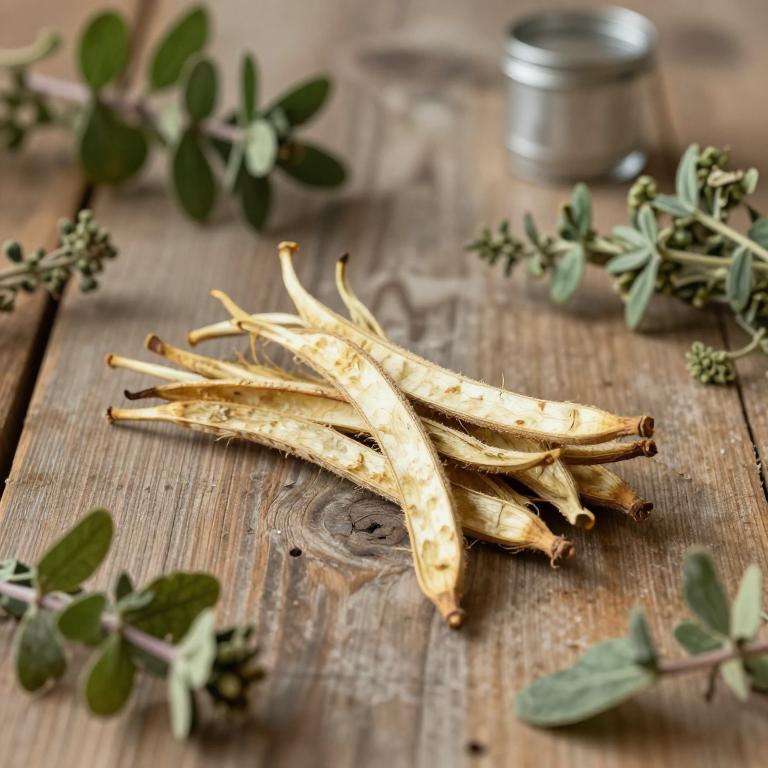
Pimpinella esculentum, scientifically known as Pediomelum esculentum, is a versatile medicinal herb valued for its diverse therapeutic properties. Renowned for its aromatic qualities, this plant is traditionally utilized to support digestive health, reduce inflammation, and promote overall wellness, serving as a vital resource in various holistic healing practices.
- Family
- Not available
- Native range
- Northern America
- Parts used
- Not available
- Common names
- Not available
- Scientific synonyms
- Not available
Names and Synonyms
Scientific Names
Accepted name
Pediomelum esculentumSources: Wikidata
Distribution
This plant exhibits a varied distribution across several regions of the United States. In the Northwestern U.S.A., it can be found growing in Colorado, Montana, and Wyoming. Its presence also extends into the North-Central U.S.A. region. Specifically, the species is documented in the states of Iowa and Kansas. Together, these locations define the current geographical range of the species.
| Region | Area |
|---|---|
| Northwestern U.S.A. | Colorado |
| Northwestern U.S.A. | Montana |
| Northwestern U.S.A. | Wyoming |
| North-Central U.S.A. | Iowa |
| North-Central U.S.A. | Kansas |
| North-Central U.S.A. | Minnesota |
| North-Central U.S.A. | Missouri |
| North-Central U.S.A. | North Dakota |
| North-Central U.S.A. | Nebraska |
| North-Central U.S.A. | South Dakota |
Sources: The World Checklist of Vascular Plants (WCVP)
Botanical Identification
Life history
The life history of Pedioelum esculentum is characterized by its classification as a perennial plant, meaning it possesses the capacity to live for several years, often maintaining its vegetative presence through multiple growing seasons. This perennial nature allows the species to establish a robust presence within its ecological niche, frequently exhibiting a growth habit that can be variable depending on environmental conditions and available resources. As a perennial, the plant undergoes successive cycles of growth and potential dormancy, which supports long-term survival and the ability to produce seeds over an extended lifespan rather than completing its life cycle in a single season.
- Lifecycle :
- perennial
Morphology
The morphology of Pedio melum esculentum is characterized by a growth form classified as a non-woody herb and specifically as a forb. It exhibits a climbing habit, functioning as a self-supporting liana or vine that does not require obligatory attachment to other structures. The plant is primarily terrestrial in its ecological niche, rather than being aquatic or semiaquatic, and it maintains an independent lifestyle, lacking any parasitic or epiphytic tendencies.
- Aquatic :
- terrestrial
- Climber :
- self-supporting
- Epiphyte :
- terrestrial
- Growth form :
- herb
- Growth form :
- forb
- Parasite :
- independent
- Woodiness :
- non-woody
Physiology
The physiology of Pedioelum esculentum is characterized by a metabolic framework defined by a C3 photosynthetic pathway, which dictates its carbon fixation processes and resource utilization strategies. Under this C3 mechanism, the plant utilizes the enzyme Ribulose-1,5-bisphosphate carboxylase/oxygenase (RuBisCO) to fix atmospheric carbon dioxide directly into a three-carbon compound, 3-phosphoglycerate, during the Calvin cycle. This physiological trait implies that the plant's energy conversion efficiency is highly dependent on environmental variables such as light intensity, temperature, and moisture availability, as the C3 pathway is susceptible to photorespiration when stomatal conductance decreases under heat or drought stress. Consequently, its physiological performance and biomass accumulation are closely tied to its ability to balance gas exchange with water loss, optimizing the efficiency of its photosynthetic machinery within its specific ecological niche.
- Photosynthetic pathway :
- C3
Reproduction
The reproduction of Pedioelum esculentum is characterized by the production of seeds that exhibit a highly uniform physical profile. Quantitative analysis of its reproductive output reveals a consistent seed mass, with a mean value of 0.02074 g. This uniformity is reflected in the lack of variance within the population, as both the maximum and minimum recorded seed masses are identical at 0.02074 g. Such precise measurements indicate a stabilized seed development process, ensuring that each individual seed carries a specific, standardized mass essential for the plant's dispersal and subsequent germination success.
- Seed mass mean:
- 0.02074 g
Sources: Global Inventory of Floras and Traits (GIFT)
Chemicals
Pediomelum esculentum has 35 reported phytochemicals identified across 0 scientific publications and several other databases. The most consistently reported chemicals include CALCIUM, Cynaroside, FAT, GLUTAMIC ACID, IRON.
| Chemical | Supporting sources | Consensus |
|---|---|---|
| CALCIUM | 1 supporting sources | ★☆☆☆☆ |
| Cynaroside | 1 supporting sources | ★☆☆☆☆ |
| FAT | 1 supporting sources | ★☆☆☆☆ |
| GLUTAMIC ACID | 1 supporting sources | ★☆☆☆☆ |
| IRON | 1 supporting sources | ★☆☆☆☆ |
| Isoflavone glycoside | 1 supporting sources | ★☆☆☆☆ |
| Isoleucine | 1 supporting sources | ★☆☆☆☆ |
| Isoorientin | 1 supporting sources | ★☆☆☆☆ |
| Isovitexin | 1 supporting sources | ★☆☆☆☆ |
| MAGNESIUM | 1 supporting sources | ★☆☆☆☆ |
CALCIUM
- Dr. Duke
Cynaroside
- Dr. Duke
FAT
- Dr. Duke
GLUTAMIC ACID
- Dr. Duke
IRON
- Dr. Duke
Isoflavone glycoside
- Dr. Duke
Isoleucine
- Dr. Duke
Isoorientin
- Dr. Duke
Isovitexin
- Dr. Duke
MAGNESIUM
- Dr. Duke
Activities
Pediomelum esculentum has 271 reported activities identified across 0 scientific publications and several other databases. The most consistently reported activities include ACE-Inhibitor, Absorbent, Acidulant, Adjuvant, Aldose-Reductase-Inhibitor.
| Activity | Supporting sources | Consensus |
|---|---|---|
| ACE-Inhibitor | 1 supporting sources | ★☆☆☆☆ |
| Absorbent | 1 supporting sources | ★☆☆☆☆ |
| Acidulant | 1 supporting sources | ★☆☆☆☆ |
| Adjuvant | 1 supporting sources | ★☆☆☆☆ |
| Aldose-Reductase-Inhibitor | 1 supporting sources | ★☆☆☆☆ |
| Allergenic | 1 supporting sources | ★☆☆☆☆ |
| Analgesic | 1 supporting sources | ★☆☆☆☆ |
| Androgenic? | 1 supporting sources | ★☆☆☆☆ |
| Angiotensin-Receptor-Blocker | 1 supporting sources | ★☆☆☆☆ |
| AntiADD | 1 supporting sources | ★☆☆☆☆ |
ACE-Inhibitor
- Dr. Duke
Absorbent
- Dr. Duke
Acidulant
- Dr. Duke
Adjuvant
- Dr. Duke
Aldose-Reductase-Inhibitor
- Dr. Duke
Allergenic
- Dr. Duke
Analgesic
- Dr. Duke
Androgenic?
- Dr. Duke
Angiotensin-Receptor-Blocker
- Dr. Duke
AntiADD
- Dr. Duke