Common Pedalium
Pedalium murex · Accepted scientific name
Scientific literature: Very Sparse (20 studies) · ★☆☆☆☆
Common Pedalium, scientifically known as Pedalium murax, is a sprawling, thorny herb native to tropical regions. Renowned in traditional medicine, it possesses potent diuretic, antioxidant, and anti-inflammatory properties. Often utilized to support kidney health and reproductive vitality, this resilient plant offers significant therapeutic potential for holistic wellness.
- Family
- Pedaliaceae
- Native range
- Africa
- Parts used
- Leaf · Seed
- Common names
- Large Caltrops
- Scientific synonyms
- Pedalium Microcarpum · Rogeria Microcarpa · 1 more
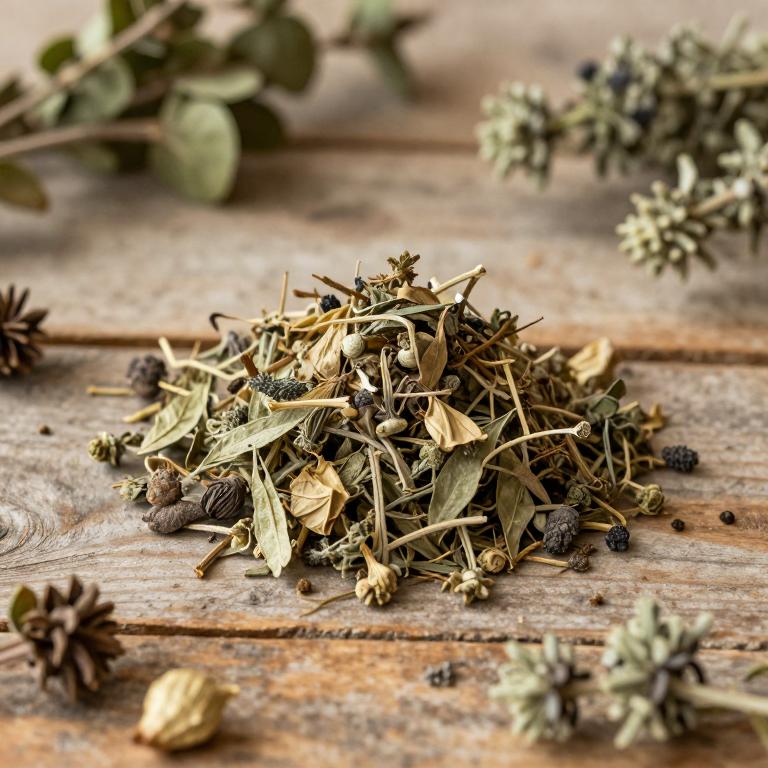
Names and Synonyms
Common Names
- Large Caltrops
Scientific Names
Accepted name
Pedalium murexSynonyms
- Pedalium microcarpum
- Rogeria microcarpa
- Murex burmanni
Sources: Wikidata, Catalogue of Life
Taxonomical Classification
This plant belongs to the kingdom Plantae and is classified under the phylum Streptophyta and class Equisetopsida. Within the subclass Magnoliidae, it is positioned in the order Lamiales and the family Pedaliaceae. Ultimately, its taxonomic identity is defined by the genus Pedalium.
| Rank | Classification |
|---|---|
| Kingdom | Plantae |
| Phylum | Streptophyta |
| Class | Equisetopsida |
| Subclass | Magnoliidae |
| Order | Lamiales |
| Family | Pedaliaceae |
| Genus | Pedalium |
Sources: The World Checklist of Vascular Plants (WCVP)
Distribution
This plant, known as Pedalium murianum, exhibits a specific geographical distribution across the West Tropical Africa region. It can be found growing naturally within the borders of Benin. Additionally, the species is documented to occur throughout Ghana. Its presence is also noted in the Ivory Coast, highlighting its regional importance. Finally, the plant is distributed within the territories of both Nigeria and Togo.
| Region | Area |
|---|---|
| West Tropical Africa | Benin |
| West Tropical Africa | Ghana |
| West Tropical Africa | Ivory Coast |
| West Tropical Africa | Nigeria |
| West Tropical Africa | Togo |
| West-Central Tropical Africa | Central African Republic |
| Northeast Tropical Africa | Eritrea |
| Northeast Tropical Africa | Socotra |
| Northeast Tropical Africa | Somalia |
| Northeast Tropical Africa | Sudan-South Sudan |
Sources: The World Checklist of Vascular Plants (WCVP)
Botanical Identification
Ecology
The ecology of Pedalium murex is characterized by its ability to thrive in challenging, high-salinity environments, serving as a distinct saline soil indicator. It is typically found growing in sandy substrates or on limestone formations, often colonizing areas of short grass situated near coastal regions. Beyond its natural coastal habitats, the plant also demonstrates ecological adaptability by establishing itself within anthropogenic landscapes, such as sisal plantations, where it can tolerate the specific soil conditions present.
- Habitat :
- saline soil indicator in sand or on limestone in short gras near the coast, also in sisal plantations
Life history
The life history of Pedalium murianum is characterized by its classification as an annual plant, completing its entire biological cycle from germination to seed production within a single growing season. As an annual species, it typically emerges in response to seasonal moisture availability, often flourishing in sandy or disturbed soils during the monsoon or post-monsoon periods. The lifecycle begins with the germination of seeds that can remain dormant in the soil bank until favorable environmental conditions are met. Following germination, the plant undergoes a rapid vegetative growth phase, establishing a prostrate or spreading habit to maximize surface area for photosynthesis. This is followed by a reproductive phase where it produces flowers and develops characteristic spiny fruits. Once the seeds are matured and dispersed, the individual plant dies, ensuring that the survival of the species relies on the successful propagation of the next generation of seeds.
- Lifecycle :
- annual
Morphology
The morphology of Pedalium murex is characterized by its growth form as a non-woody herb, typically reaching an average plant height of approximately 0.6 m. This species functions as an independent organism, neither acting as a parasite nor an epiphyte, and maintains a terrestrial habitat. Although it possesses certain sprawling qualities, it is classified as a self-supporting plant rather than an obligatory or facultative climber, vine, or liana.
- Aquatic :
- terrestrial
- Climber :
- self-supporting
- Epiphyte :
- terrestrial
- Growth form :
- herb
- Parasite :
- independent
- Plant height mean:
- 0.6 m
- Woodiness :
- non-woody
Physiology
The physiology of Pedalium murineum is characterized by specialized adaptations for survival in arid and semi-arid environments, focusing primarily on efficient water management and metabolic resilience. As a succulent-like herb, its physiological processes are geared toward minimizing transpiration while maximizing moisture absorption from limited soil resources. Regarding its nutrient cycling capabilities, the plant does not function as a nitrogen fixer; it lacks the symbiotic relationship with nitrogen-fixing bacteria, such as Rhizobium, typically found in leguminous species, and therefore relies on the uptake of available nitrates and ammonium from the soil rather than atmospheric nitrogen fixation. Its metabolic pathways are optimized to withstand high thermal stress, employing mechanisms to maintain cellular integrity under intense solar radiation and fluctuating moisture levels.
- Nitrogen fixer :
- no
Reproduction
The reproduction of Pedalium murianum is primarily centered around its seed production, which serves as the fundamental mechanism for its dispersal and survival in various ecological niches. The seeds produced by this species exhibit a highly consistent physical profile, characterized by a uniform mass across all recorded samples. Specifically, the seed mass maintains a constant value, with a mean, maximum, and minimum mass all recorded at exactly 0.18993 g. This lack of variance in seed mass suggests a highly regulated developmental process during the maturation of the fruit, ensuring that each seed carries a standardized amount of nutrient reserves to support initial germination. This consistency in seed weight is a critical factor in the plant's reproductive strategy, influencing how the seeds are distributed and their subsequent ability to establish new growth.
- Seed mass mean:
- 0.18993 g
Sources: Global Inventory of Floras and Traits (GIFT)
Plant Parts
Pedalium murex has 2 reported plant parts identified across 3 scientific publications and several other databases that are studied for medicinal purposes. The most consistently reported plant part include leaf, seed.
| Plant part | Supporting sources | Consensus |
|---|---|---|
| Leaf | 2 supporting sources | ★☆☆☆☆ |
| Seed | 1 supporting sources | ★☆☆☆☆ |
Leaf
- Pakistan journal of pharmaceutical sciences
- Microbial pathogenesis
Seed
- Journal of photochemistry and photobiology. B, Biology
Chemicals
Pedalium murex has 4 reported phytochemicals identified across 3 scientific publications and several other databases. The most consistently reported chemicals include Flavonoids, Saponins, Tannins, polyphenols.
| Chemical | Supporting sources | Consensus |
|---|---|---|
| Flavonoids | 2 supporting sources | ★☆☆☆☆ |
| Saponins | 1 supporting sources | ★☆☆☆☆ |
| Tannins | 1 supporting sources | ★☆☆☆☆ |
| polyphenols | 1 supporting sources | ★☆☆☆☆ |
Flavonoids
- Pakistan journal of pharmaceutical sciences
- Microbial pathogenesis
Saponins
- Microbial pathogenesis
Tannins
- Microbial pathogenesis
polyphenols
- Microbial pathogenesis
Activities
Pedalium murex has 1 reported activities identified across 3 scientific publications and several other databases. The most consistently reported activities include Antioxidant.
| Activity | Supporting sources | Consensus |
|---|---|---|
| Antioxidant | 1 supporting sources | ★☆☆☆☆ |
Antioxidant
- Microbial pathogenesis
Conditions
Pedalium murex has 10 reported investigations on conditions identified across 3 scientific publications and several other databases. The most consistently reported conditions include Hyperglycemia, Peptic ulcer, asthma, dysuria, gastric ulcer.
| Condition | Supporting sources | Consensus |
|---|---|---|
| Hyperglycemia | 1 supporting sources | ★☆☆☆☆ |
| Peptic ulcer | 1 supporting sources | ★☆☆☆☆ |
| Asthma | 1 supporting sources | ★☆☆☆☆ |
| Dysuria | 1 supporting sources | ★☆☆☆☆ |
| Gastric ulcer | 1 supporting sources | ★☆☆☆☆ |
| Gonorrhea | 1 supporting sources | ★☆☆☆☆ |
| Hematuria | 1 supporting sources | ★☆☆☆☆ |
| Hyperlipidemia | 1 supporting sources | ★☆☆☆☆ |
| Male infertility | 1 supporting sources | ★☆☆☆☆ |
| Syphilis | 1 supporting sources | ★☆☆☆☆ |
Hyperglycemia
- Microbial pathogenesis
Peptic ulcer
- Pakistan journal of pharmaceutical sciences
Asthma
- Biomedicine & pharmacotherapy = Biomedecine & pharmacotherapie
Dysuria
- Ancient science of life
Gastric ulcer
- Biomedicine & pharmacotherapy = Biomedecine & pharmacotherapie
Gonorrhea
- Ancient science of life
Hematuria
- Ancient science of life
Hyperlipidemia
- Microbial pathogenesis
Male infertility
- Andrologia
Syphilis
- Ancient science of life
Preparations
Pedalium murex has 5 reported preparations identified across 3 scientific publications and several other databases. The most consistently reported preparations include aqueous extract of leaves, crude extracts, leaf ethanol extract, seed extract, synthesized silver nanoparticles.
| Preparation | Supporting sources | Consensus |
|---|---|---|
| Aqueous extract of leaves | 1 supporting sources | ★☆☆☆☆ |
| Crude extracts | 1 supporting sources | ★☆☆☆☆ |
| Leaf ethanol extract | 1 supporting sources | ★☆☆☆☆ |
| Seed extract | 1 supporting sources | ★☆☆☆☆ |
| Synthesized silver nanoparticles | 1 supporting sources | ★☆☆☆☆ |
Aqueous extract of leaves
- Pakistan journal of pharmaceutical sciences
Crude extracts
- Andrologia
Leaf ethanol extract
- Microbial pathogenesis
Seed extract
- Journal of photochemistry and photobiology. B, Biology
Synthesized silver nanoparticles
- Microbial pathogenesis