kiri
Paulownia · Accepted scientific name
Scientific literature: Very Sparse (3 studies) · ★☆☆☆☆
Kiri, scientifically known as Paulownia, is a fast-growing deciduous tree celebrated for its remarkable medicinal properties. Often referred to as the "Empress Tree," its leaves and bark contain bioactive compounds used in traditional remedies to reduce inflammation, support respiratory health, and promote overall vitality through their potent antioxidant effects.
- Family
- Paulowniaceae
- Native range
- Europe
- Parts used
- Flower · Leaf
- Common names
- Not available
- Scientific synonyms
- Not available
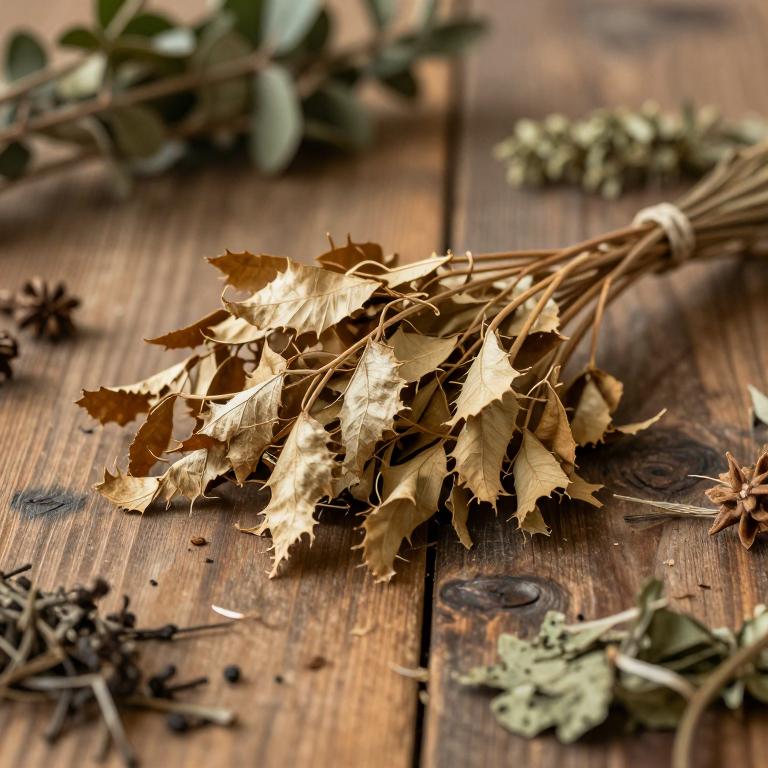
Names and Synonyms
Scientific Names
Accepted name
PaulowniaRegional and Traditional Names
German:
- Paulownien
- Kiribaum
- Paulownie
- Blauglockenbaumgewächs
- Blauglockenbaum
Sources: Wikidata, Catalogue of Life
Taxonomical Classification
This plant belongs to the kingdom Plantae and the phylum Streptophyta within the class Equisetopsida. It is further classified under the subclass Magnoliidae and the order Lamiales. Finally, it is a member of the family Paulowniaceae and the genus Paulownia.
| Rank | Classification |
|---|---|
| Kingdom | Plantae |
| Phylum | Streptophyta |
| Class | Equisetopsida |
| Subclass | Magnoliidae |
| Order | Lamiales |
| Family | Paulowniaceae |
| Genus | Paulownia |
Sources: The World Checklist of Vascular Plants (WCVP)
Distribution
This plant exhibits a specific geographical distribution across several regions of the European continent. In Northern Europe, its presence can be identified within Great Britain. Moving into Middle Europe, the species is found in countries such as Austria and Belgium. It also extends its reach through the territories of Czechia-Slovakia. Finally, the distribution of Paulownia includes the nation of Germany.
| Region | Area |
|---|---|
| Northern Europe | Great Britain |
| Middle Europe | Austria |
| Middle Europe | Belgium |
| Middle Europe | Czechia-Slovakia |
| Middle Europe | Germany |
| Middle Europe | Hungary |
| Southwestern Europe | France |
| Southwestern Europe | Spain |
| Southeastern Europe | Bulgaria |
| Southeastern Europe | Italy |
Sources: The World Checklist of Vascular Plants (WCVP)
Plant Parts
Paulownia has 2 reported plant parts identified across 2 scientific publications and several other databases that are studied for medicinal purposes. The most consistently reported plant part include flower, leaf.
| Plant part | Supporting sources | Consensus |
|---|---|---|
| Flower | 1 supporting sources | ★☆☆☆☆ |
| Leaf | 1 supporting sources | ★☆☆☆☆ |
Flower
- Food chemistry
Leaf
- Animal biotechnology
Activities
Paulownia has 1 reported activities identified across 2 scientific publications and several other databases. The most consistently reported activities include Antibacterial.
| Activity | Supporting sources | Consensus |
|---|---|---|
| Antibacterial | 1 supporting sources | ★☆☆☆☆ |
Antibacterial
- Animal biotechnology
Preparations
Paulownia has 1 reported preparations identified across 2 scientific publications and several other databases. The most consistently reported preparations include feedstuff.
| Preparation | Supporting sources | Consensus |
|---|---|---|
| Feedstuff | 1 supporting sources | ★☆☆☆☆ |
Feedstuff
- Animal biotechnology