Sweet granadilla
Passiflora ligularis · Accepted scientific name
Scientific literature: Very Extensive (229 studies) · ★★★★★
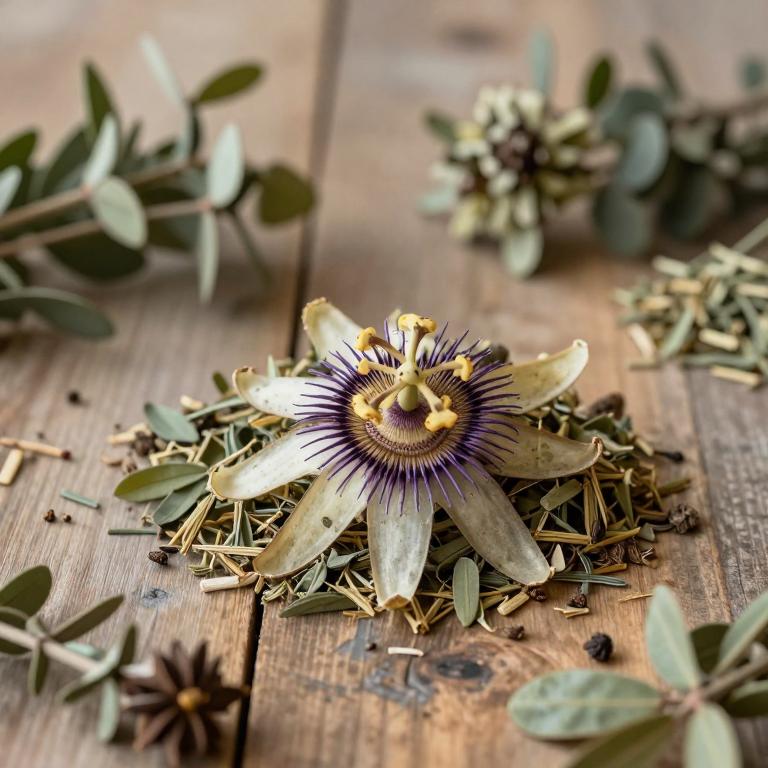
Sweet granadilla, scientifically known as Passiflora ligularis, is an exquisite tropical climbing vine celebrated for its fragrant, nectar-rich flowers and succulent fruit. Native to South American rainforests, this passionflower species offers unique medicinal potential, valued in traditional practices for its calming properties and antioxidant-rich nutritional profile.
- Family
- Passifloraceae
- Native range
- Africa
- Parts used
- Fruit · Leaf
- Common names
- Sweet Granadilla
- Scientific synonyms
- Granadilla Ligularis
Names and Synonyms
Common Names
- sweet granadilla
Scientific Names
Accepted name
Passiflora ligularisSynonyms
- Granadilla ligularis
Regional and Traditional Names
Spanish:
- granadilla
- cranix
- granada-china
- granadilla
- Granada china
German:
- Süße Granadilla
- süße Grenadille
French:
- Grenadelle
- Grenadille sucrée
- Grenadille douce
- granadille
- grenadille douce
Sources: Wikidata, Catalogue of Life
Taxonomical Classification
This plant belongs to the kingdom Plantae and the phylum Streptophyta, falling under the class Equisetopsida and subclass Magnoliidae. Within the order Malpighiales, it is classified under the family Passifloraceae. It is specifically identified by the genus Passiflora, with its species designation being Passiflora ligularis.
| Rank | Classification |
|---|---|
| Kingdom | Plantae |
| Phylum | Streptophyta |
| Class | Equisetopsida |
| Subclass | Magnoliidae |
| Order | Malpighiales |
| Family | Passifloraceae |
| Genus | Passiflora |
Sources: The World Checklist of Vascular Plants (WCVP)
Distribution
This plant exhibits a remarkably broad and diverse geographical distribution across several distinct regions. In South Tropical Africa, it can be found specifically within Zimbabwe, while its presence extends to Eastern Asia in Taiwan. The species is also documented within the Indian Subcontinent, particularly in Sri Lanka. Moving toward the Malesia region, it inhabits the island of Jawa. Finally, its range reaches as far as the North-Central Pacific in Hawaii.
| Region | Area |
|---|---|
| South Tropical Africa | Zimbabwe |
| Eastern Asia | Taiwan |
| Indian Subcontinent | Sri Lanka |
| Malesia | Jawa |
| North-Central Pacific | Hawaii |
| Mexico | Mexico Central |
| Mexico | Mexico Gulf |
| Mexico | Mexico Southwest |
| Mexico | Mexico Southeast |
| Central America | Costa Rica |
Sources: The World Checklist of Vascular Plants (WCVP)
Botanical Identification
Ecology
The ecology of Passiflora ligularis is characterized by its adaptation to specific altitudinal gradients within its native habitats, thriving primarily in montane environments. This species occupies a significant vertical niche, maintaining a presence across a broad elevational range that extends from a minimum of 1,000 m AMSL to a maximum of 3,000 m AMSL. This wide distribution suggests a high degree of environmental plasticity, allowing the plant to survive varying temperature regimes and atmospheric pressures associated with mid-to-high altitude tropical or subtropical mountain ecosystems. Its ability to inhabit these diverse elevations indicates a specialized role within the local biodiversity, likely interacting with a variety of pollinators and climbing structures found throughout these stratified forest zones.
- Elevational range max:
- 3000 m AMSL
- Elevational range min:
- 1000 m AMSL
Genetics
The genetics of Passiflora ligularis are characterized by a specific karyotypic configuration, most notably defined by a chromosome number of 18. This diploid number serves as a fundamental cytogenetic marker for the species, influencing its reproductive mechanisms and evolutionary divergence within the Passifloraceae family. The stability of this chromosomal set plays a critical role in the plant's genomic architecture, governing the inheritance patterns of various morphological and physiological traits. Such genetic parameters are essential for understanding the species' potential for hybridization and its ability to maintain genetic diversity across different ecological niches.
- Chromosome number :
- 18
Life history
The life history of Passiflora ligularis is characterized by its nature as a perennial plant, allowing it to persist through multiple growing seasons and establish a long-term presence in its natural habitat. Throughout its development, the plant maintains an evergreen status, ensuring that its foliage remains functional and intact rather than undergoing a seasonal shedding process. This combination of a perennial lifecycle and evergreen deciduousness enables the species to maintain continuous photosynthetic activity, supporting its growth and reproductive cycles over an extended period.
- Deciduousness :
- evergreen
- Lifecycle :
- perennial
Morphology
The morphology of Passiflora ligularis is characterized by its growth habit as a non-woody, obligatory climbing liana. This plant reaches a significant stature, with an average height of approximately 5 meters. It functions as an independent organism rather than a parasite and is strictly terrestrial in its ecological niche, lacking epiphytic tendencies.
- Aquatic :
- terrestrial
- Climber :
- liana
- Climber :
- obligatory
- Epiphyte :
- terrestrial
- Parasite :
- independent
- Plant height mean:
- 5 m
- Woodiness :
- non-woody
Physiology
The physiological characteristics of Passiflora ligularis are prominently defined by its vegetative morphology and nutrient acquisition processes. The plant's foliar development exhibits significant variability in size, with leaf lengths ranging from a minimum of 10 cm to a maximum of 22 cm. Complementing this longitudinal variation, the leaf width fluctuates between 7 cm and 17 cm, contributing to a robust photosynthetic surface area. In terms of metabolic nitrogen cycling, the plant does not function as a nitrogen fixer, meaning it relies on the uptake of available nitrogen from the soil through its root system rather than through symbiotic biological nitrogen fixation.
- Leaf length max:
- 22 cm
- Leaf length min:
- 10 cm
- Leaf width max:
- 17 cm
- Leaf width min:
- 7 cm
- Nitrogen fixer :
- no
Reproduction
The reproduction of Passiflora ligularis is characterized by the development of a fruit classified as a berry, which serves as the vessel for its seeds. This fruit type is indehiscent, meaning that it does not spontaneously split open at maturity to release its contents; instead, the seeds are contained within the fleshy structure until the fruit decays or is consumed by fauna.
- Dehiscence :
- indehiscent
- Fruit type :
- berry
Sources: Global Inventory of Floras and Traits (GIFT)
Plant Parts
Passiflora ligularis has 2 reported plant parts identified across 2 scientific publications and several other databases that are studied for medicinal purposes. The most consistently reported plant part include fruit, leaf.
| Plant part | Supporting sources | Consensus |
|---|---|---|
| Fruit | 1 supporting sources | ★☆☆☆☆ |
| Leaf | 1 supporting sources | ★☆☆☆☆ |
Fruit
- International scholarly research notices
Leaf
- Nutrients
Chemicals
Passiflora ligularis has 11 reported phytochemicals identified across 2 scientific publications and several other databases. The most consistently reported chemicals include Ash, CALCIUM, FAT, IRON, PHOSPHORUS.
| Chemical | Supporting sources | Consensus |
|---|---|---|
| Ash | 1 supporting sources | ★☆☆☆☆ |
| CALCIUM | 1 supporting sources | ★☆☆☆☆ |
| FAT | 1 supporting sources | ★☆☆☆☆ |
| IRON | 1 supporting sources | ★☆☆☆☆ |
| PHOSPHORUS | 1 supporting sources | ★☆☆☆☆ |
| ascorbic acid | 1 supporting sources | ★☆☆☆☆ |
| beta-carotene | 1 supporting sources | ★☆☆☆☆ |
| niacin | 1 supporting sources | ★☆☆☆☆ |
| riboflavin | 1 supporting sources | ★☆☆☆☆ |
| thiamin | 1 supporting sources | ★☆☆☆☆ |
Ash
- Dr. Duke
CALCIUM
- Dr. Duke
FAT
- Dr. Duke
IRON
- Dr. Duke
PHOSPHORUS
- Dr. Duke
ascorbic acid
- Dr. Duke
beta-carotene
- Dr. Duke
niacin
- Dr. Duke
riboflavin
- Dr. Duke
thiamin
- Dr. Duke
Activities
Passiflora ligularis has 208 reported activities identified across 2 scientific publications and several other databases. The most consistently reported activities include Antioxidant, Antidiabetic, Hypolipidemic, Acidulant, Aldose-Reductase-Inhibitor.
| Activity | Supporting sources | Consensus |
|---|---|---|
| Antioxidant | 3 supporting sources | ★★☆☆☆ |
| Antidiabetic | 2 supporting sources | ★☆☆☆☆ |
| Hypolipidemic | 2 supporting sources | ★☆☆☆☆ |
| Acidulant | 1 supporting sources | ★☆☆☆☆ |
| Aldose-Reductase-Inhibitor | 1 supporting sources | ★☆☆☆☆ |
| Allergenic | 1 supporting sources | ★☆☆☆☆ |
| Analgesic | 1 supporting sources | ★☆☆☆☆ |
| Androgenic? | 1 supporting sources | ★☆☆☆☆ |
| Angiotensin-Receptor-Blocker | 1 supporting sources | ★☆☆☆☆ |
| AntiAGE | 1 supporting sources | ★☆☆☆☆ |
Antioxidant
- Dr. Duke
- International scholarly research notices
- Nutrients
Antidiabetic
- Dr. Duke
- International scholarly research notices
Hypolipidemic
- Dr. Duke
- Nutrients
Acidulant
- Dr. Duke
Aldose-Reductase-Inhibitor
- Dr. Duke
Allergenic
- Dr. Duke
Analgesic
- Dr. Duke
Androgenic?
- Dr. Duke
Angiotensin-Receptor-Blocker
- Dr. Duke
AntiAGE
- Dr. Duke
Conditions
Passiflora ligularis has 4 reported investigations on conditions identified across 2 scientific publications and several other databases. The most consistently reported conditions include Diabetes mellitus, blood glucose, neurological disorders, oxidative stress.
| Condition | Supporting sources | Consensus |
|---|---|---|
| Diabetes mellitus | 1 supporting sources | ★☆☆☆☆ |
| Blood glucose | 1 supporting sources | ★☆☆☆☆ |
| Neurological disorders | 1 supporting sources | ★☆☆☆☆ |
| Oxidative stress | 1 supporting sources | ★☆☆☆☆ |
Diabetes mellitus
- International scholarly research notices
Blood glucose
- International scholarly research notices
Neurological disorders
- International scholarly research notices
Oxidative stress
- International scholarly research notices
Preparations
Passiflora ligularis has 3 reported preparations identified across 2 scientific publications and several other databases. The most consistently reported preparations include aqueous extract, aqueous fruit extract, ethanolic extract.
| Preparation | Supporting sources | Consensus |
|---|---|---|
| Aqueous extract | 2 supporting sources | ★☆☆☆☆ |
| Aqueous fruit extract | 1 supporting sources | ★☆☆☆☆ |
| Ethanolic extract | 1 supporting sources | ★☆☆☆☆ |
Aqueous extract
- International scholarly research notices
- Nutrients
Aqueous fruit extract
- International scholarly research notices
Ethanolic extract
- Nutrients