crato passionvine
Passiflora cincinnata · Accepted scientific name
Scientific literature: Very Sparse (18 studies) · ★☆☆☆☆
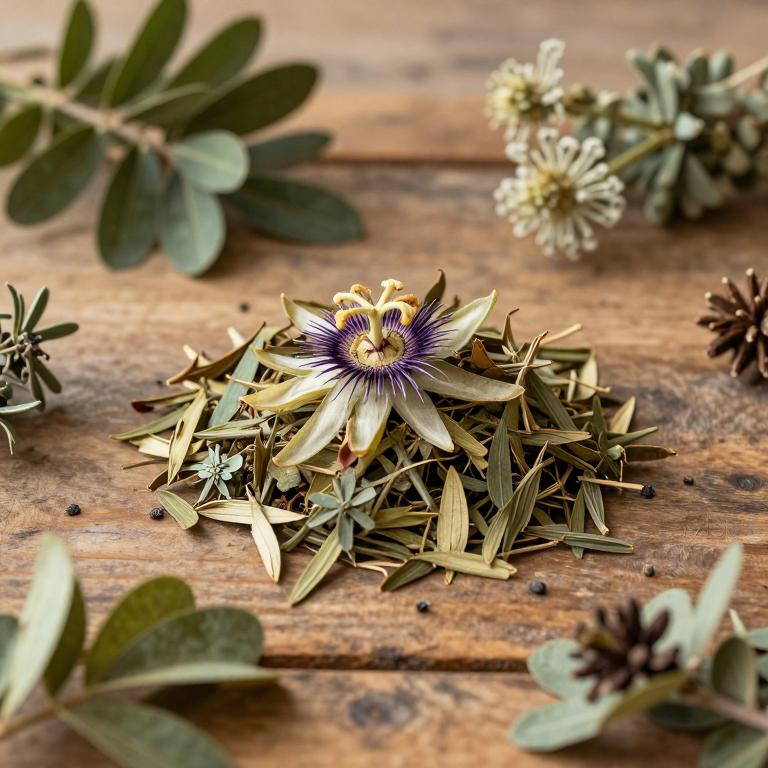
Crato passionvine, scientifically known as Passiflora cinncinata, is a remarkable medicinal plant celebrated for its therapeutic potential. Renowned for its calming properties, it is frequently utilized in traditional herbal medicine to alleviate anxiety and promote restful sleep. This vibrant climber offers a natural approach to supporting emotional well-being.
- Family
- Passifloraceae
- Native range
- Southern America
- Parts used
- Leaf · Stem
- Common names
- Crato Passionvine
- Scientific synonyms
- Passiflora Cincinnata Var. Minor · Passiflora Pisonis · 2 more
Names and Synonyms
Common Names
- crato passionvine
Scientific Names
Accepted name
Passiflora cincinnataSynonyms
- Passiflora cincinnata var. minor
- Passiflora pisonis
- Passiflora perlobata
- Passiflora cincinnata var. imbricata
Regional and Traditional Names
Spanish:
- bombolla
- montera
- pachio
Sources: Wikidata, Catalogue of Life
Taxonomical Classification
This plant belongs to the kingdom Plantae and the phylum Streptophyta, falling under the class Equisetopsida and subclass Magnoliidae. Within the order Malpighiales, it is classified under the family Passifloraceae. Finally, its taxonomic identity is completed by its placement within the genus Passiflora.
| Rank | Classification |
|---|---|
| Kingdom | Plantae |
| Phylum | Streptophyta |
| Class | Equisetopsida |
| Subclass | Magnoliidae |
| Order | Malpighiales |
| Family | Passifloraceae |
| Genus | Passiflora |
Sources: The World Checklist of Vascular Plants (WCVP)
Distribution
This plant exhibits a diverse range of habitats across the South American continent. In Northern South America, its presence is specifically noted within the borders of Venezuela. Moving toward the western regions, the species can be found inhabiting parts of both Colombia and Bolivia. The distribution extends significantly into Brazil, where it thrives in the West-Central areas. Additionally, the plant is documented to grow within the Northeast region of Brazil.
| Region | Area |
|---|---|
| Northern South America | Venezuela |
| Western South America | Bolivia |
| Western South America | Colombia |
| Brazil | Brazil West-Central |
| Brazil | Brazil Northeast |
| Brazil | Brazil Southeast |
| Brazil | Brazil North |
| Southern South America | Argentina Northeast |
| Southern South America | Argentina Northwest |
| Southern South America | Paraguay |
Sources: The World Checklist of Vascular Plants (WCVP)
Botanical Identification
Ecology
The ecology of Passiflora cincoinata is characterized by its presence across a diverse array of ecosystems, including Anthropogenic areas, the Caatinga (strict sense), the Cerrado (broad sense), and Seasonal Semi-deciduous Forests. This species demonstrates remarkable adaptability to varying topographic positions, inhabiting an extensive elevational gradient that begins at sea level (0 m AMSL) and reaches altitudes as high as 2000 m AMSL. Throughout its distributed range, the plant maintains a mean elevation of approximately 1600 m AMSL, reflecting its ability to thrive in both lowland tropical environments and higher-altitude seasonal habitats.
- Elevational range max:
- 2000 m AMSL
- Elevational range mean:
- 1600 m AMSL
- Elevational range min:
- 0 m AMSL
- Habitat :
- Área Antrópica, Caatinga (stricto sensu), Cerrado (lato sensu), Floresta Estacional Semidecidual
Life history
The life history of Passiflora cinquinnata is characterized by its status as a perennial species, allowing the plant to persist through multiple growing seasons rather than completing its cycle within a single year. As a perennial vine, it establishes a robust root system that supports long-term survival, enabling it to regrow and expand its climbing tendrils annually. This lifecycle allows the plant to invest energy into structural development and complex flowering patterns over several years, adapting to its environment through sustained vegetative growth. Because it does not follow the strict constraints of annual or biennial patterns, its lifespan is extended, providing multiple opportunities for seasonal flowering and seed production throughout its existence.
- Lifecycle :
- perennial
Morphology
The morphology of Passiflora cinncinata is characterized by its growth habit as a non-woody vine, functioning as an obligatory climber that relies on external structures for support rather than being self-supporting. It is a terrestrial species, lacking aquatic or semiaquatic tendencies, and maintains an independent existence as a non-parasitic plant. Unlike epiphytic organisms that may grow upon other plants, this species remains strictly terrestrial in its ecological positioning, establishing its root system within the soil to support its climbing liana-like structure.
- Aquatic :
- terrestrial
- Climber :
- vine
- Climber :
- obligatory
- Epiphyte :
- terrestrial
- Parasite :
- independent
- Woodiness :
- non-woody
Physiology
The physiology of Passiflora cinncinata is characterized by specialized metabolic pathways and nutrient acquisition strategies typical of climbing passionflowers. Its physiological processes are driven by efficient photosynthetic activity within its compound leaves, which facilitate the conversion of light energy into chemical energy to support rapid vegetative growth and the development of complex floral structures. Regarding nutrient cycling, the plant does not possess the physiological mechanisms required for biological nitrogen fixation; it is not a nitrogen fixer and lacks the symbiotic relationship with diazotrophic bacteria necessary to convert atmospheric nitrogen into usable forms. Consequently, its nitrogen metabolism relies entirely on the uptake of nitrates and ammonium from the soil through its root system. This reliance on external soil nitrogen dictates its physiological demand for nutrient-rich substrates to sustain its metabolic functions, including the synthesis of essential alkaloids and amino acids used in its secondary metabolism.
- Nitrogen fixer :
- no
Sources: Global Inventory of Floras and Traits (GIFT)
Plant Parts
Passiflora cincinnata has 4 reported plant parts identified across 6 scientific publications and several other databases that are studied for medicinal purposes. The most consistently reported plant part include leaf, stem, fruit, seed.
| Plant part | Supporting sources | Consensus |
|---|---|---|
| Leaf | 2 supporting sources | ★☆☆☆☆ |
| Stem | 2 supporting sources | ★☆☆☆☆ |
| Fruit | 1 supporting sources | ★☆☆☆☆ |
| Seed | 1 supporting sources | ★☆☆☆☆ |
Leaf
- Saudi journal of biological sciences
- Natural product research
Stem
- Saudi journal of biological sciences
- Natural product research
Fruit
- Drug and chemical toxicology
Seed
- Saudi journal of biological sciences
Chemicals
Passiflora cincinnata has 6 reported phytochemicals identified across 6 scientific publications and several other databases. The most consistently reported chemicals include Fatty acids, Flavonoids, Isoorientin, Trigonelline, pectin.
| Chemical | Supporting sources | Consensus |
|---|---|---|
| Fatty acids | 1 supporting sources | ★☆☆☆☆ |
| Flavonoids | 1 supporting sources | ★☆☆☆☆ |
| Isoorientin | 1 supporting sources | ★☆☆☆☆ |
| Trigonelline | 1 supporting sources | ★☆☆☆☆ |
| pectin | 1 supporting sources | ★☆☆☆☆ |
| sucrose | 1 supporting sources | ★☆☆☆☆ |
Fatty acids
- Food research international (Ottawa, Ont.)
Flavonoids
- Drug and chemical toxicology
Isoorientin
- Food research international (Ottawa, Ont.)
Trigonelline
- Food research international (Ottawa, Ont.)
pectin
- Drug and chemical toxicology
sucrose
- Food research international (Ottawa, Ont.)
Activities
Passiflora cincinnata has 1 reported activities identified across 6 scientific publications and several other databases. The most consistently reported activities include Antimicrobial.
| Activity | Supporting sources | Consensus |
|---|---|---|
| Antimicrobial | 1 supporting sources | ★☆☆☆☆ |
Antimicrobial
- Saudi journal of biological sciences
Conditions
Passiflora cincinnata has 2 reported investigations on conditions identified across 6 scientific publications and several other databases. The most consistently reported conditions include hepatic steatosis, hyperlipidemia.
| Condition | Supporting sources | Consensus |
|---|---|---|
| Hepatic steatosis | 1 supporting sources | ★☆☆☆☆ |
| Hyperlipidemia | 1 supporting sources | ★☆☆☆☆ |
Hepatic steatosis
- Drug and chemical toxicology
Hyperlipidemia
- Drug and chemical toxicology
Preparations
Passiflora cincinnata has 1 reported preparations identified across 6 scientific publications and several other databases. The most consistently reported preparations include Ethanol extracts.
| Preparation | Supporting sources | Consensus |
|---|---|---|
| Ethanol extracts | 1 supporting sources | ★☆☆☆☆ |
Ethanol extracts
- Natural product research