two-flower passionflower
Passiflora biflora · Accepted scientific name
Scientific literature: Very Sparse (7 studies) · ★☆☆☆☆
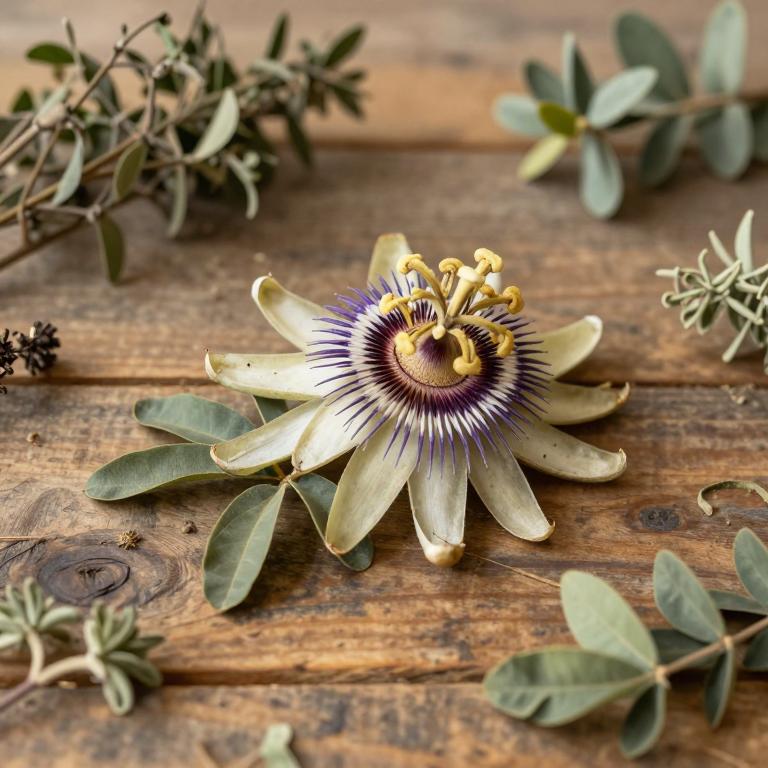
Two-flower passionflower, scientifically known as Passiflora biflora, is a captivating climbing vine native to the Americas. Renowned for its delicate, twin-bloomed flowers, this medicinal plant is prized in traditional herbalism. It is frequently utilized for its calming properties, offering natural support for relaxation and soothing the nervous system.
- Family
- Passifloraceae
- Native range
- Asia-Temperate
- Parts used
- Not available
- Common names
- Two-Flower Passionflower
- Scientific synonyms
- Decaloba Biflora Var. Major · Decaloba Biflora · 8 more
Names and Synonyms
Common Names
- two-flower passionflower
Scientific Names
Accepted name
Passiflora bifloraSynonyms
- Decaloba biflora var. major
- Decaloba biflora
- Passiflora brighamii
- Decaloba biflora var. mexicana
- Passiflora lunata var. acutiloba
- Passiflora lunata var. costata
- Passiflora glabrata
- Cieca glabrata
- Passiflora spathulata
- Lortetia biflora
Regional and Traditional Names
German:
- zweiblütige Passionsblume
Sources: Wikidata, Catalogue of Life
Taxonomical Classification
This plant, Passiflora biflora, belongs to the kingdom Plantae and the phylum Streptophyta. It is classified under the class Equisetopsida and subclass Magnoliidae, falling within the order Malpighiales. Finally, it is a member of the family Passifloraceae and the genus Passiflora.
| Rank | Classification |
|---|---|
| Kingdom | Plantae |
| Phylum | Streptophyta |
| Class | Equisetopsida |
| Subclass | Magnoliidae |
| Order | Malpighiales |
| Family | Passifloraceae |
| Genus | Passiflora |
Sources: The World Checklist of Vascular Plants (WCVP)
Distribution
This plant exhibits a diverse geographical range that spans across multiple continents and climate zones. In Eastern Asia, its presence is documented specifically within Taiwan. Its distribution extends into the Indian Subcontinent, where it can be found in India. Within the Malesia region, the species is located in both Jawa and the Philippines. Finally, the plant has reached the Southeastern United States, specifically appearing in Florida.
| Region | Area |
|---|---|
| Eastern Asia | Taiwan |
| Indian Subcontinent | India |
| Malesia | Jawa |
| Malesia | Philippines |
| Southeastern U.S.A. | Florida |
| Mexico | Mexico Central |
| Mexico | Mexico Northeast |
| Mexico | Mexico Gulf |
| Mexico | Mexico Northwest |
| Mexico | Mexico Southwest |
Sources: The World Checklist of Vascular Plants (WCVP)
Botanical Identification
Ecology
The ecology of Passiflora biflora is characterized by its preference for forest habitats, where it thrives within various forested ecosystems. This species exhibits a broad altitudinal distribution, ranging from sea level (0 m AMSL) up to a maximum elevation of 2000 m AMSL. Across its natural range, it maintains a mean elevation of approximately 800 m AMSL, reflecting its ability to adapt to diverse environmental gradients within forest structures.
- Elevational range max:
- 2000 m AMSL
- Elevational range mean:
- 800 m AMSL
- Elevational range min:
- 0 m AMSL
- Habitat :
- forest
Life history
The life history of Passiflora biflora is characterized by its status as a perennial plant, allowing it to persist through multiple growing seasons. Throughout its lifecycle, it functions as a climbing vine that utilizes specialized tendrils to navigate its environment and secure structural support. The plant begins its development from seeds or vegetative propagation, establishing a robust root system that supports its long-term survival. As a perennial, it undergoes seasonal cycles of growth, flowering, and fruit production, often responding to favorable environmental conditions to expand its presence. Its reproductive phase involves the production of distinctive flowers that facilitate pollination, eventually leading to the development of fruits that ensure the continuation of the species through subsequent generations.
- Lifecycle :
- perennial
Morphology
The morphology of Passiflora biflora is characterized by its growth form as a non-woody herb and a climbing forb. It functions as an obligatory vine, utilizing climbing mechanisms to ascend its environment rather than being self-supporting. As a terrestrial species, it does not exhibit epiphytic behavior, such as being a holoepiphyte or hemiepiphyte, but instead maintains a terrestrial existence. The plant is an independent organism, meaning it does not function as a parasite, and its habit ranges from semiaquatic to terrestrial environments.
- Aquatic :
- terrestrial
- Climber :
- vine
- Climber :
- obligatory
- Epiphyte :
- terrestrial
- Growth form :
- herb
- Growth form :
- forb
- Parasite :
- independent
- Woodiness :
- non-woody
Reproduction
The reproduction of Passiflora biflora is characterized by the development of fleshy fruits that serve as the primary vessel for seed dispersal. Within these fleshy fruits, the seeds exhibit high levels of uniformity in their physical dimensions, maintaining a consistent seed mass mean, minimum, and maximum of 0.003 g. This stability extends to the seed volume, which remains constant throughout the population with a mean, minimum, and maximum value of 0.34 mm³. This precise morphological consistency in seed mass and volume, paired with the moisture-rich nature of the fruit, facilitates the plant's reproductive cycle and dispersal mechanisms.
- Fruit dryness :
- fleshy
- Seed mass mean:
- 0.003 g
- Seed volume max:
- 0.34 mm³
Sources: Global Inventory of Floras and Traits (GIFT)
Chemicals
Passiflora biflora has 7 reported phytochemicals identified across 0 scientific publications and several other databases. The most consistently reported chemicals include Deidaclin, Epivolkenin, Passibiflorin, Taraktophyllin, Tetraphyllin A.
| Chemical | Supporting sources | Consensus |
|---|---|---|
| Deidaclin | 1 supporting sources | ★☆☆☆☆ |
| Epivolkenin | 1 supporting sources | ★☆☆☆☆ |
| Passibiflorin | 1 supporting sources | ★☆☆☆☆ |
| Taraktophyllin | 1 supporting sources | ★☆☆☆☆ |
| Tetraphyllin A | 1 supporting sources | ★☆☆☆☆ |
| Tetraphyllin B | 1 supporting sources | ★☆☆☆☆ |
| Volkenin | 1 supporting sources | ★☆☆☆☆ |
Deidaclin
- Phytochemistry
Epivolkenin
- Phytochemistry
Passibiflorin
- Phytochemistry
Taraktophyllin
- Phytochemistry
Tetraphyllin A
- Phytochemistry
Tetraphyllin B
- Phytochemistry
Volkenin
- Phytochemistry