Parthenium integrifolium
Parthenium integrifolium · Accepted scientific name
Scientific literature: Very Extensive (334 studies) · ★★★★★
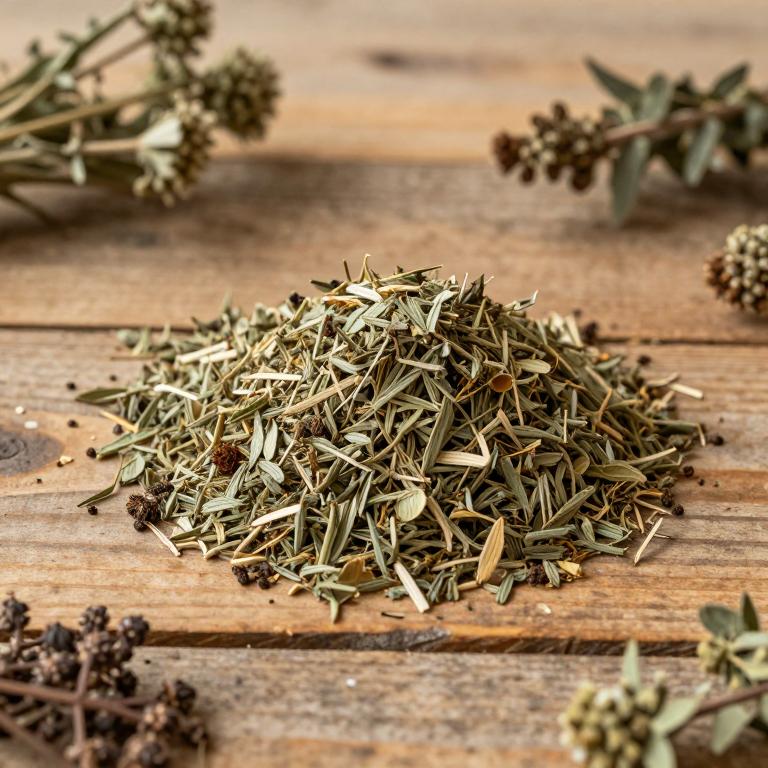
, scientifically known as Parthenium integrifolium, is a resilient medicinal plant valued for its diverse therapeutic properties. Often recognized by its distinct foliage, this species is utilized in traditional medicine to treat various ailments. Understanding its botanical characteristics and bioactive compounds is essential for exploring its potential in modern pharmacology.
- Family
- Not available
- Native range
- Northern America
- Parts used
- Not available
- Common names
- Not available
- Scientific synonyms
- Not available
Names and Synonyms
Scientific Names
Accepted name
Parthenium integrifoliumDistribution
This plant, known as Parthenium integrifolium, exhibits a specific distribution across the North-Central region of the United States. It can be found growing within the state of Illinois. Its presence also extends through the landscape of Iowa. Furthermore, the species is documented to inhabit parts of Kansas and Minnesota. Finally, its geographical range includes the state of Missouri.
| Region | Area |
|---|---|
| North-Central U.S.A. | Illinois |
| North-Central U.S.A. | Iowa |
| North-Central U.S.A. | Kansas |
| North-Central U.S.A. | Minnesota |
| North-Central U.S.A. | Missouri |
| North-Central U.S.A. | Oklahoma |
| North-Central U.S.A. | Wisconsin |
| Northeastern U.S.A. | Connecticut |
| Northeastern U.S.A. | Indiana |
| Northeastern U.S.A. | Massachusetts |
Sources: The World Checklist of Vascular Plants (WCVP)
Botanical Identification
Life history
The life history of Parthenium integrifolium is characterized by its classification as a perennial species, though its growth patterns can exhibit variability depending on environmental conditions. As a perennial, the plant is capable of surviving for multiple growing seasons, often establishing a robust presence in its habitat through persistent root systems or seed banks. While it maintains a perennial nature, its phenology may fluctuate, occasionally displaying behaviors consistent with annual or biennial cycles in response to climatic stressors or resource availability. This lifecycle allows the plant to persist through unfavorable periods and re-emerge to complete its reproductive stages, ensuring long-term survival within its ecological niche.
- Lifecycle :
- perennial
Morphology
The morphology of Parthenium integrifolium is characterized by its growth form as a non-woody herb and specifically a forb. It functions as a self-supporting plant rather than a climber, as it lacks the characteristics of a liana or vine, being categorized as both an obligatory and facultative self-supporting organism. In terms of its ecological niche and habitat preference, the plant is primarily terrestrial, lacking aquatic or semiaquatic adaptations. Furthermore, it is an independent organism that does not exhibit parasitic behavior, and it is a terrestrial species rather than an epiphyte.
- Aquatic :
- terrestrial
- Climber :
- self-supporting
- Epiphyte :
- terrestrial
- Growth form :
- herb
- Growth form :
- forb
- Parasite :
- independent
- Woodiness :
- non-woody
Reproduction
The reproduction of Parthenium integrifolium is characterized by a specific phenological cycle and highly consistent seed production metrics. The flowering period for this species typically commences in May and extends through October, though the timing can be variable depending on environmental conditions. During this reproductive phase, the plant produces seeds that exhibit a remarkably uniform mass; the seed mass remains constant across its developmental range, with a mean, maximum, and minimum value all recorded at 0.00308 g. This consistency in seed weight suggests a highly standardized reproductive output per seed produced during its active flowering months.
- Flowering time :
- May
- Flowering time :
- Oct
- Seed mass mean:
- 0.00308 g
Sources: Global Inventory of Floras and Traits (GIFT)
Chemicals
Parthenium integrifolium has 29 reported phytochemicals identified across 0 scientific publications and several other databases. The most consistently reported chemicals include 5-hydroxy-3,3',4',7-tetramethoxy flavone, Ash, CALCIUM, CHROMIUM, COBALT.
| Chemical | Supporting sources | Consensus |
|---|---|---|
| 5-hydroxy-3,3',4',7-tetramethoxy flavone | 1 supporting sources | ★☆☆☆☆ |
| Ash | 1 supporting sources | ★☆☆☆☆ |
| CALCIUM | 1 supporting sources | ★☆☆☆☆ |
| CHROMIUM | 1 supporting sources | ★☆☆☆☆ |
| COBALT | 1 supporting sources | ★☆☆☆☆ |
| FAT | 1 supporting sources | ★☆☆☆☆ |
| GUM | 1 supporting sources | ★☆☆☆☆ |
| INULIN | 1 supporting sources | ★☆☆☆☆ |
| IRON | 1 supporting sources | ★☆☆☆☆ |
| Isokaempferide | 1 supporting sources | ★☆☆☆☆ |
5-hydroxy-3,3',4',7-tetramethoxy flavone
- Dr. Duke
Ash
- Dr. Duke
CALCIUM
- Dr. Duke
CHROMIUM
- Dr. Duke
COBALT
- Dr. Duke
FAT
- Dr. Duke
GUM
- Dr. Duke
INULIN
- Dr. Duke
IRON
- Dr. Duke
Isokaempferide
- Dr. Duke
Activities
Parthenium integrifolium has 305 reported activities identified across 0 scientific publications and several other databases. The most consistently reported activities include ACE-Inhibitor, AP-1-Inhibitor, Absorbent, Acidulant, Alcohol-Dehydrogenase-Inhibitor.
| Activity | Supporting sources | Consensus |
|---|---|---|
| ACE-Inhibitor | 1 supporting sources | ★☆☆☆☆ |
| AP-1-Inhibitor | 1 supporting sources | ★☆☆☆☆ |
| Absorbent | 1 supporting sources | ★☆☆☆☆ |
| Acidulant | 1 supporting sources | ★☆☆☆☆ |
| Alcohol-Dehydrogenase-Inhibitor | 1 supporting sources | ★☆☆☆☆ |
| Aldose-Reductase-Inhibitor | 1 supporting sources | ★☆☆☆☆ |
| Allergenic | 1 supporting sources | ★☆☆☆☆ |
| Amphiglycemic? | 1 supporting sources | ★☆☆☆☆ |
| Analgesic | 1 supporting sources | ★☆☆☆☆ |
| Androgenic? | 1 supporting sources | ★☆☆☆☆ |
ACE-Inhibitor
- Dr. Duke
AP-1-Inhibitor
- Dr. Duke
Absorbent
- Dr. Duke
Acidulant
- Dr. Duke
Alcohol-Dehydrogenase-Inhibitor
- Dr. Duke
Aldose-Reductase-Inhibitor
- Dr. Duke
Allergenic
- Dr. Duke
Amphiglycemic?
- Dr. Duke
Analgesic
- Dr. Duke
Androgenic?
- Dr. Duke