Guayule
Parthenium argentatum · Accepted scientific name
Scientific literature: Very Sparse (1 studies) · ★☆☆☆☆
Guaayule, scientifically known as Parthenium argentatum, is a perennial shrub native to the Chihuahuan Desert. Renowned for its high essential oil content, this resilient plant offers significant potential for sustainable biofuel production and medicinal applications. Its ability to thrive in arid climates makes it a valuable resource for biotechnology.
- Family
- Asteraceae
- Native range
- Europe
- Parts used
- Not available
- Common names
- Mexican-Rubber
- Scientific synonyms
- Parthenium Argentatum Var. Brevifolium · Parthenium Argentatum Var. Dissectum · 8 more
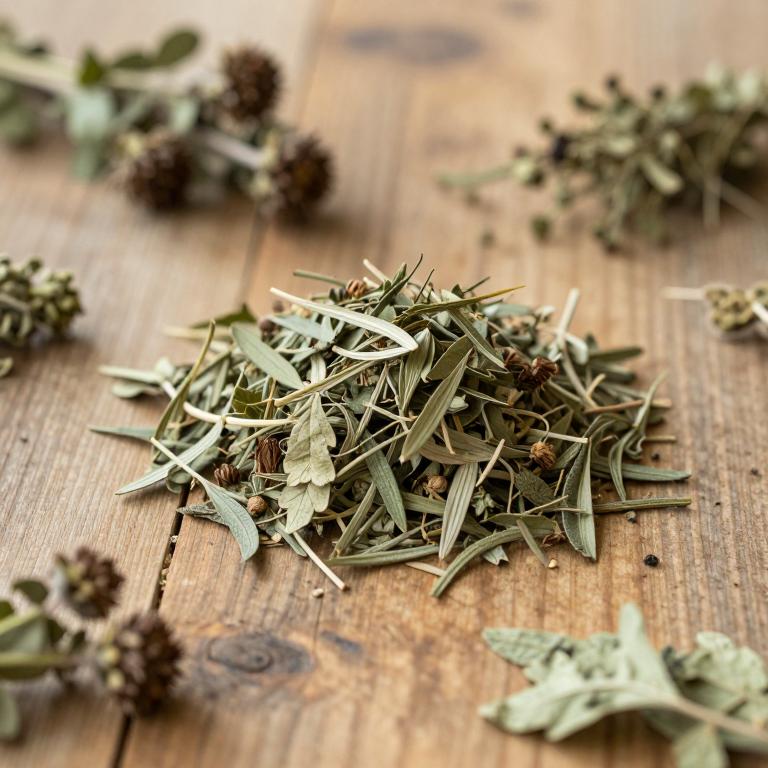
Names and Synonyms
Common Names
- Mexican-rubber
Scientific Names
Accepted name
Parthenium argentatumSynonyms
- Parthenium argentatum var. brevifolium
- Parthenium argentatum var. dissectum
- Parthenium argentatum var. angustifolium
- Parthenium argentatum var. deltoideum
- Parthenium argentatum var. gracile
- Parthenium argentatum var. latifolium
- Parthenium argentatum var. longifolium
- Parthenium argentatum f. marioloides
- Parthenium argentatum var. marioloides
- Parthenium argentatum f. patens
Regional and Traditional Names
German:
- Guayule
- Guayule
French:
- Guayule
Sources: Wikidata, Catalogue of Life
Taxonomical Classification
This plant belongs to the kingdom Plantae and is classified within the phylum Streptophyta and the class Equisetopsida. As a member of the subclass Magnoliidae and the order Asterales, it falls under the family Asteraceae. Finally, its specific taxonomic identity is defined by the genus Parthenium.
| Rank | Classification |
|---|---|
| Kingdom | Plantae |
| Phylum | Streptophyta |
| Class | Equisetopsida |
| Subclass | Magnoliidae |
| Order | Asterales |
| Family | Asteraceae |
| Genus | Parthenium |
Sources: The World Checklist of Vascular Plants (WCVP)
Distribution
This plant exhibits a diverse geographical distribution that spans several distinct regions across the globe. In Eastern Europe, its presence can be identified in both Krym and Ukraine. Its range extends into Central Asia, specifically within the territory of Tadzhiķistan. Furthermore, the species is found throughout the Caucasus region, particularly in the Transcaucasus. Finally, its distribution reaches the Southwestern U.S.A., including the state of Arizona.
| Region | Area |
|---|---|
| Eastern Europe | Krym |
| Eastern Europe | Ukraine |
| Central Asia | Tadzhikistan |
| Caucasus | Transcaucasus |
| Southwestern U.S.A. | Arizona |
| South-Central U.S.A. | Texas |
| Mexico | Mexico Northeast |
| Mexico | Mexico Southwest |
| Brazil | Brazil Southeast |
Sources: The World Checklist of Vascular Plants (WCVP)
Botanical Identification
Ecology
The ecology of Parthenium argentatum is characterized by its ability to thrive across a diverse altitudinal gradient, typically occurring at elevations ranging from a minimum of 600 m AMSL to a maximum of 3000 m AMSL. While it is naturally adapted to specific environmental conditions, it frequently colonizes anthropogenic areas (Área Antrópica), demonstrating a notable resilience and capacity to integrate into landscapes modified by human activity.
- Elevational range max:
- 3000 m AMSL
- Elevational range min:
- 600 m AMSL
- Habitat :
- Área Antrópica
Life history
The life history of Parthenium argentatum is characterized by its status as a perennial species, allowing the plant to persist in its environment over multiple growing seasons. As a long-lived woody shrub, it establishes a robust root system that supports its continued survival and regeneration through various seasonal cycles. While its longevity is a defining feature of its lifecycle, the plant's growth patterns and reproductive output can be variable depending on environmental conditions such as moisture availability and soil quality. This perennial nature enables the plant to endure periods of drought and successfully re-emerge, maintaining its presence within its ecological niche over extended periods.
- Lifecycle :
- perennial
Morphology
The morphology of Parthenium argentatum is characterized by a growth form classified as a shrub, exhibiting a variable degree of woodiness throughout its structure. This plant is strictly terrestrial in its habitat, functioning as an independent organism rather than an epiphyte or a parasite. It is a self-supporting species that does not exhibit climbing or vine-like behaviors, such as lianas. In terms of stature, it maintains a relatively low profile, with a plant height ranging from a minimum of 0.3 m to a maximum of 0.7 m.
- Aquatic :
- terrestrial
- Climber :
- self-supporting
- Epiphyte :
- terrestrial
- Growth form :
- shrub
- Parasite :
- independent
- Plant height max:
- 0.7 m
- Plant height min:
- 0.3 m
- Woodiness :
- variable
Physiology
The physiological characteristics of the foliage in Parthenium argentatum are defined by specific morphometric dimensions that govern its surface area and photosynthetic capacity. The leaves exhibit a distinct range of longitudinal growth, with a mean leaf length of 5.5 cm, though individual specimens vary from a minimum of 4 cm to a maximum of 7 cm. Complementing this length is a corresponding variation in transverse dimension; the leaf width fluctuates between a minimum of 0.7 cm and a maximum of 1.8 cm, maintaining a mean width of 1.25 cm. These structural proportions indicate a specialized leaf architecture optimized for the plant's environmental interactions and metabolic processes.
- Leaf length max:
- 7 cm
- Leaf length mean:
- 5.5 cm
- Leaf length min:
- 4 cm
- Leaf width max:
- 1.8 cm
- Leaf width mean:
- 1.25 cm
- Leaf width min:
- 0.7 cm
Reproduction
The reproduction of Parthenium argentatum is characterized by a specific flowering phenology and the production of minute fruits and seeds. The flowering period typically begins in June and concludes in August, although the timing can be variable across different environments. During this reproductive phase, the plant produces fruits that are highly consistent in their dimensions, maintaining a length of approximately 0.3 cm (with a minimum, maximum, and mean all measuring exactly 0.3 cm). The fruit width is slightly more varied, ranging from a minimum of 0.15 cm to a maximum of 0.18 cm, with a mean width of 0.165 cm. Following fertilization, the plant yields seeds that are exceptionally lightweight; the seed mass is constant across its measured range, with a minimum, maximum, and mean value all recorded at 4e-04 g.
- Flowering time :
- Jun
- Flowering time :
- Aug
- Fruit length max:
- 0.3 cm
- Fruit width max:
- 0.18 cm
- Fruit width mean:
- 0.165 cm
- Fruit width min:
- 0.15 cm
- Seed mass mean:
- 4e-04 g
Sources: Global Inventory of Floras and Traits (GIFT)
Chemicals
Parthenium argentatum has 1 reported phytochemicals identified across 0 scientific publications and several other databases. The most consistently reported chemicals include geranyl pyrophosphate.
| Chemical | Supporting sources | Consensus |
|---|---|---|
| geranyl pyrophosphate | 1 supporting sources | ★☆☆☆☆ |
geranyl pyrophosphate
- Phytochemistry