silver nailroot
Paronychia argentea · Accepted scientific name
Scientific literature: Very Sparse (14 studies) · ★☆☆☆☆
Silver nailroot, scientifically known as Paronychia argentea, is a resilient medicinal herb valued for its therapeutic properties. Traditionally used in various folk remedies, this plant is recognized for its unique botanical characteristics and potential healing benefits. Understanding its medicinal applications offers valuable insights into natural pharmacology and traditional wellness practices.
- Family
- Caryophyllaceae
- Native range
- Europe
- Parts used
- Not available
- Common names
- Silver Nailroot
- Scientific synonyms
- Paronychia Argentea Var. Mauritanica · Paronychia Argentea Var. Scabra · 28 more
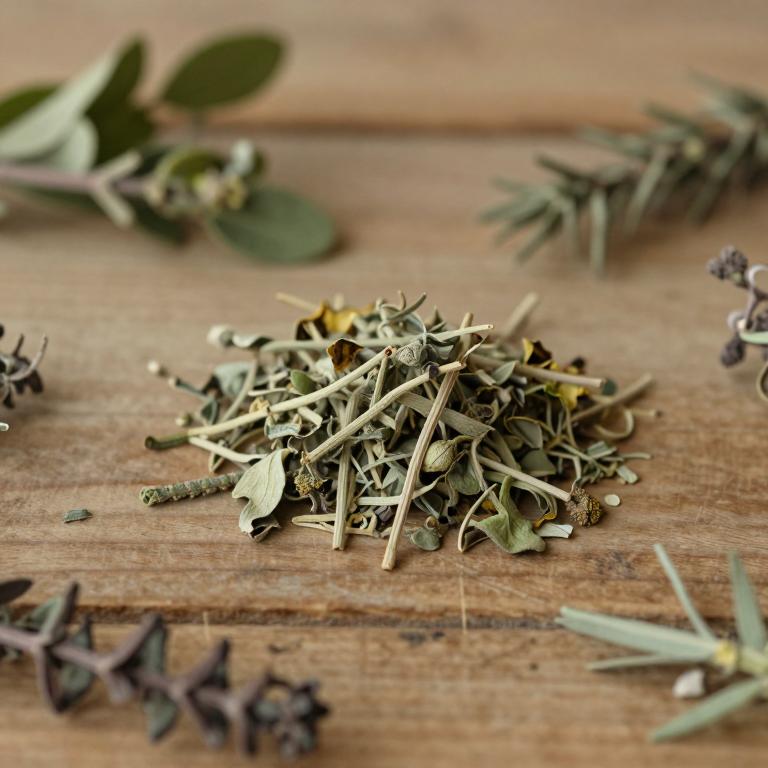
Names and Synonyms
Common Names
- silver nailroot
Scientific Names
Accepted name
Paronychia argenteaSynonyms
- Paronychia argentea var. mauritanica
- Paronychia argentea var. scabra
- Paronychia argentea var. scariosissima
- Paronychia argentea var. suffruticosa
- Paronychia nitida
- Paronychia argentea var. velutina
- Paronychia hispanica var. frutescens
- Paronychia argentea subvar. aristulata
- Paronychia saguntina
- Paronychia argentea subvar. angustifolia
- Paronychia argentea var. angustifolia
- Paronychia argentea var. rotundata
- Paronychia mauritanica
- Paronychia hispanica var. rotundata
- Paronychia argentea var. hispanica
- Paronychia polygonifolia var. elegantior
- Paronychia italica
- Paronychia hispanica
- Illecebrum paronychia
- Chaetonychia paronychia proles mauritanica
- Illecebrum narbonnense
- Paronychia glomerata
- Paronychia cuatrecasasii
- Chaetonychia paronychia
- Ferriera mediterranea
- Plottzia paronychia
- Paronychia hispanica var. oblonga
- Illecebrum argenteum
- Illecebrum italicum
- Illecebrum mauritanicum
Regional and Traditional Names
Spanish:
- Illecebrum mauritanicum
- Paronychia italica
- Paronychia nitida
- Paronychia carpetana
- Illecebrum maritimum
- Paronychia glomerata
- Paronychia cuatrecasii
- Paronychia pubescens
- Chaetonychia paronychia
- Paronychia mauritanica
German:
- Silber-Mauermiere
- silbernes Nagelkraut
French:
- paronyque argentée
Sources: Wikidata, Catalogue of Life
Taxonomical Classification
This plant belongs to the kingdom Plantae and is classified within the phylum Streptophyta and the class Equisetopsida. Following its placement in the subclass Magnoliidae and the order Caryophyllales, it is a member of the family Caryophyllaceae. Finally, it is categorized under the genus Paronychia.
| Rank | Classification |
|---|---|
| Kingdom | Plantae |
| Phylum | Streptophyta |
| Class | Equisetopsida |
| Subclass | Magnoliidae |
| Order | Caryophyllales |
| Family | Caryophyllaceae |
| Genus | Paronychia |
Sources: The World Checklist of Vascular Plants (WCVP)
Distribution
This plant exhibits a specific geographical distribution concentrated within the Mediterranean region of Southwestern Europe. It can be found growing in the Balearic Islands, which are part of the Baleares archipelago. Its presence is also documented across the island of Corsica and the territory of Sardegna. Furthermore, the species is distributed along the coastal or regional landscapes of France. Finally, the plant's range extends to the western reaches of the continent in Portugal.
| Region | Area |
|---|---|
| Southwestern Europe | Baleares |
| Southwestern Europe | Corse |
| Southwestern Europe | France |
| Southwestern Europe | Portugal |
| Southwestern Europe | Sardegna |
| Southwestern Europe | Spain |
| Southeastern Europe | Greece |
| Southeastern Europe | Italy |
| Southeastern Europe | Kriti |
| Southeastern Europe | Sicilia |
Sources: The World Checklist of Vascular Plants (WCVP)
Botanical Identification
Ecology
The ecology of Paronychia argentea is characterized by its broad adaptability to varying altitudinal gradients, allowing it to inhabit a diverse range of landscapes. This species exhibits a significant vertical distribution, spanning from sea level up to a maximum elevation of 1900 m AMSL. This wide elevational range suggests that the plant can thrive in both lowland coastal or valley environments and higher montane ecosystems. Such a broad ecological niche implies a high tolerance for shifting climatic variables, including fluctuations in temperature, atmospheric pressure, and moisture availability that occur as one moves from 0 m to 1900 m AMSL. Consequently, its presence across these different elevations allows it to occupy various microhabitats, potentially ranging from arid lowlands to more temperate highland terrains.
- Elevational range max:
- 1900 m AMSL
- Elevational range min:
- 0 m AMSL
Life history
The life history of Paronychia argentea is characterized by its classification as a perennial organism, meaning it maintains its existence through multiple growing seasons rather than completing its cycle in a single year. In terms of its structural life form, the species functions as a therophyte, a strategy where the plant survives unfavorable environmental conditions by completing its vegetative growth and persisting primarily through seeds or specialized survival structures. This lifecycle allows it to navigate seasonal fluctuations by resetting its growth patterns, ensuring long-term survival within its ecological niche.
- Life form :
- therophyte
- Lifecycle :
- perennial
Morphology
The morphology of Paronychia argentea is characterized by its growth form as a non-woody herb and subshrub that exhibits an independent lifestyle, functioning as a non-parasitic organism. The plant displays a prostrate shoot orientation and is classified as a self-supporting species rather than a climber. Its shoots typically range in length from a minimum of 5 cm to a maximum of 30 cm. Regarding its habitat and moisture requirements, the plant exhibits a versatile ecological profile that spans aquatic, semiaquatic, and terrestrial environments.
- Aquatic :
- terrestrial
- Climber :
- self-supporting
- Growth form :
- herb
- Growth form :
- subshrub
- Parasite :
- independent
- Shoot length max:
- 30 cm
- Shoot length min:
- 5 cm
- Shoot orientation :
- prostrate
- Woodiness :
- non-woody
Physiology
The physiology of Paronychia argentea is characterized by a C3 photosynthetic pathway, indicating a metabolic process typical of plants that fix carbon dioxide primarily through the Calvin cycle during daylight hours. The vegetative morphology is defined by its elliptic leaf form, which exhibits specific dimensional constraints to optimize light interception and gas exchange. These leaves possess a minimum length of 0.5 cm and a maximum length of 1.5 cm, while their width ranges from a minimum of 0.15 cm to a maximum of 0.5 cm, reflecting a compact architectural strategy for managing transpiration and resource acquisition.
- Leaf form :
- elliptic
- Leaf length max:
- 1.5 cm
- Leaf length min:
- 0.5 cm
- Leaf width max:
- 0.5 cm
- Leaf width min:
- 0.15 cm
- Photosynthetic pathway :
- C3
Reproduction
The reproduction of Paronychia argentea is characterized by a specific flowering phenology and minute reproductive structures. The flowering period typically begins in March and concludes in June, though the timing can be variable throughout the year. During this phase, the plant produces small, green flowers that measure between 0.04 cm and 0.06 cm in length. Following pollination, the plant develops dry fruits that eventually yield seeds. These seeds are exceptionally lightweight, with a mean mass of 0.00087 g, falling within a very narrow range between a minimum of 0.00086 g and a maximum of 0.00088 g.
- Flower colour :
- green
- Flower length max:
- 0.06 cm
- Flower length min:
- 0.04 cm
- Flowering time :
- Mar
- Flowering time :
- Jun
- Fruit dryness :
- dry
- Seed mass max:
- 0.00088 g
- Seed mass mean:
- 0.00087 g
- Seed mass min:
- 0.00086 g
Sources: Global Inventory of Floras and Traits (GIFT)
Chemicals
Paronychia argentea has 8 reported phytochemicals identified across 0 scientific publications and several other databases. The most consistently reported chemicals include Fatty acids, Isorhamnetin, Jaceosidin, Quercetin 3-O-glucoside, Terpenoids.
| Chemical | Supporting sources | Consensus |
|---|---|---|
| Fatty acids | 1 supporting sources | ★☆☆☆☆ |
| Isorhamnetin | 1 supporting sources | ★☆☆☆☆ |
| Jaceosidin | 1 supporting sources | ★☆☆☆☆ |
| Quercetin 3-O-glucoside | 1 supporting sources | ★☆☆☆☆ |
| Terpenoids | 1 supporting sources | ★☆☆☆☆ |
| nitrate | 1 supporting sources | ★☆☆☆☆ |
| oxalic acid | 1 supporting sources | ★☆☆☆☆ |
| quercetin | 1 supporting sources | ★☆☆☆☆ |
Fatty acids
- Antibiotics (Basel, Switzerland)
Isorhamnetin
- Journal of pharmaceutical and biomedical analysis
Jaceosidin
- Journal of pharmaceutical and biomedical analysis
Quercetin 3-O-glucoside
- Journal of pharmaceutical and biomedical analysis
Terpenoids
- Antibiotics (Basel, Switzerland)
nitrate
- BMC complementary and alternative medicine
oxalic acid
- BMC complementary and alternative medicine
quercetin
- Journal of pharmaceutical and biomedical analysis
Activities
Paronychia argentea has 1 reported activities identified across 0 scientific publications and several other databases. The most consistently reported activities include Hypoglycemic.
| Activity | Supporting sources | Consensus |
|---|---|---|
| Hypoglycemic | 1 supporting sources | ★☆☆☆☆ |
Hypoglycemic
- Journal of ethnopharmacology
Conditions
Paronychia argentea has 5 reported investigations on conditions identified across 0 scientific publications and several other databases. The most consistently reported conditions include Bacillus subtilis, Escherichia coli, Pseudomonas aeruginosa, Staphylococcus aureus, kidney stones.
| Condition | Supporting sources | Consensus |
|---|---|---|
| Bacillus subtilis | 1 supporting sources | ★☆☆☆☆ |
| Escherichia coli | 1 supporting sources | ★☆☆☆☆ |
| Pseudomonas aeruginosa | 1 supporting sources | ★☆☆☆☆ |
| Staphylococcus aureus | 1 supporting sources | ★☆☆☆☆ |
| Kidney stones | 1 supporting sources | ★☆☆☆☆ |
Bacillus subtilis
- Journal of microbiological methods
Escherichia coli
- Journal of microbiological methods
Pseudomonas aeruginosa
- Journal of microbiological methods
Staphylococcus aureus
- Journal of microbiological methods
Kidney stones
- BMC complementary and alternative medicine
Preparations
Paronychia argentea has 5 reported preparations identified across 0 scientific publications and several other databases. The most consistently reported preparations include Aqueous extracts, Essential oil, decoction, ethanolic extract, plant extracts.
| Preparation | Supporting sources | Consensus |
|---|---|---|
| Aqueous extracts | 1 supporting sources | ★☆☆☆☆ |
| Essential oil | 1 supporting sources | ★☆☆☆☆ |
| Decoction | 1 supporting sources | ★☆☆☆☆ |
| Ethanolic extract | 1 supporting sources | ★☆☆☆☆ |
| Plant extracts | 1 supporting sources | ★☆☆☆☆ |
Aqueous extracts
- Journal of ethnopharmacology
Essential oil
- Journal of ethnopharmacology
Decoction
- Journal of ethnopharmacology
Ethanolic extract
- Journal of ethnopharmacology
Plant extracts
- Journal of microbiological methods