Parkia platycephala
Parkia platycephala · Accepted scientific name
Scientific literature: Very Sparse (2 studies) · ★☆☆☆☆
scientifically known as Parkia platycephalus, is a significant medicinal tree native to African tropical forests. Renowned for its diverse therapeutic properties, various parts of this plant are utilized in traditional medicine to treat ailments ranging from inflammation to digestive issues, offering valuable insights for modern pharmacological research and development.
- Family
- Fabaceae
- Native range
- Southern America
- Parts used
- Not available
- Common names
- Not available
- Scientific synonyms
- Not available
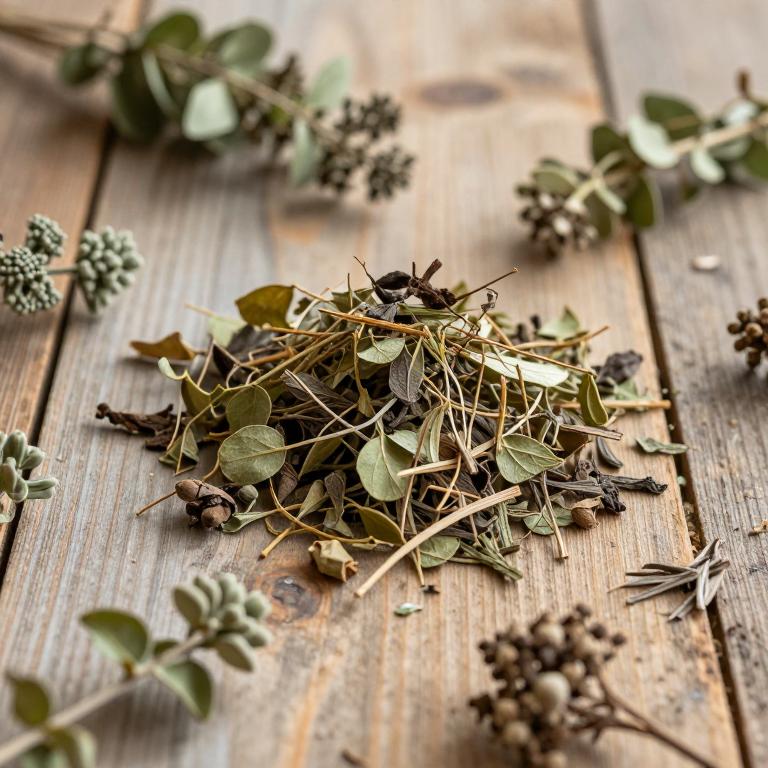
Names and Synonyms
Scientific Names
Accepted name
Parkia platycephalaSources: Wikidata, Catalogue of Life
Taxonomical Classification
This plant belongs to the kingdom Plantae and the phylum Streptophyta, falling under the class Equisetopsida and subclass Magnoliidae. Within the order Fabales, it is classified under the family Fabaceae. Specifically, Parkia platycephala is a member of the genus Parkia.
| Rank | Classification |
|---|---|
| Kingdom | Plantae |
| Phylum | Streptophyta |
| Class | Equisetopsida |
| Subclass | Magnoliidae |
| Order | Fabales |
| Family | Fabaceae |
| Genus | Parkia |
Sources: The World Checklist of Vascular Plants (WCVP)
Distribution
This plant exhibits a specific geographical presence within the vast territory of Brazil. Its distribution is notably recorded across the Brazil North region, covering extensive tropical areas. Additionally, the species can be found extending into the Brazil Northeast part of the country. The plant also occupies territories within the Brazil West-Central zone. Consequently, these three distinct regions define the primary habitat for Parkia platycephalo in Brazil.
| Region | Area |
|---|---|
| Brazil | Brazil West-Central |
| Brazil | Brazil Northeast |
| Brazil | Brazil North |
Sources: The World Checklist of Vascular Plants (WCVP)
Botanical Identification
Ecology
The ecology of Parkia platycephaloides is characterized by its broad adaptability across diverse Brazilian biomes, demonstrating a significant range of environmental tolerances. It is found inhabiting the semi-arid Caatinga (strictu sensu), where it must contend with seasonal water scarcity, as well as the more open and seasonally dry landscapes of the Cerrado (lato sensu). Furthermore, the species extends its ecological niche into more humid environments, including the seasonal deciduous forests (Floresta Estacional Semidecidual) and the more consistently moist and tropical environments of the Ombrophilous Forest (Floresta Ombrófila/Pluvial). This distribution pattern suggests that the species is capable of thriving in varying levels of precipitation and soil moisture, ranging from highly seasonal and water-stressed habitats to stable, high-rainfall tropical forest ecosystems.
- Habitat :
- Caatinga (stricto sensu), Cerrado (lato sensu), Floresta Estacional Semidecidual, Floresta Ombrófila (= Floresta Pluvial)
Life history
The life history of Parkia platycephaloides is characterized by a perennial lifecycle, meaning the plant persists for many years beyond its initial growth phases. As a long-lived woody species, it does not follow the rapid turnover seen in annual or biennial plants; instead, it invests significant energy into establishing a robust structural framework and a deep root system to ensure long-term survival in its native environment. Following the establishment of a sapling, the plant undergoes a prolonged vegetative growth period before reaching reproductive maturity, eventually transitioning into a stage of continuous or seasonal reproduction. Throughout its extended lifespan, it maintains its physiological functions and structural integrity, contributing to the forest ecosystem over multiple decades.
- Lifecycle :
- perennial
Morphology
The morphology of Parkia platycephala is characterized by its stature as a woody tree, typically reaching a mean height of 13 m, with a maximum height potential of up to 18 m. As a terrestrial species, it is entirely non-aquatic and does not exhibit epiphytic behavior, instead maintaining a self-supporting growth habit rather than acting as a climber, liana, or vine. The plant functions as an independent organism, lacking any parasitic tendencies, and is defined by its robust, woody structure.
- Aquatic :
- terrestrial
- Climber :
- self-supporting
- Epiphyte :
- terrestrial
- Growth form :
- tree
- Parasite :
- independent
- Plant height max:
- 18 m
- Plant height mean:
- 13 m
- Woodiness :
- woody
Physiology
The physiology of Parkia platycephala is characterized by a C3 photosynthetic pathway, which dictates its carbon assimilation process and metabolic efficiency under typical environmental conditions. As a C3 plant, it utilizes the Calvin cycle to fix atmospheric carbon dioxide, a process that is highly dependent on temperature and moisture availability for optimal gas exchange through its stomata. Furthermore, regarding its nutrient cycling capabilities, this species is not a nitrogen fixer, meaning it lacks the specialized symbiotic relationship with nitrogen-fixing bacteria required to convert atmospheric nitrogen into a usable form for its own growth. Consequently, its physiological reliance on soil nitrogen availability makes it subject to the nutrient profiles of its specific ecosystem.
- Nitrogen fixer :
- no
- Photosynthetic pathway :
- C3
Reproduction
The reproduction of Parkia platycephala is characterized by a complex biological process driven primarily by biotic mechanisms. The plant exhibits a pollination syndrome that is fundamentally biotic in nature, relying on living organisms to facilitate the transfer of pollen. Specifically, the reproductive success of this species is heavily dependent on insect pollination, with various types of insects serving as the primary vectors. This includes a diverse range of insect pollinators such as bees, beetles, ants, butterflies, moths, and flies, all of which play a critical role in the fertilization process. By utilizing these biotic agents, the plant ensures the genetic exchange necessary for its lifecycle and continued propagation within its ecosystem.
- Pollination syndrome :
- insect
- Pollination syndrome :
- biotic
Sources: Global Inventory of Floras and Traits (GIFT)
Chemicals
Parkia platycephala has 1 reported phytochemicals identified across 0 scientific publications and several other databases. The most consistently reported chemicals include Lectin.
| Chemical | Supporting sources | Consensus |
|---|---|---|
| Lectin | 1 supporting sources | ★☆☆☆☆ |
Lectin
- Preparative biochemistry & biotechnology
Conditions
Parkia platycephala has 1 reported investigations on conditions identified across 0 scientific publications and several other databases. The most consistently reported conditions include gastrointestinal disorder.
| Condition | Supporting sources | Consensus |
|---|---|---|
| Gastrointestinal disorder | 1 supporting sources | ★☆☆☆☆ |
Gastrointestinal disorder
- Biological research