Paratrophis insignis
Paratrophis insignis · Accepted scientific name
Scientific literature: Very Sparse (8 studies) · ★☆☆☆☆
Paratropis insignis, scientifically known as Paratropis insignis, is a significant medicinal plant valued in traditional healing practices. Renowned for its diverse therapeutic properties, it is frequently utilized to treat various ailments, ranging from inflammation to digestive issues. Exploring its phytochemical profile offers promising insights into modern pharmacological applications.
- Family
- Moraceae
- Native range
- Northern America
- Parts used
- Leaf
- Common names
- Not available
- Scientific synonyms
- Morus Marmolii · Morus Peruviana · 2 more
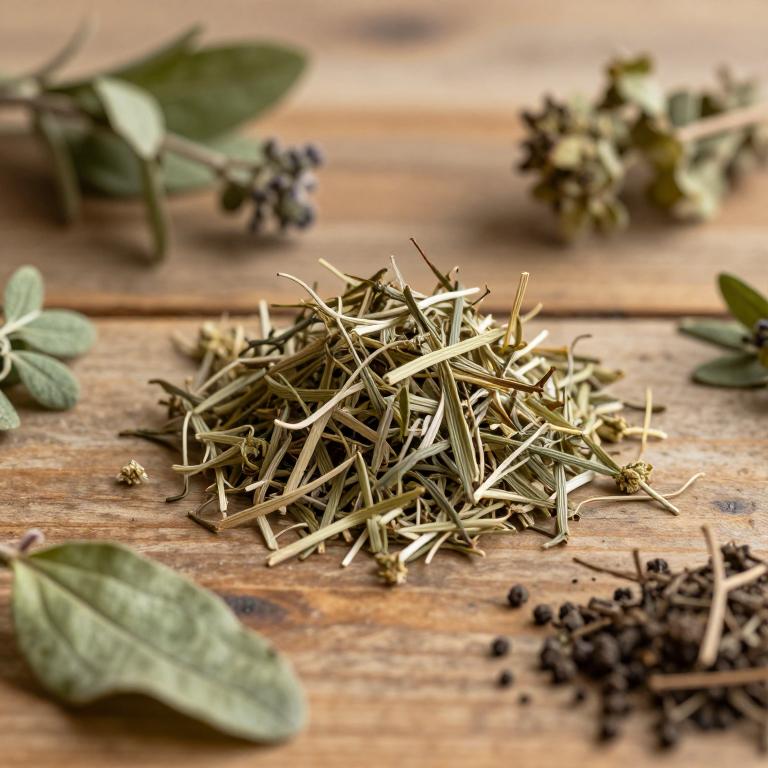
Names and Synonyms
Scientific Names
Accepted name
Paratrophis insignisSynonyms
- Morus marmolii
- Morus peruviana
- Morus trianae
- Morus insignis
Regional and Traditional Names
Spanish:
- Salvio lechoso
Sources: Catalogue of Life
Taxonomical Classification
This plant, Paratropis insignis, belongs to the kingdom Plantae and is classified under the phylum Streptophyta and class Equisetopsida. Within the subclass Magnoliidae, it is further organized into the order Rosales and the family Moraea. It is specifically identified by its genus, Paratropis.
| Rank | Classification |
|---|---|
| Kingdom | Plantae |
| Phylum | Streptophyta |
| Class | Equisetopsida |
| Subclass | Magnoliidae |
| Order | Rosales |
| Family | Moraceae |
| Genus | Paratrophis |
Sources: The World Checklist of Vascular Plants (WCVP)
Distribution
This plant exhibits a broad distribution across several tropical regions in the Americas. In North America, its presence is specifically noted in Southeast Mexico. Moving south, it can be found throughout Central America, including Guatemala, Costa Rica, and Panamá. The species also extends into Northern South America, where it is located in Venezuela. Consequently, its range spans a diverse corridor from Mexico to the northern reaches of the South American continent.
| Region | Area |
|---|---|
| Mexico | Mexico Southeast |
| Central America | Costa Rica |
| Central America | Guatemala |
| Central America | Panamá |
| Northern South America | Venezuela |
| Western South America | Bolivia |
| Western South America | Colombia |
| Western South America | Ecuador |
| Western South America | Peru |
| Southern South America | Argentina Northwest |
Sources: The World Checklist of Vascular Plants (WCVP)
Plant Parts
Paratrophis insignis has 1 reported plant parts identified across 1 scientific publications and several other databases that are studied for medicinal purposes. The most consistently reported plant part include leaf.
| Plant part | Supporting sources | Consensus |
|---|---|---|
| Leaf | 1 supporting sources | ★☆☆☆☆ |
Leaf
- Chemical & pharmaceutical bulletin
Chemicals
Paratrophis insignis has 7 reported phytochemicals identified across 1 scientific publications and several other databases. The most consistently reported chemicals include BETA-SITOSTEROL, Moracin M, Mulberrofuran U, Ursolic acid, beta-sitosterol-3-O-beta-glucopyranoside.
| Chemical | Supporting sources | Consensus |
|---|---|---|
| BETA-SITOSTEROL | 1 supporting sources | ★☆☆☆☆ |
| Moracin M | 1 supporting sources | ★☆☆☆☆ |
| Mulberrofuran U | 1 supporting sources | ★☆☆☆☆ |
| Ursolic acid | 1 supporting sources | ★☆☆☆☆ |
| beta-sitosterol-3-O-beta-glucopyranoside | 1 supporting sources | ★☆☆☆☆ |
| kaempferol-3-O-beta-glucopyranoside | 1 supporting sources | ★☆☆☆☆ |
| quercetin 3-O-beta-glucopyranoside | 1 supporting sources | ★☆☆☆☆ |
BETA-SITOSTEROL
- Chemical & pharmaceutical bulletin
Moracin M
- Chemical & pharmaceutical bulletin
Mulberrofuran U
- Chemical & pharmaceutical bulletin
Ursolic acid
- Chemical & pharmaceutical bulletin
beta-sitosterol-3-O-beta-glucopyranoside
- Chemical & pharmaceutical bulletin
kaempferol-3-O-beta-glucopyranoside
- Chemical & pharmaceutical bulletin
quercetin 3-O-beta-glucopyranoside
- Chemical & pharmaceutical bulletin
Preparations
Paratrophis insignis has 1 reported preparations identified across 1 scientific publications and several other databases. The most consistently reported preparations include Ethyl acetate- and n-butanol-soluble fractions of the leaves.
| Preparation | Supporting sources | Consensus |
|---|---|---|
| Ethyl acetate- and n-butanol-soluble fractions of the leaves | 1 supporting sources | ★☆☆☆☆ |
Ethyl acetate- and n-butanol-soluble fractions of the leaves
- Chemical & pharmaceutical bulletin