Paratinospora sagittata
Paratinospora sagittata · Accepted scientific name
Scientific literature: Very Sparse (26 studies) · ★☆☆☆☆
scientifically known as Paratinospora sagittata, is a remarkable medicinal plant valued for its potent therapeutic properties. Found in specific tropical ecosystems, this species is utilized in traditional medicine to treat various ailments. Research continues to explore its bioactive compounds, highlighting its significant potential in modern pharmacology and herbal wellness.
- Family
- Menispermaceae
- Native range
- Asia-Temperate
- Parts used
- Root
- Common names
- Not available
- Scientific synonyms
- Tinospora Sagittata Var. Yunnanensis · Tinospora Sagittata Var. Craveniana · 9 more
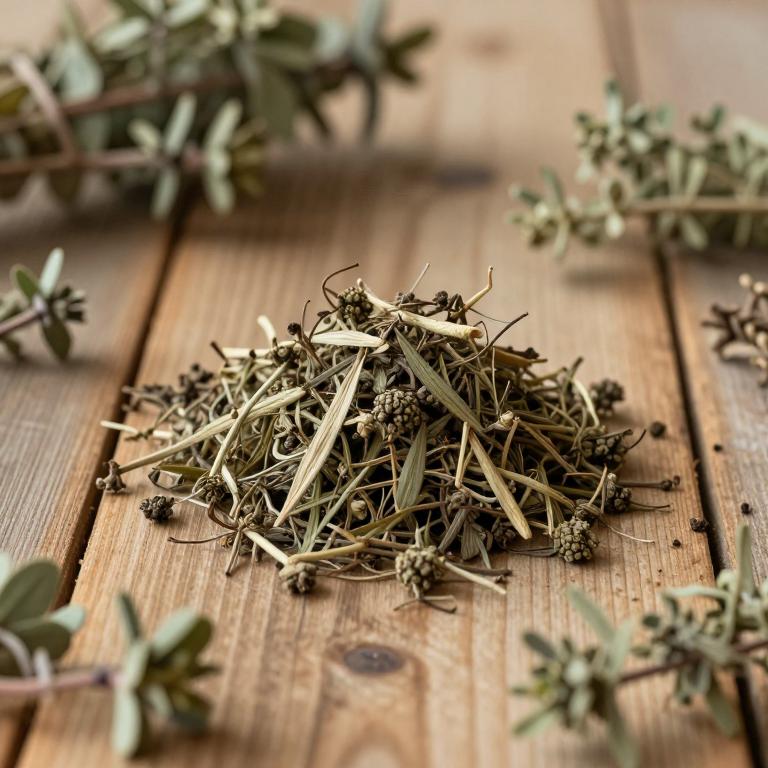
Names and Synonyms
Scientific Names
Accepted name
Paratinospora sagittataSynonyms
- Tinospora sagittata var. yunnanensis
- Tinospora sagittata var. craveniana
- Tinospora sagittata
- Tinospora sagittata var. leucocarpa
- Tinospora yunnanensis
- Tinospora craveniana
- Tinospora intermedia
- Tinospora imbricata
- Tinospora capillipes
- Tinospora szechuanensis
- Limacia sagittata
Sources: Catalogue of Life
Taxonomical Classification
This plant belongs to the kingdom Plantae and is classified within the phylum Streptophyta and the class Equisetopsida. Under the subclass Magnoliidae and order Ranunculales, it is further categorized into the family Menispermaceae. Finally, its taxonomic identity is established within the genus Paratinospora, specifically as the species Paratinospora sagittata.
| Rank | Classification |
|---|---|
| Kingdom | Plantae |
| Phylum | Streptophyta |
| Class | Equisetopsida |
| Subclass | Magnoliidae |
| Order | Ranunculales |
| Family | Menispermaceae |
| Genus | Paratinospora |
Sources: The World Checklist of Vascular Plants (WCVP)
Distribution
This plant exhibits a diverse range of habitats across the vast landscapes of China. Its distribution extends through the varied terrains of China South-Central and China North-Central regions. Additionally, the species can be found inhabiting the tropical environments of Hainan. It also grows within the specific ecological zones of China Southeast. Finally, the geographical reach of this medicinal plant includes the high-altitude areas of Tibet.
| Region | Area |
|---|---|
| China | China South-Central |
| China | Hainan |
| China | China North-Central |
| China | China Southeast |
| China | Tibet |
| Indo-China | Vietnam |
Sources: The World Checklist of Vascular Plants (WCVP)
Plant Parts
Paratinospora sagittata has 1 reported plant parts identified across 2 scientific publications and several other databases that are studied for medicinal purposes. The most consistently reported plant part include root.
| Plant part | Supporting sources | Consensus |
|---|---|---|
| Root | 2 supporting sources | ★☆☆☆☆ |
Root
- Phytochemistry
- Zhong yao cai = Zhongyaocai = Journal of Chinese medicinal materials
Chemicals
Paratinospora sagittata has 19 reported phytochemicals identified across 2 scientific publications and several other databases. The most consistently reported chemicals include (+)-5'-methoxyisolariciresinol 3alpha-O-beta-D-glucopyranoside, 2-Deoxycrustecdysone, Clerodane Diterpenoids, Columbin, Compound 1.
| Chemical | Supporting sources | Consensus |
|---|---|---|
| (+)-5'-methoxyisolariciresinol 3alpha-O-beta-D-glucopyranoside | 1 supporting sources | ★☆☆☆☆ |
| 2-Deoxycrustecdysone | 1 supporting sources | ★☆☆☆☆ |
| Clerodane Diterpenoids | 1 supporting sources | ★☆☆☆☆ |
| Columbin | 1 supporting sources | ★☆☆☆☆ |
| Compound 1 | 1 supporting sources | ★☆☆☆☆ |
| Compound 17 | 1 supporting sources | ★☆☆☆☆ |
| Compound 2 | 1 supporting sources | ★☆☆☆☆ |
| Compound 3 | 1 supporting sources | ★☆☆☆☆ |
| Flavonoids | 1 supporting sources | ★☆☆☆☆ |
| Geniposide | 1 supporting sources | ★☆☆☆☆ |
(+)-5'-methoxyisolariciresinol 3alpha-O-beta-D-glucopyranoside
- Zhong yao cai = Zhongyaocai = Journal of Chinese medicinal materials
2-Deoxycrustecdysone
- Zhong yao cai = Zhongyaocai = Journal of Chinese medicinal materials
Clerodane Diterpenoids
- Phytochemistry
Columbin
- Toxicology letters
Compound 1
- Phytochemistry
Compound 17
- Phytochemistry
Compound 2
- Phytochemistry
Compound 3
- Fitoterapia
Flavonoids
- Journal of ethnopharmacology
Geniposide
- Zhong yao cai = Zhongyaocai = Journal of Chinese medicinal materials
Activities
Paratinospora sagittata has 5 reported activities identified across 2 scientific publications and several other databases. The most consistently reported activities include Anticancer, Antimicrobial, Antiprotozoal, Hypoglycemic, Hypolipidemic.
| Activity | Supporting sources | Consensus |
|---|---|---|
| Anticancer | 1 supporting sources | ★☆☆☆☆ |
| Antimicrobial | 1 supporting sources | ★☆☆☆☆ |
| Antiprotozoal | 1 supporting sources | ★☆☆☆☆ |
| Hypoglycemic | 1 supporting sources | ★☆☆☆☆ |
| Hypolipidemic | 1 supporting sources | ★☆☆☆☆ |
Anticancer
- Frontiers in pharmacology
Antimicrobial
- Frontiers in pharmacology
Antiprotozoal
- Frontiers in pharmacology
Hypoglycemic
- Combinatorial chemistry & high throughput screening
Hypolipidemic
- Frontiers in pharmacology
Preparations
Paratinospora sagittata has 2 reported preparations identified across 2 scientific publications and several other databases. The most consistently reported preparations include Radix Tinosporae, roots.
| Preparation | Supporting sources | Consensus |
|---|---|---|
| Radix tinosporae | 1 supporting sources | ★☆☆☆☆ |
| Roots | 1 supporting sources | ★☆☆☆☆ |
Radix tinosporae
- Phytochemistry
Roots
- Zhong yao cai = Zhongyaocai = Journal of Chinese medicinal materials