Parastrephia lucida
Parastrephia lucida · Accepted scientific name
Scientific literature: Very Sparse (18 studies) · ★☆☆☆☆
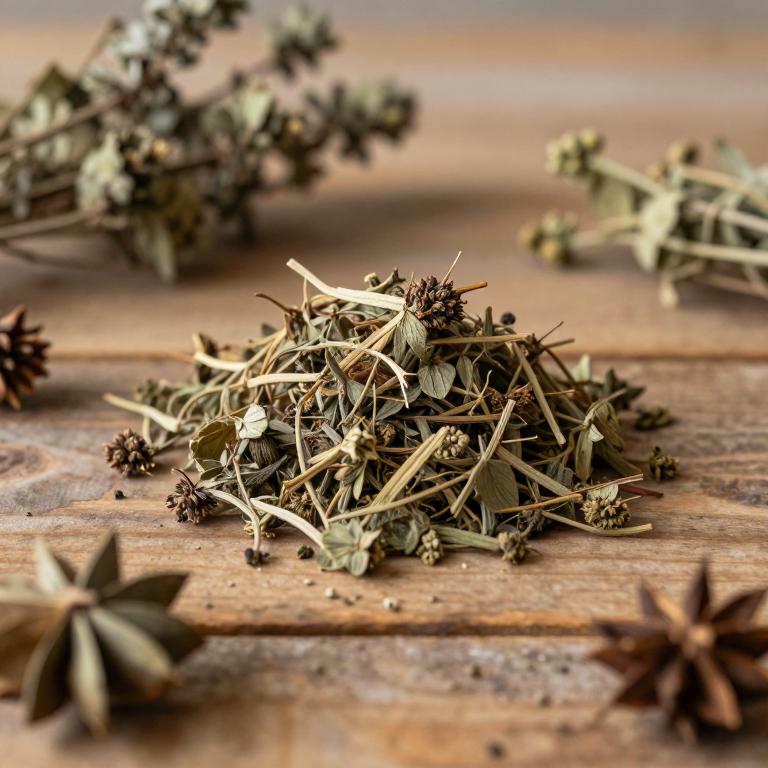
, scientifically known as Parastrephia lucida, is a resilient medicinal shrub native to the high-altitude regions of the Andes. Renowned in traditional folk medicine, it possesses significant therapeutic potential. Researchers are currently exploring its bioactive compounds for their antioxidant and anti-inflammatory properties, highlighting its importance in natural pharmacology.
- Family
- Asteraceae
- Native range
- Southern America
- Parts used
- Not available
- Common names
- Not available
- Scientific synonyms
- Baccharis Lucida · Baccharis Phyliciformis · 14 more
Names and Synonyms
Scientific Names
Accepted name
Parastrephia lucidaSynonyms
- Baccharis lucida
- Baccharis phyliciformis
- Polyclados abietinus
- Lepidophyllum phyliciforme
- Parastrephia ericoides
- Vernonia phyliciformis
- Parastrephia phyliciformis
- Diplostephium tovarii
- Dolichogyne glabra
- Dolichogyne rigida
- Lepidophyllum abietinum
- Lepidophyllum lucidum
- Lepidophyllum phyliciforme var. resinosum
- Lepidophyllum rigidum
- Vernonia phyliciformis var. resinosa
- Dolichogyne rupestris
Sources: Wikidata, Catalogue of Life
Taxonomical Classification
This plant belongs to the kingdom Plantae and the phylum Streptophyta, falling under the class Equisetopsida and subclass Magnoliidae. Within the order Asterales and the family Asteraceae, it is classified under the genus Parastrefia. Its specific scientific designation is Parastrefia lucida.
| Rank | Classification |
|---|---|
| Kingdom | Plantae |
| Phylum | Streptophyta |
| Class | Equisetopsida |
| Subclass | Magnoliidae |
| Order | Asterales |
| Family | Asteraceae |
| Genus | Parastrephia |
Sources: The World Checklist of Vascular Plants (WCVP)
Distribution
This plant is primarily located within the diverse landscapes of Western South America. Specifically, its presence can be identified in the territories of Bolivia and Peru. The species also extends into the southern regions of Brazil, covering both the Southeast and South areas. Furthermore, its range reaches into Southern South America, specifically within the Northwest of Argentina. Together, these locations define the unique geographical footprint of Parastrephia lucida.
| Region | Area |
|---|---|
| Western South America | Bolivia |
| Western South America | Peru |
| Brazil | Brazil Southeast |
| Brazil | Brazil South |
| Southern South America | Argentina Northwest |
| Southern South America | Chile North |
Sources: The World Checklist of Vascular Plants (WCVP)
Botanical Identification
Ecology
The ecology of Parasatrephia lucida is characterized by its preference for high-altitude environments, typically flourishing within specific montane zones. This species occupies a specialized ecological niche defined by a distinct elevational range, occurring at altitudes starting from a minimum of 2900 m AMSL and extending up to a maximum of 5000 m AMSL. This distribution suggests an adaptation to the unique climatic conditions, such as lower temperatures and varying atmospheric pressures, found in these high-elevation tropical or subtropical mountain ecosystems.
- Elevational range max:
- 5000 m AMSL
- Elevational range min:
- 2900 m AMSL
Life history
The life history of Parastrephia lucida is characterized by its status as a perennial species, allowing it to establish a long-term presence within its native habitats. Throughout its existence, the plant undergoes multiple growing seasons, relying on a robust root system to survive environmental fluctuations and sustain its development over several years. As a perennial, it avoids the complete mortality associated with annual or biennial life cycles, instead focusing on iterative growth and the ability to recover from seasonal stresses. This enduring lifecycle supports its reproductive strategies, enabling the plant to contribute to the stability and continuity of its ecosystem over an extended period.
- Lifecycle :
- perennial
Morphology
The morphology of Parastrephia lucida is characterized by a woody growth form, specifically classified as a shrub. It functions as an independent organism, exhibiting no parasitic tendencies toward other plants. The plant is terrestrial in nature, lacking aquatic or semiaquatic adaptations, and it does not exhibit epiphytic behavior, remaining firmly rooted in the ground rather than growing on other structures. Furthermore, it is a self-supporting species, meaning it does not possess the climbing or vining habits of lianas or facultative climbers, maintaining a stable, upright structural integrity through its woody stems.
- Aquatic :
- terrestrial
- Climber :
- self-supporting
- Epiphyte :
- terrestrial
- Growth form :
- shrub
- Parasite :
- independent
- Woodiness :
- woody
Sources: Global Inventory of Floras and Traits (GIFT)
Chemicals
Parastrephia lucida has 9 reported phytochemicals identified across 0 scientific publications and several other databases. The most consistently reported chemicals include Flavonoids, Apigenin trimethyl ether, CINNAMIC ACID, Coumarines, apigenin.
| Chemical | Supporting sources | Consensus |
|---|---|---|
| Flavonoids | 2 supporting sources | ★☆☆☆☆ |
| Apigenin trimethyl ether | 1 supporting sources | ★☆☆☆☆ |
| CINNAMIC ACID | 1 supporting sources | ★☆☆☆☆ |
| Coumarines | 1 supporting sources | ★☆☆☆☆ |
| apigenin | 1 supporting sources | ★☆☆☆☆ |
| kaempferol | 1 supporting sources | ★☆☆☆☆ |
| luteolin methyl ether | 1 supporting sources | ★☆☆☆☆ |
| polyphenols | 1 supporting sources | ★☆☆☆☆ |
| vanillin | 1 supporting sources | ★☆☆☆☆ |
Flavonoids
- Journal of ethnopharmacology
- Saudi pharmaceutical journal : SPJ : the official publication of the Saudi Pharmaceutical Society
Apigenin trimethyl ether
- Journal of ethnopharmacology
CINNAMIC ACID
- Journal of ethnopharmacology
Coumarines
- Saudi pharmaceutical journal : SPJ : the official publication of the Saudi Pharmaceutical Society
apigenin
- Journal of ethnopharmacology
kaempferol
- Journal of ethnopharmacology
luteolin methyl ether
- Journal of ethnopharmacology
polyphenols
- Saudi pharmaceutical journal : SPJ : the official publication of the Saudi Pharmaceutical Society
vanillin
- Journal of ethnopharmacology
Activities
Parastrephia lucida has 2 reported activities identified across 0 scientific publications and several other databases. The most consistently reported activities include Antioxidant, Antiseptic.
| Activity | Supporting sources | Consensus |
|---|---|---|
| Antioxidant | 2 supporting sources | ★☆☆☆☆ |
| Antiseptic | 1 supporting sources | ★☆☆☆☆ |
Antioxidant
- Journal of food science
- Saudi pharmaceutical journal : SPJ : the official publication of the Saudi Pharmaceutical Society
Antiseptic
- Journal of ethnopharmacology
Conditions
Parastrephia lucida has 3 reported investigations on conditions identified across 0 scientific publications and several other databases. The most consistently reported conditions include antiseptic, bacterial infections, pain.
| Condition | Supporting sources | Consensus |
|---|---|---|
| Antiseptic | 1 supporting sources | ★☆☆☆☆ |
| Bacterial infections | 1 supporting sources | ★☆☆☆☆ |
| Pain | 1 supporting sources | ★☆☆☆☆ |
Antiseptic
- Journal of ethnopharmacology
Bacterial infections
- Journal of ethnopharmacology
Pain
- Journal of ethnopharmacology
Preparations
Parastrephia lucida has 10 reported preparations identified across 0 scientific publications and several other databases. The most consistently reported preparations include aqueous extracts, ethanol 20% extracts, ethanolic extract, extract, extracts.
| Preparation | Supporting sources | Consensus |
|---|---|---|
| Aqueous extracts | 1 supporting sources | ★☆☆☆☆ |
| Ethanol 20% extracts | 1 supporting sources | ★☆☆☆☆ |
| Ethanolic extract | 1 supporting sources | ★☆☆☆☆ |
| Extract | 1 supporting sources | ★☆☆☆☆ |
| Extracts | 1 supporting sources | ★☆☆☆☆ |
| Fractions | 1 supporting sources | ★☆☆☆☆ |
| Hydroalcoholic extracts | 1 supporting sources | ★☆☆☆☆ |
| Resin | 1 supporting sources | ★☆☆☆☆ |
| Standardized hydroalcoholic extracts | 1 supporting sources | ★☆☆☆☆ |
| Tinctures | 1 supporting sources | ★☆☆☆☆ |
Aqueous extracts
- Journal of ethnopharmacology
Ethanol 20% extracts
- Journal of food science
Ethanolic extract
- Saudi pharmaceutical journal : SPJ : the official publication of the Saudi Pharmaceutical Society
Extract
- Journal of ethnopharmacology
Extracts
- Journal of ethnopharmacology
Fractions
- Journal of ethnopharmacology
Hydroalcoholic extracts
- Journal of ethnopharmacology
Resin
- Saudi pharmaceutical journal : SPJ : the official publication of the Saudi Pharmaceutical Society
Standardized hydroalcoholic extracts
- Brazilian journal of medical and biological research = Revista brasileira de pesquisas medicas e biologicas
Tinctures
- Journal of ethnopharmacology