Sea Daffodil
Pancratium maritimum · Accepted scientific name
Scientific literature: Sparse (65 studies) · ★★☆☆☆
Sea Daffodil, scientifically known as Pancratium maritimum, is a striking perennial bulb found along Mediterranean coastlines. Renowned for its fragrant, white blooms, this resilient plant thrives in sandy habitats. Beyond its aesthetic beauty, it holds significant ethnobotanical value, offering diverse medicinal properties used in traditional healing practices worldwide.
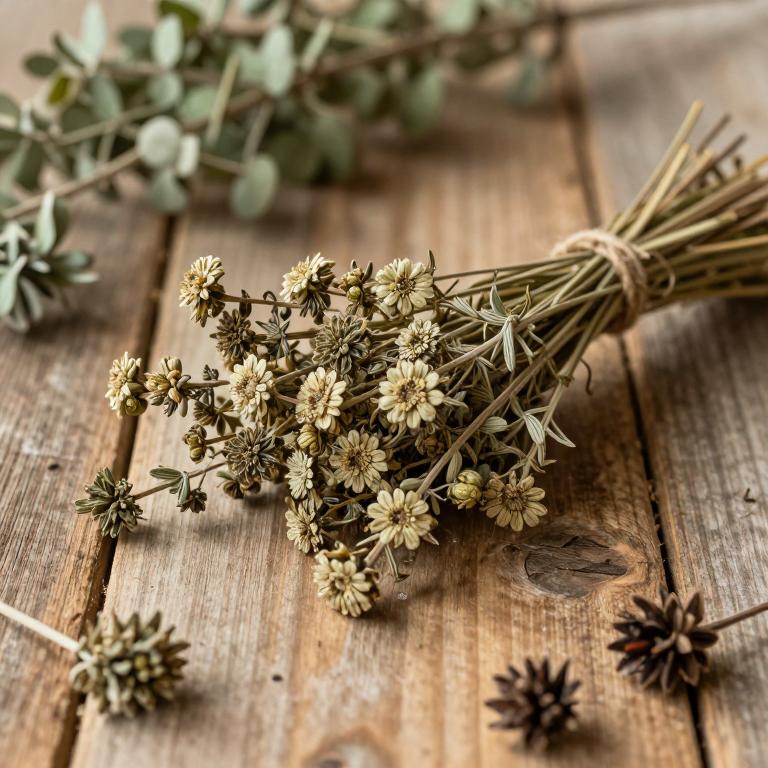
Names and Synonyms
Common Names
- Sea Daffodil
- sea-daffodil
- Sweet Spider-lily
Scientific Names
Accepted name
Pancratium maritimumSynonyms
- Pancratium maritimum var. aureum
- Pancratium angustifolium
- Pancratium aegyptiacum
- Pancratium linosae
- Pancratium maritimum f. barcinonense
- Pancratium carolinianum
- Pancratium mirennae
- Pancratium abchasicum
- Pancratium barcinonense
- Hymenocallis ruizii
- Hymenocallis maritima
- Hymenocallis caroliniana
Regional and Traditional Names
Spanish:
- Nardo coronado
- Nardo marítimo
- Azucena marítima
- Hymenocallis maritima
- Pancratium carolinianum
- Scilla parva
- Hymenocallis lacera
- Hymenocallis caroliniana
- Hymenocallis ruizii
- Pancratium aegyptiacum
- Pancratium angustifolium
- Pancratium abchasicum
- Pancratium barcinonense
- Pancratium mirennae
- Pancratium linosae
- Nardo maritimo
- Azucena maritima
- Azucena de Mar
- Lirio de Mar
German:
- Dünen-Trichternarzisse
- Strandlilie
- Dünen-Trichternarzisse
- Strandlilie
French:
- Lis maritime
- Lis Maritime
- Lis de mer
- Lis des sables
- Lys des dunes
- Lys de mer
- Lis de mer
- Lis des sables
- Lis maritime
- Lys de mer
- Lys des sables
- Lys maritime
Sources: Wikidata, Catalogue of Life
Taxonomical Classification
This plant belongs to the kingdom Plantae and is classified under the phylum Streptophyta and the class Equisetopsida. Within the subclass Magnoliidae, it follows the order Asparagales and is a member of the family Amaryllidaceae. Finally, it is categorized under the genus Pancratium.
| Rank | Classification |
|---|---|
| Kingdom | Plantae |
| Phylum | Streptophyta |
| Class | Equisetopsida |
| Subclass | Magnoliidae |
| Order | Asparagales |
| Family | Amaryllidaceae |
| Genus | Pancratium |
Sources: The World Checklist of Vascular Plants (WCVP)
Distribution
This plant exhibits a specific distribution across various coastal regions of Europe. In Northern Europe, its presence can be found as far north as Great Britain. Moving toward Southwestern Europe, it is widely distributed across the islands of the Baleares and Corse. The species also inhabits the mainland territories of France. Furthermore, its range extends along the Atlantic coast into Portugal.
| Region | Area |
|---|---|
| Northern Europe | Great Britain |
| Southwestern Europe | Baleares |
| Southwestern Europe | Corse |
| Southwestern Europe | France |
| Southwestern Europe | Portugal |
| Southwestern Europe | Sardegna |
| Southwestern Europe | Spain |
| Southeastern Europe | Albania |
| Southeastern Europe | Bulgaria |
| Southeastern Europe | Greece |
Sources: The World Checklist of Vascular Plants (WCVP)
Botanical Identification
Ecology
The ecology of Pancratium maritimum is characterized by its specialized adaptation to coastal environments, where it primarily inhabits sandy substrates and shorelines. This species thrives in low-lying maritime zones, maintaining a specific elevational range that begins at sea level (0 m AMSL) and extends only slightly inland to a maximum of 30 m AMSL. By occupying these shifting sand habitats, the plant has evolved to withstand the unique stresses of littoral ecosystems, including high salinity and unstable soil conditions.
- Elevational range max:
- 30 m AMSL
- Elevational range min:
- 0 m AMSL
- Habitat :
- sand, shores
Life history
The life history of Pancratium maritimum is characterized by its status as a perennial species, allowing it to persist in its coastal habitats over multiple years. As a plant adapted to survive fluctuating environmental conditions, it functions as a geophyte, storing essential nutrients and moisture within underground structures to sustain its growth cycles. This survival strategy is further categorized by its classification as a cryptophyte, meaning its vital regenerative organs are protected beneath the soil surface, shielding them from the harsh, saline, and often arid conditions of its natural environment.
- Life form :
- geophyte
- Life form :
- cryptophyte
- Lifecycle :
- perennial
Morphology
The morphology of Pancratium maritimum is characterized by a growth form consisting of a non-woody herb and forb. It is a self-supporting plant that does not function as a climber, liana, or vine, and it maintains an independent lifestyle as it is not a parasite. In terms of its ecological niche, it is a terrestrial species rather than an aquatic, semiaquatic, or epiphytic one. The plant typically reaches a height ranging from a minimum of 0.2 m to a maximum of 0.6 m.
- Aquatic :
- terrestrial
- Climber :
- self-supporting
- Epiphyte :
- terrestrial
- Growth form :
- herb
- Growth form :
- forb
- Parasite :
- independent
- Plant height max:
- 0.6 m
- Plant height min:
- 0.2 m
- Woodiness :
- non-woody
Physiology
The physiology of Pancratium maritimum is characterized by specialized adaptations to its coastal environment, particularly through its distinct leaf morphology and metabolic processes. The plant utilizes a C3 photosynthetic pathway to facilitate carbon fixation. Its foliage is defined by a linear leaf form, exhibiting a degree of succulence that aids in moisture retention. The leaves vary in size, with a minimum length of 25 cm reaching up to a maximum of 40 cm, while the width remains relatively narrow and consistent, ranging from a minimum of 1.2 cm to a maximum of 1.3 cm.
- Leaf form :
- linear
- Leaf length max:
- 40 cm
- Leaf length min:
- 25 cm
- Leaf width max:
- 1.3 cm
- Leaf width min:
- 1.2 cm
- Photosynthetic pathway :
- C3
- Succulence :
- yes
Reproduction
The reproduction of Pancratium maritimum is characterized by a sexual process involving bisexual flowers arranged in an umbel inflorescence. These white flowers, which measure between 3.5 cm and 5 cm in length, typically bloom during the month of August. The plant relies on biotic pollination, specifically utilizing an insect pollination syndrome, and self-fertilization is notably absent. Following successful pollination, the plant develops a dehiscent capsule fruit that measures approximately 3 cm to 4 cm in length and 2 cm to 3 cm in width. Each capsule is highly productive, containing a large number of seeds ranging from 101 to 1000 per fruit. The seeds themselves vary in size, with lengths between 13 mm and 16 mm and widths between 9 mm and 12 mm, possessing a mean mass of approximately 0.0439858335 g (ranging from 0.0374 g to 0.0483 g). Dispersal of the seeds occurs through both hydrochorous (water) and anthropochorous (human) syndromes, facilitating the spread of the species across its habitat.
- Dehiscence :
- dehiscent
- Dispersal syndrome :
- hydrochorous
- Dispersal syndrome :
- anthropochorous
- Flower colour :
- white
- Flower length max:
- 5 cm
- Flower length min:
- 3.5 cm
- Flowering time :
- Aug
- Fruit length max:
- 4 cm
- Fruit length min:
- 3 cm
- Fruit type :
- capsule
- Fruit width max:
- 3 cm
- Fruit width min:
- 2 cm
- Inflorescence :
- umbel
- Pollination syndrome :
- insect
- Pollination syndrome :
- biotic
- Reproduction sexual :
- bisexual
- Seed length max:
- 16 mm
- Seed length min:
- 13 mm
- Seed mass max:
- 0.0483 g
- Seed mass mean:
- 0.0439858335 g
- Seed mass min:
- 0.0374 g
- Seed width max:
- 12 mm
- Seed width min:
- 9 mm
- Seeds_per_fruit :
- 101-1000
- Self fertilization :
- absent
Sources: Global Inventory of Floras and Traits (GIFT)
Chemicals
Pancratium maritimum has 14 reported phytochemicals identified across 0 scientific publications and several other databases. The most consistently reported chemicals include lycorine, Pancratistatin, Haemanthamine, Haemanthidine, Hippeastrine.
| Chemical | Supporting sources | Consensus |
|---|---|---|
| lycorine | 3 supporting sources | ★★☆☆☆ |
| Pancratistatin | 2 supporting sources | ★☆☆☆☆ |
| Haemanthamine | 1 supporting sources | ★☆☆☆☆ |
| Haemanthidine | 1 supporting sources | ★☆☆☆☆ |
| Hippeastrine | 1 supporting sources | ★☆☆☆☆ |
| Homolycorine | 1 supporting sources | ★☆☆☆☆ |
| Hordenine | 1 supporting sources | ★☆☆☆☆ |
| Lycorenine | 1 supporting sources | ★☆☆☆☆ |
| Pancracine | 1 supporting sources | ★☆☆☆☆ |
| Pancratine | 1 supporting sources | ★☆☆☆☆ |
lycorine
- Dr. Duke
- BMC plant biology
- Genetica
Pancratistatin
- BMC plant biology
- Journal of natural products
Haemanthamine
- Zeitschrift fur Naturforschung. C, Journal of biosciences
Haemanthidine
- Dr. Duke
Hippeastrine
- Dr. Duke
Homolycorine
- Dr. Duke
Hordenine
- Dr. Duke
Lycorenine
- Dr. Duke
Pancracine
- Dr. Duke
Pancratine
- Dr. Duke
Activities
Pancratium maritimum has 46 reported activities identified across 0 scientific publications and several other databases. The most consistently reported activities include Analeptic, Analgesic, Antiacetylcholinesterase, Antialzheimeran, Antiasthmatic.
| Activity | Supporting sources | Consensus |
|---|---|---|
| Analeptic | 1 supporting sources | ★☆☆☆☆ |
| Analgesic | 1 supporting sources | ★☆☆☆☆ |
| Antiacetylcholinesterase | 1 supporting sources | ★☆☆☆☆ |
| Antialzheimeran | 1 supporting sources | ★☆☆☆☆ |
| Antiasthmatic | 1 supporting sources | ★☆☆☆☆ |
| Antibacterial | 1 supporting sources | ★☆☆☆☆ |
| Antibutylcholinesterase | 1 supporting sources | ★☆☆☆☆ |
| Anticholinesterase | 1 supporting sources | ★☆☆☆☆ |
| Antidiarrheic | 1 supporting sources | ★☆☆☆☆ |
| Antifeedant | 1 supporting sources | ★☆☆☆☆ |
Analeptic
- Dr. Duke
Analgesic
- Dr. Duke
Antiacetylcholinesterase
- Dr. Duke
Antialzheimeran
- Dr. Duke
Antiasthmatic
- Dr. Duke
Antibacterial
- Dr. Duke
Antibutylcholinesterase
- Dr. Duke
Anticholinesterase
- Dr. Duke
Antidiarrheic
- Dr. Duke
Antifeedant
- Dr. Duke