Panax sokpayensis
Panax sokpayensis · Accepted scientific name
Scientific literature: Very Sparse (7 studies) · ★☆☆☆☆
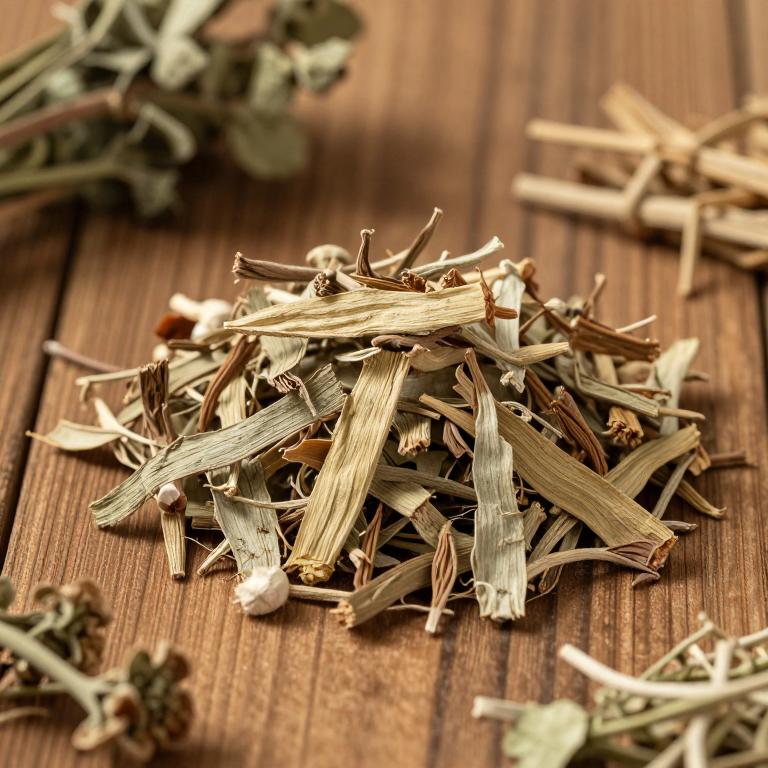
, scientifically known as Panax sokpayensis, is a rare medicinal plant native to the high-altitude Himalayan regions. Belonging to the Araliaceae family, this potent ginseng relative is highly valued in traditional medicine for its unique bioactive compounds, which are believed to possess significant adaptogenic, antioxidant, and immune-boosting properties.
- Family
- Araliaceae
- Native range
- Asia-Tropical
- Parts used
- Rhizome
- Common names
- Not available
- Scientific synonyms
- Not available
Names and Synonyms
Scientific Names
Accepted name
Panax sokpayensisSources: Wikidata
Taxonomical Classification
This plant, Panax sokpayensis, belongs to the kingdom Plantae and the phylum Streptophyta. Within the class Equisetopsida and subclass Magnoliidae, it is categorized under the order Apiales and the family Araliaceae. Ultimately, it is classified under the genus Panax.
| Rank | Classification |
|---|---|
| Kingdom | Plantae |
| Phylum | Streptophyta |
| Class | Equisetopsida |
| Subclass | Magnoliidae |
| Order | Apiales |
| Family | Araliaceae |
| Genus | Panax |
Sources: The World Checklist of Vascular Plants (WCVP)
Distribution
This plant, known as Panax sokpayensis, exhibits a specific and localized range of occurrence. Its primary geographical distribution is centered within the Indian Subcontinent. More specifically, it is found inhabiting the unique environments of the East Himalaya. This mountain region provides the particular ecological conditions necessary for its survival and growth. Consequently, the species remains a characteristic element of the high-altitude flora in this Himalayan zone.
| Region | Area |
|---|---|
| Indian Subcontinent | East Himalaya |
Sources: The World Checklist of Vascular Plants (WCVP)
Botanical Identification
Life history
The life history of Panax sokpayensis is characterized by its classification as a hemicryptophyte, a life form in which the perennating buds are located at the soil surface or just below it, protected by leaf litter or organic debris. As a hemicryptophyte, this perennial herb navigates its seasonal cycles by maintaining its vital reproductive and vegetative structures at the ground level, allowing it to survive periods of environmental stress or dormancy. This growth strategy enables the plant to emerge effectively during favorable growing seasons while utilizing the soil-surface interface to ensure survival through unfavorable climatic conditions.
- Life form :
- hemicryptophyte
Morphology
The morphology of Panax sokpayensis is characterized by its growth habit as a terrestrial plant, as it lacks epiphytic qualities and functions as an independent organism rather than a parasite. Regarding its structural support, the plant is classified as a self-supporting climber, meaning it does not rely on host structures through obligatory or facultative climbing mechanisms to maintain its upright position in its natural habitat.
- Climber :
- self-supporting
- Epiphyte :
- terrestrial
- Parasite :
- independent
Sources: Global Inventory of Floras and Traits (GIFT)
Plant Parts
Panax sokpayensis has 1 reported plant parts identified across 1 scientific publications and several other databases that are studied for medicinal purposes. The most consistently reported plant part include rhizome.
| Plant part | Supporting sources | Consensus |
|---|---|---|
| Rhizome | 1 supporting sources | ★☆☆☆☆ |
Rhizome
- Scientific reports
Chemicals
Panax sokpayensis has 5 reported phytochemicals identified across 1 scientific publications and several other databases. The most consistently reported chemicals include CK, Compound K, GINSENOSIDE, Ginsenosides, ginsenoside compound K.
| Chemical | Supporting sources | Consensus |
|---|---|---|
| CK | 1 supporting sources | ★☆☆☆☆ |
| Compound K | 1 supporting sources | ★☆☆☆☆ |
| GINSENOSIDE | 1 supporting sources | ★☆☆☆☆ |
| Ginsenosides | 1 supporting sources | ★☆☆☆☆ |
| ginsenoside compound K | 1 supporting sources | ★☆☆☆☆ |
CK
- Scientific reports
Compound K
- Scientific reports
GINSENOSIDE
- Scientific reports
Ginsenosides
- Scientific reports
ginsenoside compound K
- Scientific reports
Preparations
Panax sokpayensis has 1 reported preparations identified across 1 scientific publications and several other databases. The most consistently reported preparations include Panax sokpayensis rhizome.
| Preparation | Supporting sources | Consensus |
|---|---|---|
| Panax sokpayensis rhizome | 1 supporting sources | ★☆☆☆☆ |
Panax sokpayensis rhizome
- Scientific reports