Pallenis spinosa
Pallenis spinosa · Accepted scientific name
Scientific literature: Very Sparse (5 studies) · ★☆☆☆☆
, scientifically known as Pallenis spinosa, is a versatile medicinal plant valued for its potent therapeutic properties. Renowned in traditional healing, it contains bioactive compounds used to treat various ailments, including inflammation and infections. This hardy species offers significant pharmacological potential, making it a vital subject for modern botanical research.
- Family
- Not available
- Native range
- Europe
- Parts used
- Leaf · Flower
- Common names
- Not available
- Scientific synonyms
- Not available
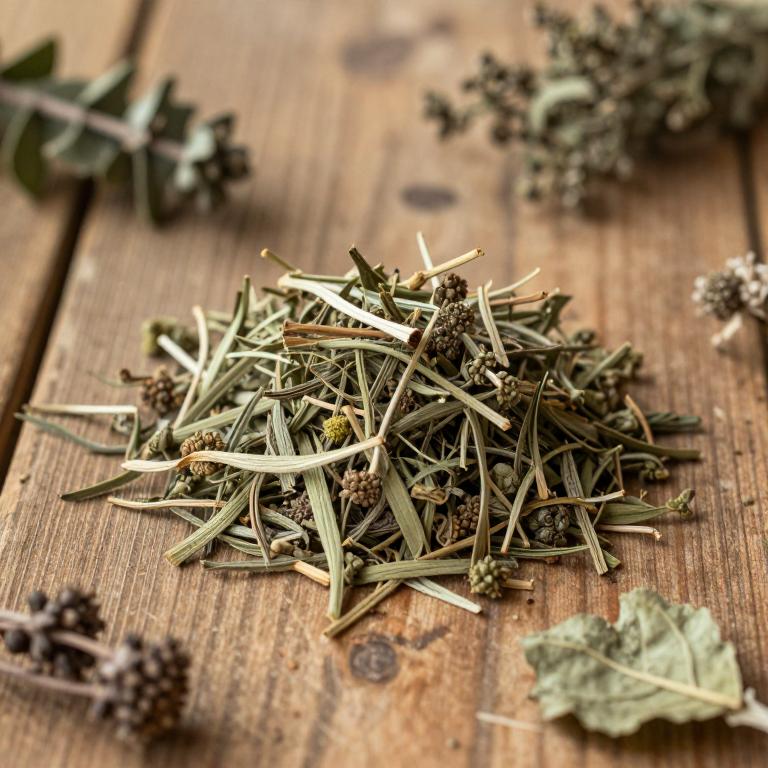
Names and Synonyms
Scientific Names
Accepted name
Pallenis spinosaDistribution
This plant, Paliurus spinosa, exhibits a specific geographical distribution centered around the Mediterranean region. Within Southwestern Europe, it can be found growing across the islands of the Baleares and Sardegna. Its presence also extends to the island of Corse, adding to its coastal and island range. Furthermore, the species is documented in the mainland territories of France and Portugal. Together, these locations define its primary habitat within the southwestern European landscape.
| Region | Area |
|---|---|
| Southwestern Europe | Baleares |
| Southwestern Europe | Corse |
| Southwestern Europe | France |
| Southwestern Europe | Portugal |
| Southwestern Europe | Sardegna |
| Southwestern Europe | Spain |
| Southeastern Europe | Albania |
| Southeastern Europe | Bulgaria |
| Southeastern Europe | Greece |
| Southeastern Europe | Italy |
Sources: The World Checklist of Vascular Plants (WCVP)
Botanical Identification
Ecology
The ecology of Paliellis spinosa is characterized by its ability to thrive across a broad altitudinal gradient, ranging from sea level up to a maximum elevation of 1500 m AMSL. This species is highly adaptable to various anthropogenic and semi-natural landscapes, frequently colonizing disturbed or open environments. Its preferred habitats include dry meadows, oldfields, and cropfields, as well as more managed settings such as parks. This distribution pattern suggests a preference for open, sun-exposed sites where it can establish itself within diverse terrestrial ecosystems.
- Elevational range max:
- 1500 m AMSL
- Elevational range min:
- 0 m AMSL
- Habitat :
- cropfields,meadows:dry,oldfields,parks
Life history
The life history of Pallenis spinosa is characterized by an annual lifecycle, meaning the plant completes its entire biological progression from germination to seed production within a single growing season. Functioning as a therophyte, it survives the unfavorable periods of its environment primarily in the form of seeds, which remain dormant until conditions become suitable for rapid growth and reproduction. This life form strategy allows the species to effectively colonize disturbed or seasonal habitats, utilizing its ephemeral existence to maximize reproductive output before the onset of environmental stress.
- Life form :
- therophyte
- Lifecycle :
- annual
Morphology
The morphology of Palleni sspinosa is characterized by a non-woody, herbaceous growth form, manifesting as both a herb and a forb. This plant exhibits a terrestrial habit, functioning as an independent organism rather than a parasite or an epiphyte. In terms of stature, it is a relatively small specimen, with a plant height ranging from a minimum of 0.1 m to a maximum of 1 m. The shoots are oriented in an erect manner, and while it possesses self-supporting climbing capabilities, it does not require external structures as an obligatory climber.
- Aquatic :
- terrestrial
- Climber :
- self-supporting
- Epiphyte :
- terrestrial
- Growth form :
- herb
- Parasite :
- independent
- Plant height max:
- 1 m
- Plant height min:
- 0.1 m
- Shoot orientation :
- erect
- Woodiness :
- non-woody
Physiology
The physiology of Pali니스 spinosa is characterized by a C3 photosynthetic pathway, a common metabolic strategy that involves the direct fixation of carbon dioxide through the Calvin cycle. Morphologically, the plant's vegetative structures are defined by an alternate leaf arrangement, where individual leaves are positioned at different levels along the stem. These leaves exhibit an elliptic form, providing a specific surface area optimized for light interception and gas exchange within its environmental niche.
- Leaf arrangement :
- alternate
- Leaf form :
- elliptic
- Photosynthetic pathway :
- C3
Reproduction
The reproductive cycle of Pallenis spinosa is characterized by a prolonged flowering period that begins in February and extends through December. During this time, the plant produces yellow flowers that vary significantly in size, with widths ranging from a minimum of 2.5 cm to a maximum of 7 cm. Following pollination, the plant develops small, dry, indehiscent fruits classified as achenes. These fruits are quite diminutive, measuring between 0.25 cm and 0.32 cm in length. The seeds contained within are extremely lightweight, maintaining a consistent mean, minimum, and maximum mass of 0.00112 g. For the distribution of its progeny, the species utilizes a hydrochorous dispersal syndrome, relying on water to transport its seeds to new locations.
- Dehiscence :
- indehiscent
- Dispersal syndrome :
- hydrochorous
- Flower colour :
- yellow
- Flower width max:
- 7 cm
- Flower width min:
- 2.5 cm
- Flowering time :
- Feb
- Flowering time :
- Dec
- Fruit dryness :
- dry
- Fruit length max:
- 0.32 cm
- Fruit length min:
- 0.25 cm
- Fruit type :
- achene
- Seed mass mean:
- 0.00112 g
Sources: Global Inventory of Floras and Traits (GIFT)
Plant Parts
Pallenis spinosa has 3 reported plant parts identified across 4 scientific publications and several other databases that are studied for medicinal purposes. The most consistently reported plant part include leaf, flower, stem.
| Plant part | Supporting sources | Consensus |
|---|---|---|
| Leaf | 2 supporting sources | ★☆☆☆☆ |
| Flower | 1 supporting sources | ★☆☆☆☆ |
| Stem | 1 supporting sources | ★☆☆☆☆ |
Leaf
- Food & function
- Journal of complementary & integrative medicine
Flower
- Food & function
Stem
- Food & function
Preparations
Pallenis spinosa has 6 reported preparations identified across 4 scientific publications and several other databases. The most consistently reported preparations include Leaf extracts, flower extracts, methanolic extracts of its flowers, methanolic extracts of its leaves, methanolic extracts of its stem.
| Preparation | Supporting sources | Consensus |
|---|---|---|
| Leaf extracts | 1 supporting sources | ★☆☆☆☆ |
| Flower extracts | 1 supporting sources | ★☆☆☆☆ |
| Methanolic extracts of its flowers | 1 supporting sources | ★☆☆☆☆ |
| Methanolic extracts of its leaves | 1 supporting sources | ★☆☆☆☆ |
| Methanolic extracts of its stem | 1 supporting sources | ★☆☆☆☆ |
| Stem extracts | 1 supporting sources | ★☆☆☆☆ |
Leaf extracts
- Food & function
Flower extracts
- Food & function
Methanolic extracts of its flowers
- Food & function
Methanolic extracts of its leaves
- Food & function
Methanolic extracts of its stem
- Food & function
Stem extracts
- Food & function