Christ's-thorn
Paliurus spina-christi · Accepted scientific name
Scientific literature: Very Sparse (42 studies) · ★☆☆☆☆
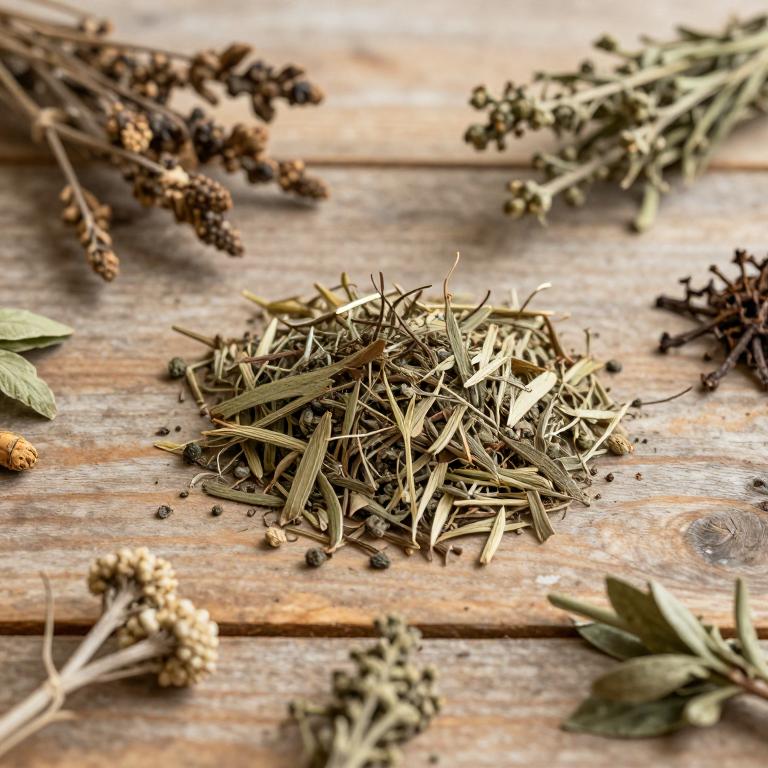
Christ's-thorn, scientifically known as Paliurus spina-christi, is a resilient, thorny shrub native to Mediterranean and Asian regions. Renowned in traditional medicine, its various parts—including leaves, bark, and roots—offer potent antioxidant, anti-inflammatory, and antimicrobial properties. This versatile plant serves as a vital natural resource for diverse therapeutic applications.
Names and Synonyms
Common Names
- Christ's-thorn
- Christ's thorn
- Jerusalem Thorn
- crown of thorns
- garland thorn
Scientific Names
Accepted name
Paliurus spina-christiSynonyms
- Paliurus aculeatus
- Rhamnus horrida
- Paliurus trinervatus
- Paliurus solitarius
- Paliurus spina-christi var. inermis
- Paliurus aculeatus var. inermis
- Paliurus clypeiformis
- Paliurus microcarpus
- Paliurus petasus
- Paliurus incurvus
- Paliurus spina-christi var. apterus
- Ziziphus paliurus
- Paliurus spina-christi var. rotundifolius
- Paliurus spina-christi var. macrocarpus
- Paliurus vulgaris
- Rhamnus paliurus
- Rhamnus australis
Regional and Traditional Names
Spanish:
- Espina de Cristo
German:
- Christusdorn
- Christusdorn
- Gemeiner Stechdorn
French:
- Épine du Christ
Sources: Wikidata, Catalogue of Life
Taxonomical Classification
This plant belongs to the kingdom Plantae and the phylum Streptophyta, falling under the class Equisetopsida and subclass Magnoliidae. Within the order Rosales, it is classified under the family Rhamnaceae. Finally, it is categorized under the genus Paliurus.
| Rank | Classification |
|---|---|
| Kingdom | Plantae |
| Phylum | Streptophyta |
| Class | Equisetopsida |
| Subclass | Magnoliidae |
| Order | Rosales |
| Family | Rhamnaceae |
| Genus | Paliurus |
Sources: The World Checklist of Vascular Plants (WCVP)
Distribution
This plant exhibits a diverse geographical distribution across several European regions. In Middle Europe, it can be found growing within the borders of Hungary. Its presence extends to Southwestern Europe, where it is located in France, Spain, and the island of Corse. Additionally, the species is documented in Southeastern Europe, specifically in Albania. Together, these locations highlight the varied habitats where the plant thrives.
| Region | Area |
|---|---|
| Middle Europe | Hungary |
| Southwestern Europe | Corse |
| Southwestern Europe | France |
| Southwestern Europe | Spain |
| Southeastern Europe | Albania |
| Southeastern Europe | Bulgaria |
| Southeastern Europe | Greece |
| Southeastern Europe | Italy |
| Southeastern Europe | Romania |
| Southeastern Europe | Türkiye-in-Europe |
Sources: The World Checklist of Vascular Plants (WCVP)
Botanical Identification
Ecology
The ecology of Paliurus spina-christi is defined by its ability to thrive in diverse and rugged landscapes, ranging from hills and mountains to dense shrubberies and stony places. This species exhibits a broad altitudinal distribution, typically found at a mean elevation of 1000 m AMSL, though it can ascend to a maximum elevation of 1500 m AMSL. Its presence in stony and mountainous terrains suggests a high tolerance for well-drained, often nutrient-poor soils and an adaptation to the varying microclimates found within these specialized habitats.
- Elevational range max:
- 1500 m AMSL
- Elevational range mean:
- 1000 m AMSL
- Habitat :
- hills, mountains, shrubberies, stony places
Life history
The life history of Paliurus spinosa-christi is characterized by its status as a perennial plant, ensuring its long-term survival and establishment within its ecological niche through multiple growing seasons. As a phanerophyte, its regenerative buds are located high above the ground on woody stems, a structural adaptation that supports its growth habit and resilience. This phanerophyte life form allows the species to maintain a significant above-ground biomass, facilitating its ability to withstand environmental fluctuations and persist as a stable component of its habitat over many years.
- Life form :
- phanerophyte
- Lifecycle :
- perennial
Morphology
The morphology of Paliurus spina-christi is characterized by its woody growth form, which can manifest as both a shrub and a tree. This terrestrial, independent species exhibits a self-supporting structure, functioning as a self-supporting plant rather than a climber, liana, or vine. It is not an epiphyte or a parasite, maintaining its own biological processes in a terrestrial habitat. In terms of stature, the plant typically reaches a mean height of 3 m, with its vertical growth ranging from a minimum of 1 m to a maximum of 3 m.
- Aquatic :
- terrestrial
- Climber :
- self-supporting
- Epiphyte :
- terrestrial
- Growth form :
- shrub
- Growth form :
- tree
- Parasite :
- independent
- Plant height mean:
- 3 m
- Plant height min:
- 1 m
- Woodiness :
- woody
Physiology
The physiology of Paliurus spinosa-christi is characterized by a C3 photosynthetic pathway, which dictates its carbon fixation processes and metabolic efficiency in its native habitats. Morphologically, the plant exhibits specific leaf dimensions that support its physiological functions, with leaf lengths typically ranging from a minimum of 2 cm to a maximum of 4 cm, maintaining an average length of approximately 3 cm. These leaf parameters play a critical role in the plant's gas exchange and transpiration rates, balancing light interception with water conservation strategies inherent to the C3 metabolic framework.
- Leaf length max:
- 4 cm
- Leaf length mean:
- 3 cm
- Leaf length min:
- 2 cm
- Photosynthetic pathway :
- C3
Reproduction
The reproduction of Paliurus spina-christi is characterized by a specific seasonal flowering period and highly variable seed morphology. The plant typically enters its flowering phase in May, with the blooming process concluding around June. The resulting seeds exhibit a significant range in physical dimensions; while the mean seed mass is recorded at approximately 0.116037 g, individual seed weights can fluctuate considerably, ranging from a minimum of 0.0151 g to a maximum of 0.28028 g.
- Flowering time :
- May
- Flowering time :
- Jun
- Seed mass max:
- 0.28028 g
- Seed mass mean:
- 0.116037 g
- Seed mass min:
- 0.0151 g
Sources: Global Inventory of Floras and Traits (GIFT)
Plant Parts
Paliurus spina-christi has 2 reported plant parts identified across 2 scientific publications and several other databases that are studied for medicinal purposes. The most consistently reported plant part include leaf, stem.
| Plant part | Supporting sources | Consensus |
|---|---|---|
| Leaf | 1 supporting sources | ★☆☆☆☆ |
| Stem | 1 supporting sources | ★☆☆☆☆ |
Leaf
- Antioxidants (Basel, Switzerland)
Stem
- Antioxidants (Basel, Switzerland)
Chemicals
Paliurus spina-christi has 24 reported phytochemicals identified across 2 scientific publications and several other databases. The most consistently reported chemicals include Jujuboside A, Flavonoids, Jujuboside B, RUTIN, Spinosin.
| Chemical | Supporting sources | Consensus |
|---|---|---|
| Jujuboside A | 3 supporting sources | ★★☆☆☆ |
| Flavonoids | 2 supporting sources | ★☆☆☆☆ |
| Jujuboside B | 2 supporting sources | ★☆☆☆☆ |
| RUTIN | 2 supporting sources | ★☆☆☆☆ |
| Spinosin | 2 supporting sources | ★☆☆☆☆ |
| AFLATOXIN B1 | 1 supporting sources | ★☆☆☆☆ |
| B2 | 1 supporting sources | ★☆☆☆☆ |
| Beauvericin | 1 supporting sources | ★☆☆☆☆ |
| CALCIUM | 1 supporting sources | ★☆☆☆☆ |
| CATECHIN | 1 supporting sources | ★☆☆☆☆ |
Jujuboside A
- Zhong yao cai = Zhongyaocai = Journal of Chinese medicinal materials
- Plants (Basel, Switzerland)
- Genes
Flavonoids
- Frontiers in plant science
- Journal of pharmaceutical and biomedical analysis
Jujuboside B
- Plants (Basel, Switzerland)
- Genes
RUTIN
- BMC complementary and alternative medicine
- Journal of ethnopharmacology
Spinosin
- Chemical & pharmaceutical bulletin
- Plants (Basel, Switzerland)
AFLATOXIN B1
- Journal of advanced research
B2
- Journal of advanced research
Beauvericin
- Journal of advanced research
CALCIUM
- Journal of ethnopharmacology
CATECHIN
- Journal of ethnopharmacology
Activities
Paliurus spina-christi has 2 reported activities identified across 2 scientific publications and several other databases. The most consistently reported activities include Antigenotoxic, Antimicrobial.
| Activity | Supporting sources | Consensus |
|---|---|---|
| Antigenotoxic | 1 supporting sources | ★☆☆☆☆ |
| Antimicrobial | 1 supporting sources | ★☆☆☆☆ |
Antigenotoxic
- BMC complementary and alternative medicine
Antimicrobial
- Turkish journal of pharmaceutical sciences
Conditions
Paliurus spina-christi has 3 reported investigations on conditions identified across 2 scientific publications and several other databases. The most consistently reported conditions include Candida albicans, diabetes mellitus, oxidative DNA damage.
| Condition | Supporting sources | Consensus |
|---|---|---|
| Candida albicans | 1 supporting sources | ★☆☆☆☆ |
| Diabetes mellitus | 1 supporting sources | ★☆☆☆☆ |
| Oxidative dna damage | 1 supporting sources | ★☆☆☆☆ |
Candida albicans
- Turkish journal of pharmaceutical sciences
Diabetes mellitus
- Journal of ethnopharmacology
Oxidative dna damage
- BMC complementary and alternative medicine
Preparations
Paliurus spina-christi has 7 reported preparations identified across 2 scientific publications and several other databases. The most consistently reported preparations include dichloromethane extract, leaf extracts, methanol extract, methanolic extract, methanolic extracts.
| Preparation | Supporting sources | Consensus |
|---|---|---|
| Dichloromethane extract | 1 supporting sources | ★☆☆☆☆ |
| Leaf extracts | 1 supporting sources | ★☆☆☆☆ |
| Methanol extract | 1 supporting sources | ★☆☆☆☆ |
| Methanolic extract | 1 supporting sources | ★☆☆☆☆ |
| Methanolic extracts | 1 supporting sources | ★☆☆☆☆ |
| N-hexane extract | 1 supporting sources | ★☆☆☆☆ |
| Stem extracts | 1 supporting sources | ★☆☆☆☆ |
Dichloromethane extract
- Antioxidants (Basel, Switzerland)
Leaf extracts
- Antioxidants (Basel, Switzerland)
Methanol extract
- Antioxidants (Basel, Switzerland)
Methanolic extract
- Antioxidants (Basel, Switzerland)
Methanolic extracts
- Journal of ethnopharmacology
N-hexane extract
- Antioxidants (Basel, Switzerland)
Stem extracts
- Antioxidants (Basel, Switzerland)