Hoffmannsegg's wild coffee
Palicourea hoffmannseggiana · Accepted scientific name
Scientific literature: Very Sparse (2 studies) · ★☆☆☆☆
Hoffmannsegg's wild coffee, scientifically known as Palicourea hoffmannseggiana, is a medicinal shrub native to Brazil. Renowned for its potent bioactive compounds, particularly indole alkaloids, it is traditionally used to treat various ailments. Modern research explores its significant potential as a natural contraceptive and its diverse pharmacological properties.
- Family
- Rubiaceae
- Native range
- Northern America
- Parts used
- Not available
- Common names
- Hoffmannsegg'S Wild Coffee
- Scientific synonyms
- Cephaelis Patrisii · Psychotria Hoffmannseggiana Var. Tribracteata · 29 more
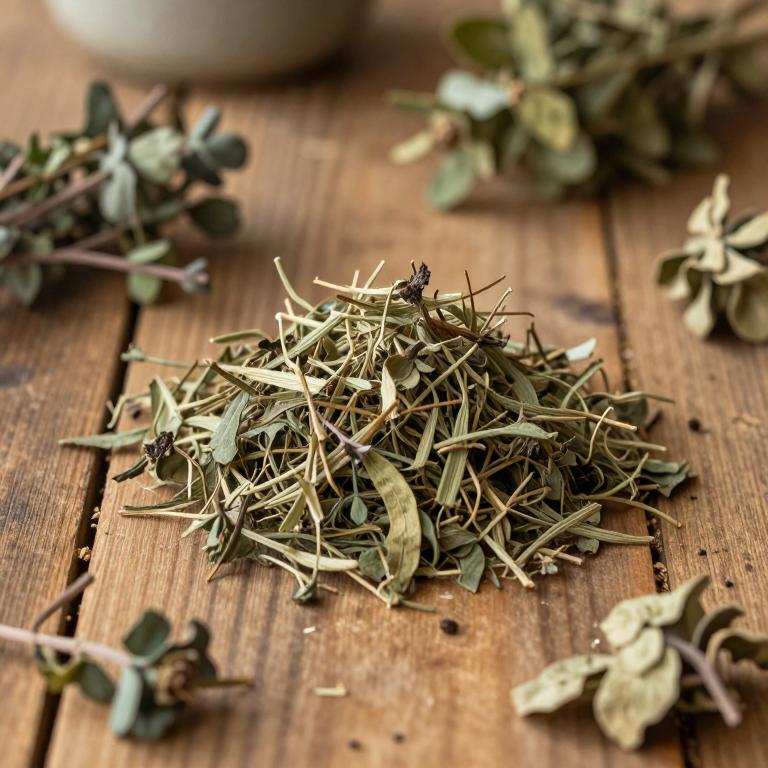
Names and Synonyms
Common Names
- Hoffmannsegg's wild coffee
Scientific Names
Accepted name
Palicourea hoffmannseggianaSynonyms
- Cephaelis patrisii
- Psychotria hoffmannseggiana var. tribracteata
- Psychotria hoffmannseggiana
- Uragoga barbiflora
- Uragoga biattenuata
- Uragoga capitellata
- Uragoga furcata
- Uragoga heterocephala
- Uragoga hoffmannseggiana
- Uragoga hoffmannseggiana
- Uragoga tribracteata
- Palicourea furcata
- Cephaelis hoffmannseggiana
- Cephaelis rubra
- Patabea capitellata
- Uragoga carapichea
- Uragoga flavicans
- Carapichea patrisii
- Psychotria cuspidata var. vulgatior
- Psychotria rubra var. gracilis
- Psychotria tenuiramea
- Psychotria tribracteata
- Psychotria hoffmannseggiana f. pubescens
- Psychotria hoffmannseggiana var. celsa
- Psychotria barbiflora
- Psychotria biattenuata
- Psychotria flavicans
- Psychotria furcata
- Psychotria heterocephala
- Psychotria hoffmannseggiana subsp. tribracteata
- Psychotria rubra var. virens
Sources: Wikidata, Catalogue of Life
Taxonomical Classification
This plant, known scientifically as Palicourea hoffmannseggiana, belongs to the kingdom Plantae and the phylum Streptophyta. It is classified under the class Equisetopsida and the subclass Magnoliidae, falling within the order Gentianales. Ultimately, it is a member of the family Rubiaceae and the genus Palicourea.
| Rank | Classification |
|---|---|
| Kingdom | Plantae |
| Phylum | Streptophyta |
| Class | Equisetopsida |
| Subclass | Magnoliidae |
| Order | Gentianales |
| Family | Rubiaceae |
| Genus | Palicourea |
Sources: The World Checklist of Vascular Plants (WCVP)
Distribution
This plant exhibits a diverse geographical range that stretches from North to Central America. Within Mexico, its presence is noted across several distinct regions, including Mexico Central and Mexico Gulf. It is also found throughout the Mexico Southwest and Mexico Southeast territories. Moving further south, the species extends its reach into the tropical landscapes of Central America. Specifically, its distribution includes the country of Costa Rica.
| Region | Area |
|---|---|
| Mexico | Mexico Central |
| Mexico | Mexico Gulf |
| Mexico | Mexico Southwest |
| Mexico | Mexico Southeast |
| Central America | Costa Rica |
| Central America | Nicaragua |
| Central America | Panamá |
| Caribbean | Cuba |
| Caribbean | Dominican Republic |
| Caribbean | Puerto Rico |
Sources: The World Checklist of Vascular Plants (WCVP)
Botanical Identification
Ecology
The ecology of Palicourea hoffmannsegianna is characterized by its presence in high-altitude forest ecosystems, specifically within the habitat known as bosque alto. This species inhabits a broad altitudinal gradient, spanning an elevational range that begins at sea level (0 m AMSL) and extends up to a maximum elevation of 1450 m AMSL.
- Elevational range max:
- 1450 m AMSL
- Elevational range min:
- 0 m AMSL
- Habitat :
- Bosque alto
Life history
The life history of Palicourtea hoffmannsegiana is characterized by a perennial lifecycle, allowing the plant to persist through multiple growing seasons. In terms of its structural growth patterns and ecological positioning, it exhibits a dual life form classification, manifesting as both a phanerophyte and a nanophanerophyte. This indicates that while the species typically maintains its buds well above the ground level as a phanerophyte, it also possesses the capacity to function as a nanophanerophyte, where the shoot system remains relatively low to the substrate.
- Life form :
- nanophanerophyte
- Life form :
- phanerophyte
- Lifecycle :
- perennial
Morphology
The morphology of Palicourea hoffmannsegianna is characterized by a woody growth form, primarily manifesting as a shrub. It is a terrestrial species that does not exhibit aquatic or semiaquatic tendencies, nor does it function as an epiphyte, remaining strictly terrestrial in its ecological habit. As a self-supporting plant, it does not function as a climber, liana, or vine, nor does it require external support to maintain its structure. Furthermore, the plant is an independent organism, showing no parasitic behavior, and maintains a robust, woody constitution throughout its development.
- Aquatic :
- terrestrial
- Climber :
- self-supporting
- Epiphyte :
- terrestrial
- Growth form :
- shrub
- Parasite :
- independent
- Woodiness :
- woody
Physiology
The physiology of Palicourea hoffmannsegianna is fundamentally characterized by its carbon assimilation strategy, specifically utilizing the C3 photosynthetic pathway. In this metabolic process, the initial fixation of atmospheric carbon dioxide occurs through the enzyme Rubisco, which incorporates $CO_2$ into a three-carbon compound, 3-phosphoglycerate, within the mesophyll cells. This C3 pathway dictates the plant's resource management, influencing its transpiration rates, water-use efficiency, and stomatal conductance patterns in response to environmental stimuli. Unlike plants employing C4 or CAM pathways to concentrate carbon, the physiological performance of P. hoffmannsegianna is closely tied to its ability to balance photosynthetic gain against photorespiration and water loss, making its metabolic efficiency highly dependent on the ambient temperature and light availability of its habitat.
- Photosynthetic pathway :
- C3
Reproduction
The reproduction of Palicourea hoffmannsegianna is characterized by the production of fruit that exhibits a fleshy texture, transitioning through stages of dryness. The seeds produced during this reproductive process are highly uniform in size, maintaining a consistent seed volume with a minimum, maximum, and mean value of exactly 18 mm³.
- Fruit dryness :
- fleshy
- Seed volume max:
- 18 mm³
Sources: Global Inventory of Floras and Traits (GIFT)
Chemicals
Palicourea hoffmannseggiana has 1 reported phytochemicals identified across 0 scientific publications and several other databases. The most consistently reported chemicals include Psychorubrin.
| Chemical | Supporting sources | Consensus |
|---|---|---|
| Psychorubrin | 1 supporting sources | ★☆☆☆☆ |
Psychorubrin
- Journal of medicinal chemistry
Activities
Palicourea hoffmannseggiana has 1 reported activities identified across 0 scientific publications and several other databases. The most consistently reported activities include Cytotoxic.
| Activity | Supporting sources | Consensus |
|---|---|---|
| Cytotoxic | 1 supporting sources | ★☆☆☆☆ |
Cytotoxic
- Journal of medicinal chemistry
Preparations
Palicourea hoffmannseggiana has 3 reported preparations identified across 0 scientific publications and several other databases. The most consistently reported preparations include Herbal tea, Psychotria rubra Herbal Tea (PRHT), alcoholic extract.
| Preparation | Supporting sources | Consensus |
|---|---|---|
| Herbal tea | 1 supporting sources | ★☆☆☆☆ |
| Psychotria rubra herbal tea (prht) | 1 supporting sources | ★☆☆☆☆ |
| Alcoholic extract | 1 supporting sources | ★☆☆☆☆ |
Herbal tea
- Scientific reports
Psychotria rubra herbal tea (prht)
- Scientific reports
Alcoholic extract
- Journal of medicinal chemistry