Palicourea colorata
Palicourea colorata · Accepted scientific name
Scientific literature: Very Sparse (3 studies) · ★☆☆☆☆
Palicourtea colorata, scientifically known as Palicourtea colorata, is a medicinal shrub native to the tropical rainforests of Central and South America. Renowned in traditional medicine, it is frequently utilized for its potent bioactive compounds, which are studied for their potential roles in hormonal regulation and reproductive health.
- Family
- Not available
- Native range
- Southern America
- Parts used
- Flower · Fruit
- Common names
- Not available
- Scientific synonyms
- Not available
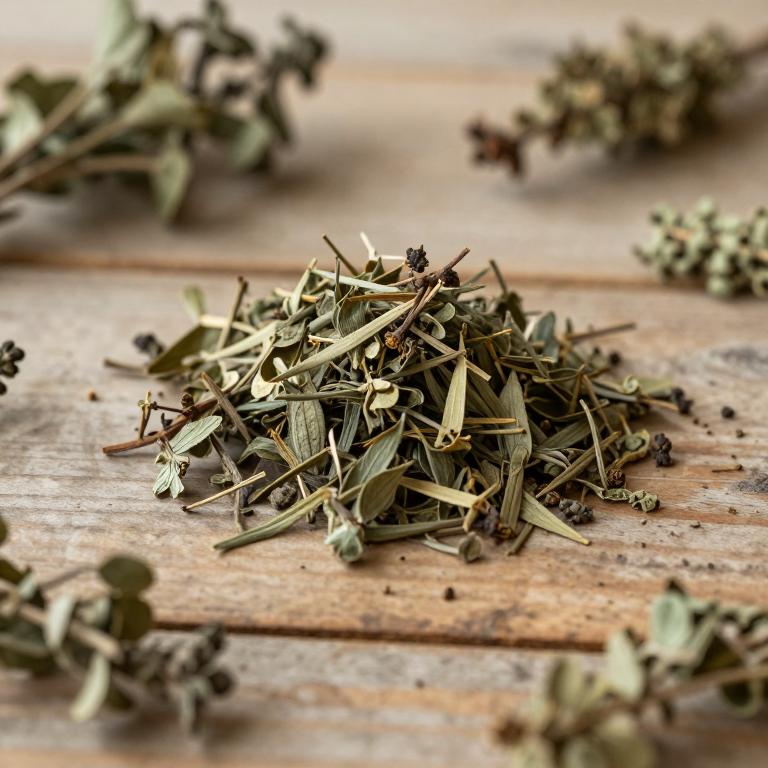
Names and Synonyms
Scientific Names
Accepted name
Palicourea colorataSources: Wikidata
Distribution
This plant is primarily distributed throughout the tropical regions of northern South America. Its range includes several distinct territories such as French Guiana, Guyana, and Suriname. Furthermore, it can be found extending across the landscapes of Venezuela. Moving toward the western portion of the continent, the species also inhabits parts of Bolivia. Consequently, its natural habitat spans a significant longitudinal stretch of the South American continent.
| Region | Area |
|---|---|
| Northern South America | French Guiana |
| Northern South America | Guyana |
| Northern South America | Suriname |
| Northern South America | Venezuela |
| Western South America | Bolivia |
| Western South America | Colombia |
| Western South America | Peru |
| Brazil | Brazil West-Central |
| Brazil | Brazil Northeast |
| Brazil | Brazil North |
Sources: The World Checklist of Vascular Plants (WCVP)
Botanical Identification
Ecology
The ecology of Palicourea colorata is characterized by its presence across a diverse array of forest ecosystems and varied altitudinal gradients. It is found in a wide range of habitats, including Campinarana, Floresta Ciliar or Galeria, Floresta de Igapó, Floresta Estacional Perenifólia, Floresta Estacional Semidecidual, and Floresta Ombrófila (also known as Floresta Pluvial). Its distribution spans from low-lying areas starting at an elevation of 50 m AMSL up to a maximum elevation of 800 m AMSL.
- Elevational range max:
- 800 m AMSL
- Elevational range min:
- 50 m AMSL
- Habitat :
- Campinarana, Floresta Ciliar ou Galeria, Floresta de Igapó, Floresta Estacional Perenifólia, Floresta Estacional Semidecidual, Floresta Ombrófila (= Floresta Pluvial)
Life history
The life history of Palicourea colorata is characterized by its classification as a phanerophyte, indicating a growth habit where its regenerative buds are located well above the ground level on woody stems. Within the broader spectrum of its structural development, the plant exhibits characteristics consistent with a phanerophyte, allowing it to establish a robust vertical presence in its native environment. While it maintains this dominant woody structure, its life cycle and ecological positioning can occasionally intersect with the traits of a nanophanerophyte, reflecting a specialized strategy in managing its biomass and height relative to its surroundings. This life history allows the species to persist through various seasonal changes by relying on its elevated permanent shoots to survive environmental stressors.
- Life form :
- nanophanerophyte
- Life form :
- phanerophyte
Morphology
The morphology of Palicourtea colorata is characterized by a woody structure, manifesting primarily as a shrub in its growth form. It is a terrestrial species, functioning as an independent organism rather than acting as a parasite or an epiphyte. In terms of its structural habit, while it exhibits characteristics of a self-supporting plant, it possesses qualities that allow it to exist as a self-supporting climber or liana within its ecological niche. Unlike aquatic or semiaquatic species, this plant is strictly terrestrial, maintaining a robust, woody development that supports its shrubby architecture.
- Aquatic :
- terrestrial
- Climber :
- self-supporting
- Epiphyte :
- terrestrial
- Growth form :
- shrub
- Parasite :
- independent
- Woodiness :
- woody
Sources: Global Inventory of Floras and Traits (GIFT)
Plant Parts
Palicourea colorata has 3 reported plant parts identified across 3 scientific publications and several other databases that are studied for medicinal purposes. The most consistently reported plant part include flower, fruit, leaf.
| Plant part | Supporting sources | Consensus |
|---|---|---|
| Flower | 1 supporting sources | ★☆☆☆☆ |
| Fruit | 1 supporting sources | ★☆☆☆☆ |
| Leaf | 1 supporting sources | ★☆☆☆☆ |
Flower
- Neurochemical research
Fruit
- Neurochemical research
Leaf
- Neurochemical research
Preparations
Palicourea colorata has 3 reported preparations identified across 3 scientific publications and several other databases. The most consistently reported preparations include flowers, fruits, leaves.
| Preparation | Supporting sources | Consensus |
|---|---|---|
| Flowers | 1 supporting sources | ★☆☆☆☆ |
| Fruits | 1 supporting sources | ★☆☆☆☆ |
| Leaves | 1 supporting sources | ★☆☆☆☆ |
Flowers
- Neurochemical research
Fruits
- Neurochemical research
Leaves
- Neurochemical research