peony
Paeonia · Accepted scientific name
Scientific literature: Sparse (55 studies) · ★★☆☆☆
Peony, scientifically known as Paeonia, is a versatile medicinal plant revered for centuries in traditional healing. Renowned for its striking blooms, its roots contain bioactive compounds used to treat inflammation, pain, and menstrual disorders. This resilient perennial serves as a cornerstone in herbal pharmacology for promoting overall wellness.
- Family
- Paeoniaceae
- Native range
- Europe
- Parts used
- Root · Flower
- Common names
- Kirigo Peony · Peony · 2 more
- Scientific synonyms
- Moutan
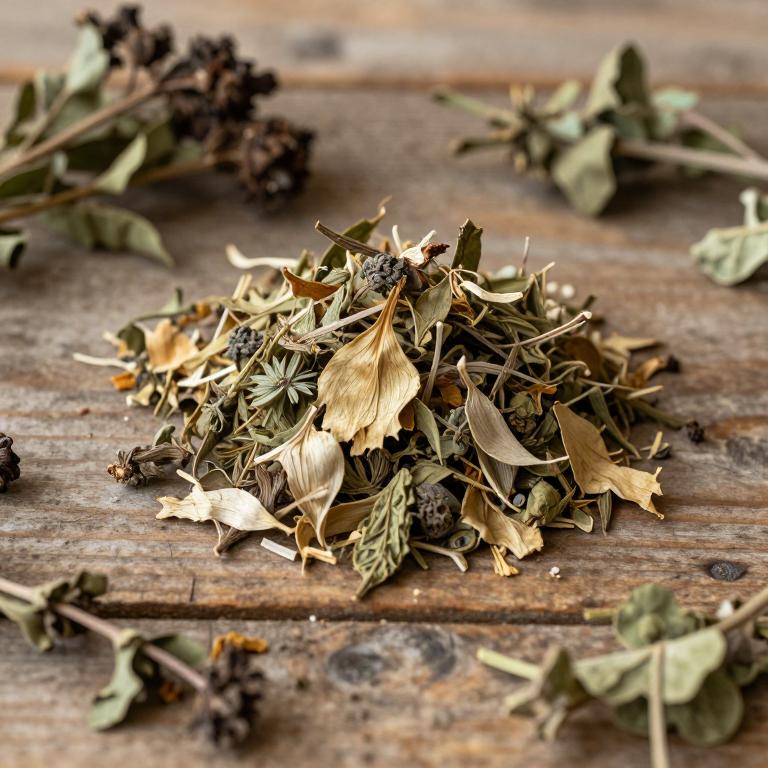
Names and Synonyms
Common Names
- Kirigo Peony
- peony
- Paeony
- Peonies
Scientific Names
Accepted name
PaeoniaSynonyms
- Moutan
Regional and Traditional Names
Spanish:
- Paeoniaceae
- Rosa albardera
- Albardera
- Peonia
- Peonía
- Peonías
German:
- Pfingstrosen
- Pfingstrosengewächse
- Paeoniales
- Päonie
- Baumpfingstrosen
- Josef Rock
- Pfingstrose
- Pfingstrose
- Pfingstrosen
French:
- pivoine
- pivoines
- Pivoine
- Pivoines
- Pivoine
Sources: Wikidata, Catalogue of Life
Taxonomical Classification
This plant belongs to the kingdom Plantae and the phylum Streptophyta, falling under the class Equisetopsida and subclass Magnoliidae. Within the order Saxifragales, it is classified under the family Paeoniaceae. Ultimately, it is identified by the genus Paeonia.
| Rank | Classification |
|---|---|
| Kingdom | Plantae |
| Phylum | Streptophyta |
| Class | Equisetopsida |
| Subclass | Magnoliidae |
| Order | Saxifragales |
| Family | Paeoniaceae |
| Genus | Paeonia |
Sources: The World Checklist of Vascular Plants (WCVP)
Distribution
This plant exhibits a specific geographical distribution across several northern European regions. It can be found growing in the natural landscapes of Denmark. Additionally, its presence is documented within the borders of Finland. The species also inhabits various areas across Great Britain and Ireland. Finally, its range extends to the northern territories of Sweden.
| Region | Area |
|---|---|
| Northern Europe | Denmark |
| Northern Europe | Finland |
| Northern Europe | Great Britain |
| Northern Europe | Ireland |
| Northern Europe | Sweden |
| Middle Europe | Austria |
| Middle Europe | Czechia-Slovakia |
| Middle Europe | Germany |
| Middle Europe | Hungary |
| Middle Europe | Switzerland |
Sources: The World Checklist of Vascular Plants (WCVP)
Plant Parts
Paeonia has 5 reported plant parts identified across 9 scientific publications and several other databases that are studied for medicinal purposes. The most consistently reported plant part include root, flower, leaf, seed, stem.
| Plant part | Supporting sources | Consensus |
|---|---|---|
| Root | 4 supporting sources | ★★☆☆☆ |
| Flower | 2 supporting sources | ★☆☆☆☆ |
| Leaf | 1 supporting sources | ★☆☆☆☆ |
| Seed | 1 supporting sources | ★☆☆☆☆ |
| Stem | 1 supporting sources | ★☆☆☆☆ |
Root
- Microscopy research and technique
- Journal of ethnopharmacology
- Pharmaceuticals (Basel, Switzerland)
- Chemistry & biodiversity
Flower
- Horticulture research
- Zhonghua yi shi za zhi (Beijing, China : 1980)
Leaf
- Journal of ethnopharmacology
Seed
- Horticulture research
Stem
- Journal of ethnopharmacology
Chemicals
Paeonia has 14 reported phytochemicals identified across 9 scientific publications and several other databases. The most consistently reported chemicals include Flavonoids, PAEONOL, Paeoniflorin, Phenols, Steroids.
| Chemical | Supporting sources | Consensus |
|---|---|---|
| Flavonoids | 2 supporting sources | ★☆☆☆☆ |
| PAEONOL | 2 supporting sources | ★☆☆☆☆ |
| Paeoniflorin | 2 supporting sources | ★☆☆☆☆ |
| Phenols | 2 supporting sources | ★☆☆☆☆ |
| Steroids | 1 supporting sources | ★☆☆☆☆ |
| Stilbenes | 1 supporting sources | ★☆☆☆☆ |
| Tannins | 1 supporting sources | ★☆☆☆☆ |
| Terpenes | 1 supporting sources | ★☆☆☆☆ |
| linoleic acid | 1 supporting sources | ★☆☆☆☆ |
| linolenic acid | 1 supporting sources | ★☆☆☆☆ |
Flavonoids
- International journal of biological macromolecules
- Journal of ethnopharmacology
PAEONOL
- Food research international (Ottawa, Ont.)
- Journal of ethnopharmacology
Paeoniflorin
- Food research international (Ottawa, Ont.)
- Journal of ethnopharmacology
Phenols
- International journal of biological macromolecules
- Journal of ethnopharmacology
Steroids
- Journal of ethnopharmacology
Stilbenes
- Journal of ethnopharmacology
Tannins
- Journal of ethnopharmacology
Terpenes
- International journal of biological macromolecules
linoleic acid
- Chemistry & biodiversity
linolenic acid
- Chemistry & biodiversity
Activities
Paeonia has 8 reported activities identified across 9 scientific publications and several other databases. The most consistently reported activities include Antibacterial, Antioxidant, Anticholinesterase, Anticoagulant, Antitumor.
| Activity | Supporting sources | Consensus |
|---|---|---|
| Antibacterial | 2 supporting sources | ★☆☆☆☆ |
| Antioxidant | 2 supporting sources | ★☆☆☆☆ |
| Anticholinesterase | 1 supporting sources | ★☆☆☆☆ |
| Anticoagulant | 1 supporting sources | ★☆☆☆☆ |
| Antitumor | 1 supporting sources | ★☆☆☆☆ |
| Antiviral | 1 supporting sources | ★☆☆☆☆ |
| Fibrinolytic | 1 supporting sources | ★☆☆☆☆ |
| Neuroprotective | 1 supporting sources | ★☆☆☆☆ |
Antibacterial
- Food research international (Ottawa, Ont.)
- Journal of ethnopharmacology
Antioxidant
- Food research international (Ottawa, Ont.)
- Journal of ethnopharmacology
Anticholinesterase
- Food research international (Ottawa, Ont.)
Anticoagulant
- Izvestiia Akademii nauk. Seriia biologicheskaia
Antitumor
- Food research international (Ottawa, Ont.)
Antiviral
- Journal of ethnopharmacology
Fibrinolytic
- Izvestiia Akademii nauk. Seriia biologicheskaia
Neuroprotective
- Journal of ethnopharmacology
Conditions
Paeonia has 12 reported investigations on conditions identified across 9 scientific publications and several other databases. The most consistently reported conditions include amenorrhea, anti-oxidant, cardiovascular diseases, diabetes complications, diabetic kidney disease.
| Condition | Supporting sources | Consensus |
|---|---|---|
| Amenorrhea | 1 supporting sources | ★☆☆☆☆ |
| Anti-oxidant | 1 supporting sources | ★☆☆☆☆ |
| Cardiovascular diseases | 1 supporting sources | ★☆☆☆☆ |
| Diabetes complications | 1 supporting sources | ★☆☆☆☆ |
| Diabetic kidney disease | 1 supporting sources | ★☆☆☆☆ |
| Dysmenorrhea | 1 supporting sources | ★☆☆☆☆ |
| Epilepsy | 1 supporting sources | ★☆☆☆☆ |
| Gastritis | 1 supporting sources | ★☆☆☆☆ |
| Hematemesis | 1 supporting sources | ★☆☆☆☆ |
| Hyperglycemia | 1 supporting sources | ★☆☆☆☆ |
Amenorrhea
- Journal of ethnopharmacology
Anti-oxidant
- International journal of biological macromolecules
Cardiovascular diseases
- Journal of ethnopharmacology
Diabetes complications
- BMC complementary and alternative medicine
Diabetic kidney disease
- International journal of biological macromolecules
Dysmenorrhea
- Journal of ethnopharmacology
Epilepsy
- Journal of ethnopharmacology
Gastritis
- Journal of ethnopharmacology
Hematemesis
- Journal of ethnopharmacology
Hyperglycemia
- BioMed research international
Preparations
Paeonia has 5 reported preparations identified across 9 scientific publications and several other databases. The most consistently reported preparations include Cortex, Total Glucosides of Paeonia, cortex, hot water extracts, teas.
| Preparation | Supporting sources | Consensus |
|---|---|---|
| Cortex | 1 supporting sources | ★☆☆☆☆ |
| Total glucosides of paeonia | 1 supporting sources | ★☆☆☆☆ |
| Cortex | 1 supporting sources | ★☆☆☆☆ |
| Hot water extracts | 1 supporting sources | ★☆☆☆☆ |
| Teas | 1 supporting sources | ★☆☆☆☆ |
Cortex
- Zhong nan da xue xue bao. Yi xue ban = Journal of Central South University. Medical sciences
Total glucosides of paeonia
- Rheumatology international
Cortex
- Zhong nan da xue xue bao. Yi xue ban = Journal of Central South University. Medical sciences
Hot water extracts
- Pharmaceuticals (Basel, Switzerland)
Teas
- Pharmaceuticals (Basel, Switzerland)