wild peony
Paeonia mascula · Accepted scientific name
Scientific literature: Very Sparse (11 studies) · ★☆☆☆☆
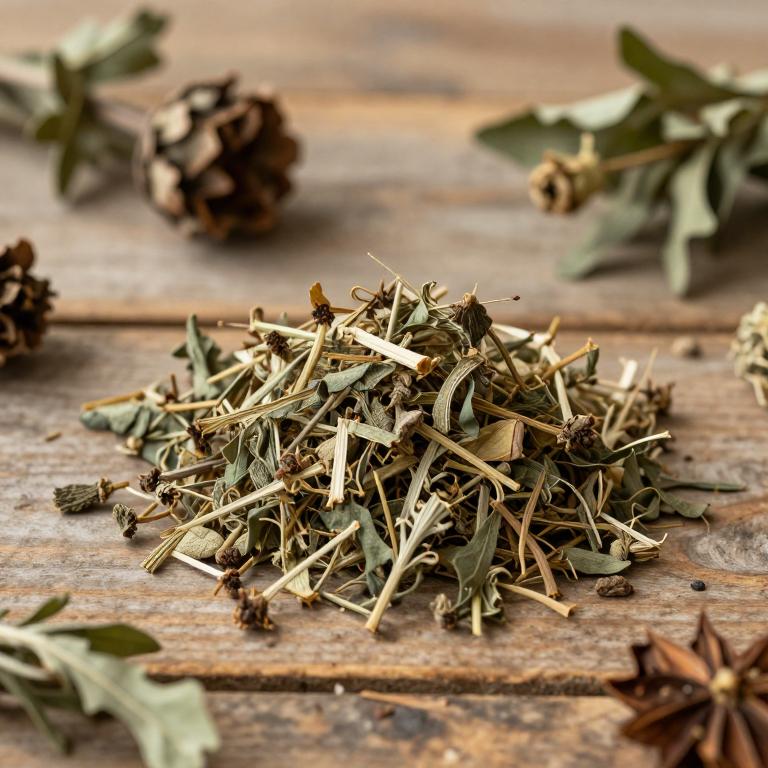
Wild peony, scientifically known as Paeonia mascula, is a perennial herb celebrated for its striking, deep-pink blossoms. Found across Europe and Western Asia, this resilient plant holds significant historical value in traditional medicine, often utilized for its diverse therapeutic properties and its ability to support overall wellness and vitality.
- Family
- Paeoniaceae
- Native range
- Europe
- Parts used
- Not available
- Common names
- Peony · Wild Peony · 1 more
- Scientific synonyms
- Paeonia Officinalis Var. Mascula
Names and Synonyms
Common Names
- Peony
- Wild Peony
- coral peony
Scientific Names
Accepted name
Paeonia masculaSynonyms
- Paeonia officinalis var. mascula
Regional and Traditional Names
German:
- Korallen-Pfingstrose
- Korallenpfingstrose
- Großblättrige Pfingstrose
- Korallen-Pfingstrose
- Großblättrige Pfingstrose
French:
- Pivoine coralline
- Pivoine mâle
- Pivoine mâle
Sources: Wikidata, Catalogue of Life
Taxonomical Classification
This plant belongs to the kingdom Plantae within the phylum Streptophyta and the class Equisetopsida. It is further classified under the subclass Magnoliidae and the order Saxifragales. Finally, it is a member of the family Paeoniaceae within the genus Paeonia.
| Rank | Classification |
|---|---|
| Kingdom | Plantae |
| Phylum | Streptophyta |
| Class | Equisetopsida |
| Subclass | Magnoliidae |
| Order | Saxifragales |
| Family | Paeoniaceae |
| Genus | Paeonia |
Sources: The World Checklist of Vascular Plants (WCVP)
Distribution
This plant exhibits a broad geographical distribution across several key regions of the European continent. In Northern Europe, its presence can be documented in Great Britain. Moving into Middle Europe, the species is commonly found in both Austria and Germany. The plant also extends into Southwestern Europe, where it grows within the borders of France. Finally, its range reaches further south into the landscapes of Spain.
| Region | Area |
|---|---|
| Northern Europe | Great Britain |
| Middle Europe | Austria |
| Middle Europe | Germany |
| Southwestern Europe | France |
| Southwestern Europe | Spain |
| Southeastern Europe | Albania |
| Southeastern Europe | Bulgaria |
| Southeastern Europe | Greece |
| Southeastern Europe | Italy |
| Southeastern Europe | Sicilia |
Sources: The World Checklist of Vascular Plants (WCVP)
Botanical Identification
Life history
The life history of Paeonia mascula is characterized by a perennial lifecycle, allowing the plant to persist across multiple growing seasons through stable reproductive and vegetative strategies. As a cryptophyte, it manages environmental stressors by protecting its vital organs underground during unfavorable periods. Specifically, its biological structure is classified as a geophyte, meaning it relies on specialized underground storage organs, such as tubers or thick rhizomes, to survive dormancy and fuel new growth during the spring.
- Life form :
- geophyte
- Life form :
- cryptophyte
- Lifecycle :
- perennial
Morphology
The morphology of Paeonia mascula is characterized by its growth form as a non-woody herb. This species is a self-supporting plant that does not function as a climber or a liana, maintaining a stable structure through its own stem. As a terrestrial organism, it is neither aquatic nor semiaquatic, nor does it exhibit epiphytic behavior, growing instead independently in its habitat without being a parasite. In terms of stature, the plant is relatively low-growing, with a plant height ranging from a minimum of 0.3 m to a maximum of 0.6 m.
- Aquatic :
- terrestrial
- Climber :
- self-supporting
- Epiphyte :
- terrestrial
- Growth form :
- herb
- Parasite :
- independent
- Plant height max:
- 0.6 m
- Plant height min:
- 0.3 m
- Woodiness :
- non-woody
Physiology
The physiology of Paeonia mascula is characterized by its metabolic processes and specialized growth adaptations, most notably its reliance on the C3 photosynthetic pathway for carbon fixation. As a C3 plant, it utilizes the enzyme Rubisco to fix atmospheric carbon dioxide directly into a three-carbon compound during the Calvin cycle, a process that is highly efficient in the temperate, moist, and shaded environments where this species typically thrives. This metabolic strategy necessitates careful regulation of transpiration and stomatal conductance to balance CO2 uptake with water loss, especially during the peak growing season. Beyond carbon assimilation, the plant exhibits complex physiological responses to seasonal shifts, including the accumulation of storage carbohydrates in its thick, fleshy rhizomes to support vernalization and rapid spring regrowth. Furthermore, its physiological profile includes the biosynthesis of various secondary metabolites, which serve as chemical defenses and play a role in the plant's overall physiological resilience against environmental stressors.
- Photosynthetic pathway :
- C3
Reproduction
The reproduction of Paeonia mascula is characterized by a complex life cycle involving both sexual and asexual mechanisms. Sexual reproduction is facilitated through the production of large, showy flowers that serve to attract pollinators, with the flowering period typically beginning in May and following a seasonal progression that can be variable depending on environmental conditions. The flowering time is a critical stage in its reproductive cycle, as the timing of bloom influences successful fertilization and subsequent seed development. Once pollination occurs, the plant produces follicles that contain numerous seeds, which are dispersed to colonize new areas. In addition to seed production, the plant can also engage in vegetative reproduction through its robust rhizomatous root system, allowing it to spread locally and ensure persistence in its natural habitat even when sexual reproduction is limited.
- Flowering time :
- May
Sources: Global Inventory of Floras and Traits (GIFT)
Chemicals
Paeonia mascula has 3 reported phytochemicals identified across 0 scientific publications and several other databases. The most consistently reported chemicals include Flavonoids, Tannins, Terpenoids.
| Chemical | Supporting sources | Consensus |
|---|---|---|
| Flavonoids | 1 supporting sources | ★☆☆☆☆ |
| Tannins | 1 supporting sources | ★☆☆☆☆ |
| Terpenoids | 1 supporting sources | ★☆☆☆☆ |
Flavonoids
- Plants (Basel, Switzerland)
Tannins
- Plants (Basel, Switzerland)
Terpenoids
- Plants (Basel, Switzerland)
Activities
Paeonia mascula has 6 reported activities identified across 0 scientific publications and several other databases. The most consistently reported activities include Anticancer, Antidiabetic, Antimicrobial, Antioxidant, Antisclerotic.
| Activity | Supporting sources | Consensus |
|---|---|---|
| Anticancer | 1 supporting sources | ★☆☆☆☆ |
| Antidiabetic | 1 supporting sources | ★☆☆☆☆ |
| Antimicrobial | 1 supporting sources | ★☆☆☆☆ |
| Antioxidant | 1 supporting sources | ★☆☆☆☆ |
| Antisclerotic | 1 supporting sources | ★☆☆☆☆ |
| Neuroprotective | 1 supporting sources | ★☆☆☆☆ |
Anticancer
- Plants (Basel, Switzerland)
Antidiabetic
- Plants (Basel, Switzerland)
Antimicrobial
- Plants (Basel, Switzerland)
Antioxidant
- Plants (Basel, Switzerland)
Antisclerotic
- Plants (Basel, Switzerland)
Neuroprotective
- Plants (Basel, Switzerland)
Conditions
Paeonia mascula has 2 reported investigations on conditions identified across 0 scientific publications and several other databases. The most consistently reported conditions include antidiabetic, antioxidant.
| Condition | Supporting sources | Consensus |
|---|---|---|
| Antidiabetic | 1 supporting sources | ★☆☆☆☆ |
| Antioxidant | 1 supporting sources | ★☆☆☆☆ |
Antidiabetic
- Plants (Basel, Switzerland)
Antioxidant
- Plants (Basel, Switzerland)