alkali-blite
Oxybasis rubra · Accepted scientific name
Scientific literature: Very Sparse (10 studies) · ★☆☆☆☆
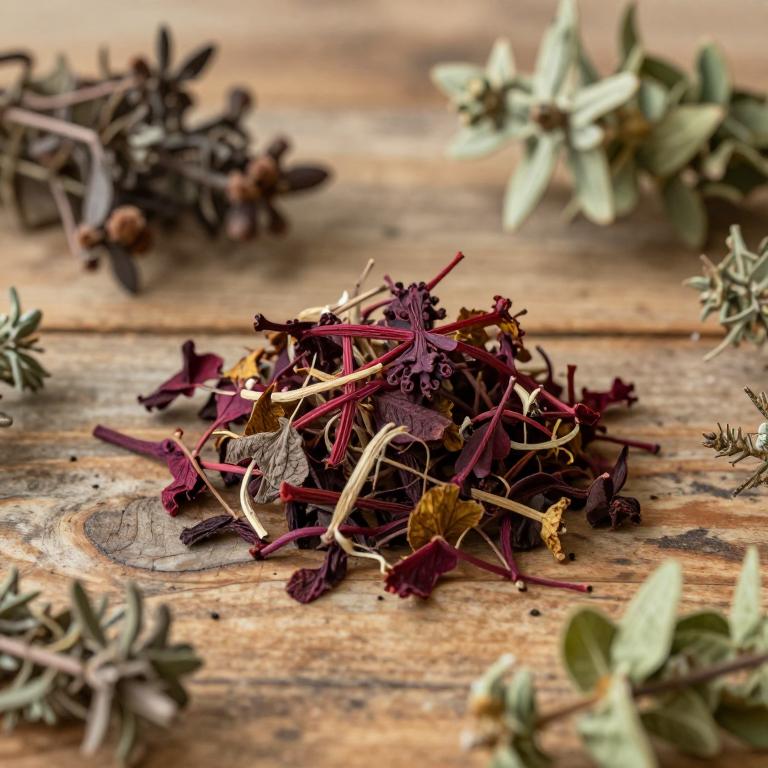
Alkali-blithe, scientifically known as Oxybasis rubra, is a resilient perennial herb primarily found in saline environments. Renowned for its ability to thrive in alkaline soils, this plant holds significant ethnobotanical value. Its unique physiological adaptations and potential medicinal properties make it a fascinating subject for botanical research and study.
Names and Synonyms
Common Names
- alkali-blite
- coast-blite
- red-pigweed
- red pigweed
Scientific Names
Accepted name
Oxybasis rubraSynonyms
- Orthosporum rubrum
- Orthospermum rubrum
- Agathophytum rubrum
- Blitum polymorphum var. rubrum
- Blitum rubrum
- Atriplex rubra
- Botrys ruber
- Chenopodium rubrum
Regional and Traditional Names
Spanish:
- Cenizo rojo
- Cenizo rojo
German:
- Chenopodium rubrum
- Roter Gänsefuß
- Atriplex rubra
- Blitum polymorphum var. rubrum
- Blitum rubrum
- Botrys rubra
- Orthospermum rubrum
- Orthosporum rubrum
- roter Gänsefuß
French:
- ansérine rouge
- chénopode rouge
Sources: Wikidata, Catalogue of Life
Taxonomical Classification
This plant belongs to the kingdom Plantae and is classified under the phylum Streptophyta and the class Equisetopsida. Within the subclass Magnoliidae, it falls under the order Caryophyllales and the family Amaranthaceae. Finally, it is categorized under the genus Oxybasis, specifically as the species Oxybasis rubra.
| Rank | Classification |
|---|---|
| Kingdom | Plantae |
| Phylum | Streptophyta |
| Class | Equisetopsida |
| Subclass | Magnoliidae |
| Order | Caryophyllales |
| Family | Amaranthaceae |
| Genus | Oxybasis |
Sources: The World Checklist of Vascular Plants (WCVP)
Distribution
This plant, known as Oxybasis rubra, exhibits a specific distribution across several regions in Northern Europe. It can be found growing within the coastal or damp habitats of Denmark. Its range also extends northward to include the landscapes of Finland. Additionally, the species is documented throughout the islands of Great Britain and Ireland. Finally, its presence is confirmed in the northern territories of Norway.
| Region | Area |
|---|---|
| Northern Europe | Denmark |
| Northern Europe | Finland |
| Northern Europe | Great Britain |
| Northern Europe | Ireland |
| Northern Europe | Norway |
| Northern Europe | Sweden |
| Middle Europe | Austria |
| Middle Europe | Belgium |
| Middle Europe | Czechia-Slovakia |
| Middle Europe | Germany |
Sources: The World Checklist of Vascular Plants (WCVP)
Botanical Identification
Ecology
The ecology of Oxybasis rubra is characterized by its specialized ability to thrive in saline places, where it occupies distinct environmental niches. This plant demonstrates a broad altitudinal distribution, ranging from low-lying areas at an elevation of 300 m AMSL to higher mountainous terrains reaching a maximum elevation of 1800 m AMSL.
- Elevational range max:
- 1800 m AMSL
- Elevational range min:
- 300 m AMSL
- Habitat :
- saline places
Life history
The life history of Oxybasis rubra is characterized by its classification as an annual plant, completing its entire reproductive cycle within a single growing season. As a therophyte, it maintains its biological activity through seeds that remain dormant until environmental conditions are favorable for germination. This life form strategy allows the plant to escape unfavorable seasonal periods, effectively surviving through its seed stage. Additionally, the plant exhibits a deciduous nature, shedding its vegetative structures as it concludes its seasonal cycle, ensuring that its resources are consolidated into seed production before the onset of senescence.
- Deciduousness :
- deciduous
- Life form :
- therophyte
- Lifecycle :
- annual
Morphology
The morphology of Oxybasis rubra is characterized by its growth form as a non-woody herb and forb. This species is a self-supporting plant that does not function as a climber, liana, or vine, and it maintains an independent existence rather than acting as a parasite or epiphyte. It is classified as a terrestrial plant, typically found in land-based habitats rather than aquatic or semiaquatic environments. In terms of stature, the plant exhibits significant variability in size, with individual specimens ranging from a minimum height of 0.15 m to a maximum height of 1.2 m, resulting in an average plant height of approximately 0.8645 m.
- Aquatic :
- terrestrial
- Climber :
- self-supporting
- Epiphyte :
- terrestrial
- Growth form :
- herb
- Growth form :
- forb
- Parasite :
- independent
- Plant height max:
- 1.2 m
- Plant height mean:
- 0.8645 m
- Plant height min:
- 0.15 m
- Woodiness :
- non-woody
Physiology
The physiology of Oxybasis rubra is characterized by a C3 photosynthetic pathway, indicating a standard carbon fixation process typical of many temperate species. The plant exhibits a non-carnivorous nutritional strategy, relying on autotrophic processes rather than the capture of prey for nitrogen. Morphologically, its foliage is defined by a mean leaf size of 13.593 cm², which contributes to a mean Specific Leaf Area (SLA) of 208.16 cm²/g, reflecting a specific balance between its leaf mass and surface area.
- Carnivory :
- non-carnivorous
- Leaf size mean:
- 13.593 cm²
- Photosynthetic pathway :
- C3
- Specific Leaf Area (SLA) mean:
- 208.16 cm²/g
Reproduction
The reproduction of Oxybasis rubra is characterized by a sexual process utilizing bisexual flowers. The flowering period typically occurs during the summer months, specifically starting in July and concluding in August. The plant relies on abiotic pollination syndromes, specifically driven by the wind, to facilitate fertilization; notably, self-fertilization is absent in this species. Following successful pollination, the plant produces dry, indehiscent fruits classified as achenes. The resulting seeds are quite small, with a mean mass of approximately 0.000113724333333333 g (ranging from a minimum of 0.00006 g to a maximum of 0.0006 g) and a consistent seed volume of 0.27 mm³. These seeds are dispersed via an anemochorous syndrome, utilizing the wind for distribution. Asexual reproduction is absent in this species, making sexual reproduction the sole method of propagation.
- Dehiscence :
- indehiscent
- Dispersal syndrome :
- anemochorous
- Flowering time :
- Jul
- Flowering time :
- Aug
- Fruit dryness :
- dry
- Fruit type :
- achene
- Pollination syndrome :
- wind
- Pollination syndrome :
- abiotic
- Reproduction asexual :
- absent
- Reproduction sexual :
- bisexual
- Seed mass max:
- 6e-04 g
- Seed mass mean:
- 0.000113724333333333 g
- Seed mass min:
- 6e-05 g
- Seed volume max:
- 0.27 mm³
- Self fertilization :
- absent
Sources: Global Inventory of Floras and Traits (GIFT)
Plant Parts
Oxybasis rubra has 1 reported plant parts identified across 1 scientific publications and several other databases that are studied for medicinal purposes. The most consistently reported plant part include seed.
| Plant part | Supporting sources | Consensus |
|---|---|---|
| Seed | 1 supporting sources | ★☆☆☆☆ |
Seed
- Saudi journal of biological sciences
Chemicals
Oxybasis rubra has 1 reported phytochemicals identified across 1 scientific publications and several other databases. The most consistently reported chemicals include Hederagenin.
| Chemical | Supporting sources | Consensus |
|---|---|---|
| Hederagenin | 1 supporting sources | ★☆☆☆☆ |
Hederagenin
- Molecules (Basel, Switzerland)
Activities
Oxybasis rubra has 2 reported activities identified across 1 scientific publications and several other databases. The most consistently reported activities include Antioxidant, Cytotoxic.
| Activity | Supporting sources | Consensus |
|---|---|---|
| Antioxidant | 1 supporting sources | ★☆☆☆☆ |
| Cytotoxic | 1 supporting sources | ★☆☆☆☆ |
Antioxidant
- Saudi journal of biological sciences
Cytotoxic
- Saudi journal of biological sciences
Conditions
Oxybasis rubra has 5 reported investigations on conditions identified across 1 scientific publications and several other databases. The most consistently reported conditions include gastrointestinal cancer, lung cancer, prostate cancer, skin cancer, thyroid cancer.
| Condition | Supporting sources | Consensus |
|---|---|---|
| Gastrointestinal cancer | 1 supporting sources | ★☆☆☆☆ |
| Lung cancer | 1 supporting sources | ★☆☆☆☆ |
| Prostate cancer | 1 supporting sources | ★☆☆☆☆ |
| Skin cancer | 1 supporting sources | ★☆☆☆☆ |
| Thyroid cancer | 1 supporting sources | ★☆☆☆☆ |
Gastrointestinal cancer
- Molecules (Basel, Switzerland)
Lung cancer
- Molecules (Basel, Switzerland)
Prostate cancer
- Molecules (Basel, Switzerland)
Skin cancer
- Molecules (Basel, Switzerland)
Thyroid cancer
- Molecules (Basel, Switzerland)