Otoba parvifolia
Otoba parvifolia · Accepted scientific name
Scientific literature: Very Sparse (2 studies) · ★☆☆☆☆
Otoba parvifolia, scientifically known as Otoba parvifolia, is a significant medicinal plant native to tropical regions. Renowned for its diverse therapeutic properties, this species is frequently utilized in traditional medicine to treat various ailments. Its bioactive compounds offer promising potential for pharmacological research and modern holistic healing practices.
- Family
- Myristicaceae
- Native range
- Southern America
- Parts used
- Not available
- Common names
- Not available
- Scientific synonyms
- Myristica Otoba Var. Glaucescens · Dialyanthera Parvifolia
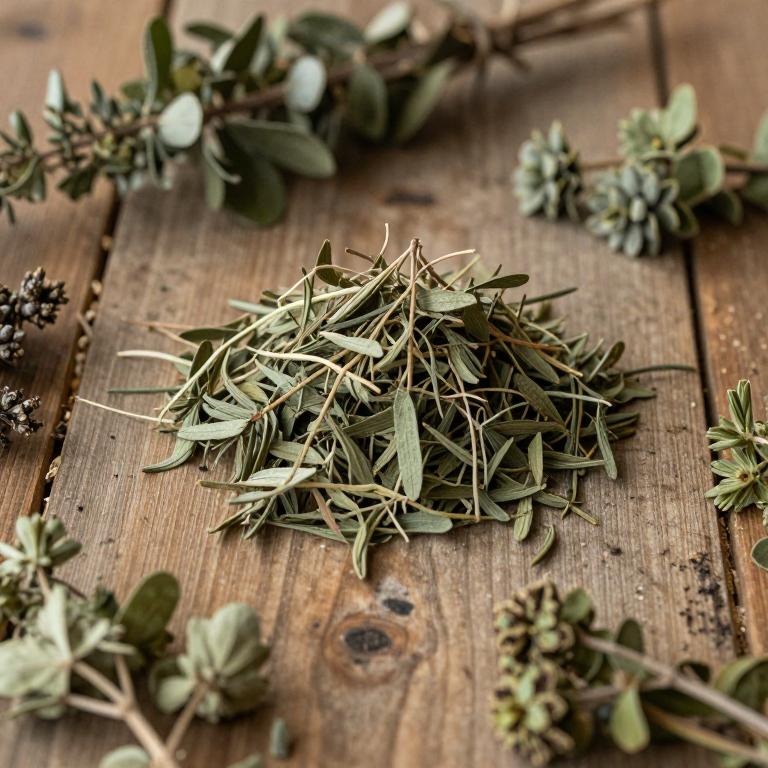
Names and Synonyms
Scientific Names
Accepted name
Otoba parvifoliaSynonyms
- Myristica otoba var. glaucescens
- Dialyanthera parvifolia
Sources: Wikidata, Catalogue of Life
Taxonomical Classification
This plant, known scientifically as Otoba parvifolia, belongs to the kingdom Plantae and the phylum Streptophyta. It is classified under the class Equisetopsida and the subclass Magnoliidae, following the order Magnoliales. Finally, it is a member of the family Myristicaceae within the genus Otoba.
| Rank | Classification |
|---|---|
| Kingdom | Plantae |
| Phylum | Streptophyta |
| Class | Equisetopsida |
| Subclass | Magnoliidae |
| Order | Magnoliales |
| Family | Myristicaceae |
| Genus | Otoba |
Sources: The World Checklist of Vascular Plants (WCVP)
Distribution
This plant exhibits a broad distribution across the South American continent. In Northern South America, it can be found growing within the borders of Venezuela. Moving toward the western part of the continent, its presence extends into Colombia and Ecuador. The species is also widely distributed throughout the western regions of Peru. Finally, its geographical range reaches as far south as Bolivia.
| Region | Area |
|---|---|
| Northern South America | Venezuela |
| Western South America | Bolivia |
| Western South America | Colombia |
| Western South America | Ecuador |
| Western South America | Peru |
| Brazil | Brazil North |
Sources: The World Checklist of Vascular Plants (WCVP)
Botanical Identification
Ecology
The ecology of Otoba parvifolia is characterized by its presence in diverse forest ecosystems, specifically occupying both Floresta de Terra Firme and Floresta de Várzea habitats. This plant demonstrates a broad altitudinal distribution, thriving at elevations ranging from a minimum of 10 m AMSL to a maximum of 1100 m AMSL.
- Elevational range max:
- 1100 m AMSL
- Elevational range min:
- 10 m AMSL
- Habitat :
- Floresta de Terra Firme, Floresta de Várzea
Life history
The life history of Otoba parvifolia is characterized by its status as a perennial species, meaning it persists through multiple growing seasons rather than completing its life cycle in a single year. As a long-lived woody plant, it follows a developmental trajectory that involves an initial establishment phase followed by sustained vegetative growth and periodic reproductive cycles. Its perennial nature allows the plant to accumulate biomass and structural complexity over many years, enabling it to survive through varying environmental conditions and seasonal fluctuations. This extended lifespan supports a stable presence within its ecosystem, providing a continuous source of biological material as it undergoes continuous growth and eventual maturation.
- Lifecycle :
- perennial
Morphology
The morphology of Otoba parvifolia is characterized by its growth form as a woody tree, which can reach a significant stature with a mean height of approximately 15 m and a maximum height of up to 30 m. This species is a terrestrial plant, existing as an independent organism rather than a parasite or an epiphyte. Unlike climbing species such as lianas or vines, it is strictly self-supporting in its structural development.
- Aquatic :
- terrestrial
- Climber :
- self-supporting
- Epiphyte :
- terrestrial
- Growth form :
- tree
- Parasite :
- independent
- Plant height max:
- 30 m
- Plant height mean:
- 15 m
- Woodiness :
- woody
Physiology
The physiology of Otoba parvifolia is characterized by a C3 photosynthetic pathway, which dictates its carbon fixation process through the direct carboxylation of ribulose-1,5-bisphosphate by the enzyme RuBisCO. This metabolic strategy involves the standard Calvin cycle to convert atmospheric carbon dioxide into organic compounds, a common trait among many woody tropical species. Furthermore, regarding its nutrient acquisition capabilities, the plant is not a nitrogen fixer, meaning it lacks the symbiotic relationship with nitrogen-fixing bacteria required to convert atmospheric nitrogen into usable forms and must instead rely on the uptake of nitrates and ammonium from the soil to meet its nitrogen requirements for protein and chlorophyll synthesis.
- Nitrogen fixer :
- no
- Photosynthetic pathway :
- C3
Reproduction
The reproduction of Otoba parvifolia is characterized by a complex dispersal strategy and specific seed morphology. The species exhibits a versatile dispersal syndrome, utilizing various methods including anemochory, zoochory, autochory, hydrochory, and unspecialized mechanisms to ensure its propagation across different environments. The seeds produced by this plant are relatively uniform in size, with a recorded mean seed mass of 1.815 g. This mass fluctuates within a very narrow range, with a minimum seed mass of 1.8 g and a maximum seed mass of 1.83 g, indicating a highly consistent investment in individual seed energy reserves.
- Dispersal syndrome :
- zoochorous
- Seed mass max:
- 1.83 g
- Seed mass mean:
- 1.815 g
- Seed mass min:
- 1.8 g
Sources: Global Inventory of Floras and Traits (GIFT)
Activities
Otoba parvifolia has 1 reported activities identified across 0 scientific publications and several other databases. The most consistently reported activities include Antimicrobial.
| Activity | Supporting sources | Consensus |
|---|---|---|
| Antimicrobial | 1 supporting sources | ★☆☆☆☆ |
Antimicrobial
- Molecules (Basel, Switzerland)
Conditions
Otoba parvifolia has 1 reported investigations on conditions identified across 0 scientific publications and several other databases. The most consistently reported conditions include Borrelia burgdorferi.
| Condition | Supporting sources | Consensus |
|---|---|---|
| Borrelia burgdorferi | 1 supporting sources | ★☆☆☆☆ |
Borrelia burgdorferi
- Molecules (Basel, Switzerland)
Preparations
Otoba parvifolia has 1 reported preparations identified across 0 scientific publications and several other databases. The most consistently reported preparations include Banderol.
| Preparation | Supporting sources | Consensus |
|---|---|---|
| Banderol | 1 supporting sources | ★☆☆☆☆ |
Banderol
- Molecules (Basel, Switzerland)