Marsh Angelica
Ostericum palustre · Accepted scientific name
Scientific literature: Very Sparse (7 studies) · ★☆☆☆☆
Marsh Angelica, scientifically known as Ostericum palustre, is a perennial herb native to Europe and Asia. Found in damp, marshy habitats, it is characterized by its umbelliferous flowers and aromatic foliage. Historically used in folk medicine, this plant offers unique phytochemical properties valued in traditional herbal practices and botanical studies.
- Family
- Apiaceae
- Native range
- Europe
- Parts used
- Not available
- Common names
- Marsh Angelica
- Scientific synonyms
- Selinum Odoratum · Angelica Pancicii · 6 more
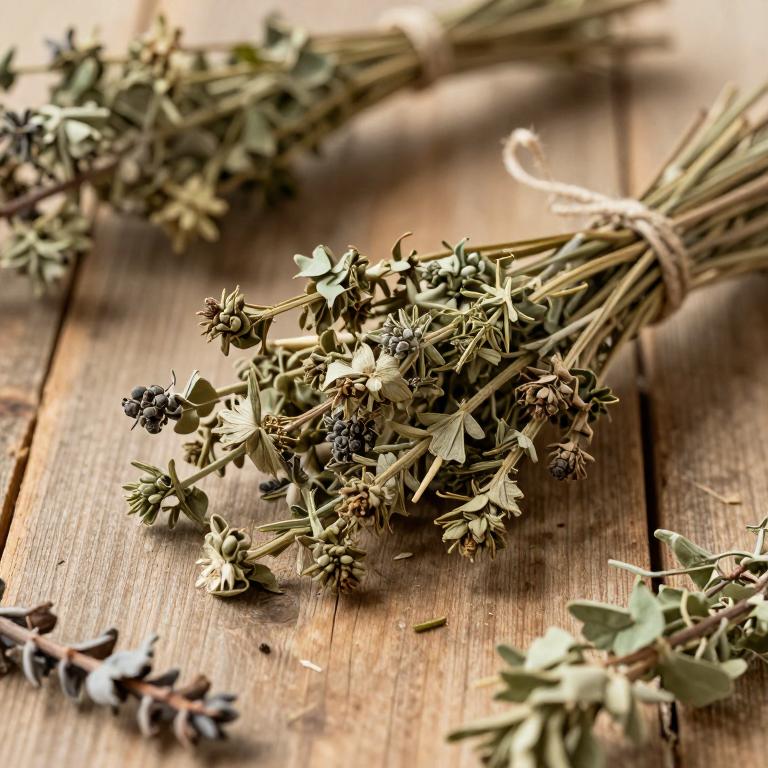
Names and Synonyms
Common Names
- Marsh Angelica
Scientific Names
Accepted name
Ostericum palustreSynonyms
- Selinum odoratum
- Angelica pancicii
- Imperatoria palustris
- Selinum ostericum
- Ostericum pratense
- Gomphopetalum albiflorum
- Ostericum albiflorum
- Angelica palustris
Regional and Traditional Names
German:
- Sumpf-Engelwurz
Sources: Wikidata, Catalogue of Life
Taxonomical Classification
This plant belongs to the kingdom Plantae and the phylum Streptophyta, falling under the class Equisetopsida and subclass Magnoliidae. Within the order Apiales, it is classified under the family Apiaceae. Finally, it is identified by the genus Ostericum, specifically as the species Ostericum palustre.
| Rank | Classification |
|---|---|
| Kingdom | Plantae |
| Phylum | Streptophyta |
| Class | Equisetopsida |
| Subclass | Magnoliidae |
| Order | Apiales |
| Family | Apiaceae |
| Genus | Ostericum |
Sources: The World Checklist of Vascular Plants (WCVP)
Distribution
This plant exhibits a wide distribution across several regions within the European continent. In Middle Europe, it can be found inhabiting the landscapes of Germany and Poland. Its presence also extends to the territories of Czechia and Slovakia within the same central region. Additionally, the species is recorded in the country of Hungary. Moving toward Southeastern Europe, the distribution of this medicinal plant reaches as far as Albania.
| Region | Area |
|---|---|
| Middle Europe | Czechia-Slovakia |
| Middle Europe | Germany |
| Middle Europe | Hungary |
| Middle Europe | Poland |
| Southeastern Europe | Albania |
| Southeastern Europe | Bulgaria |
| Southeastern Europe | Romania |
| Southeastern Europe | NW. Balkan Pen. |
| Eastern Europe | Belarus |
| Eastern Europe | Baltic States |
Sources: The World Checklist of Vascular Plants (WCVP)
Botanical Identification
Ecology
The ecology of Ostericum palustre is characterized by its preference for highly specific, moisture-rich environments, primarily thriving within meadows and swamps. This species is typically found in fenlands, marshes, and damp alluvial meadows where the substrate remains consistently saturated or waterlogged. These habitats provide the necessary high humidity and nutrient-rich, often acidic to neutral, hydromorphic soils required for its growth. By occupying these wetland niches, the plant plays a role in the complex hydrological and biological interactions of mire and riparian ecosystems, where it must contend with periodic flooding and competition from other hydrophytic vegetation.
- Habitat :
- meadows, swamps
Life history
The life history of Ostericum palustre is characterized by a biennial lifecycle, meaning it typically completes its biological processes over a two-year period. As a hemicryptophyte, the plant maintains its perennating buds at or just below the soil surface, protected by leaf litter or substrate during unfavorable conditions. It exhibits a deciduous nature, shedding its foliage seasonally as part of its survival strategy.
- Deciduousness :
- deciduous
- Life form :
- hemicryptophyte
- Lifecycle :
- biennial
Morphology
The morphology of Ostericum palustre is characterized by its growth form as a non-woody herb, functioning as a self-supporting plant rather than a climber or vine. It is an independent species that does not exhibit parasitic or epiphytic behavior, maintaining a terrestrial lifestyle. In terms of stature, the plant typically reaches a mean height of 0.6 m, though its size can vary significantly, ranging from a minimum of 0.4 m to a maximum of 1.2 m.
- Aquatic :
- terrestrial
- Climber :
- self-supporting
- Epiphyte :
- terrestrial
- Growth form :
- herb
- Parasite :
- independent
- Plant height max:
- 1.2 m
- Plant height mean:
- 0.6 m
- Plant height min:
- 0.4 m
- Woodiness :
- non-woody
Physiology
The physiology of Ostericum palustre is primarily defined by its carbon fixation mechanism, utilizing the C3 photosynthetic pathway. This metabolic process involves the direct fixation of atmospheric carbon dioxide by the enzyme RuBisCO within the mesophyll cells, leading to the immediate production of three-carbon compounds. As a C3 plant, its physiological efficiency is closely tied to environmental conditions, particularly temperature and moisture availability, as it lacks the specialized mechanisms found in C4 or CAM species to minimize photorespiration. The plant's energy production and growth patterns are thus highly dependent on maintaining optimal stomatal conductance to balance gas exchange with transpirational water loss, a critical physiological requirement for its survival in its typical ecological niche.
- Photosynthetic pathway :
- C3
Reproduction
The reproduction of Ostericum palustre is characterized by a specific seasonal flowering window and specialized pollination and dispersal mechanisms. The plant typically begins its flowering period in July and concludes in August. Its pollination strategy is primarily biotic, utilizing an insect pollination syndrome to facilitate fertilization. Furthermore, the species is capable of self-fertilization, which ensures reproductive success even under varying environmental conditions. Once seeds are developed, the plant utilizes a hydrochorous dispersal syndrome, relying on water movement to transport its progeny to new locations.
- Dispersal syndrome :
- hydrochorous
- Flowering time :
- Jul
- Flowering time :
- Aug
- Pollination syndrome :
- insect
- Pollination syndrome :
- biotic
- Self fertilization :
- present
Sources: Global Inventory of Floras and Traits (GIFT)
Chemicals
Ostericum palustre has 6 reported phytochemicals identified across 0 scientific publications and several other databases. The most consistently reported chemicals include BORNYL ACETATE, Coumarins, Kessane, N-octanol, Oxypeucedanin.
| Chemical | Supporting sources | Consensus |
|---|---|---|
| BORNYL ACETATE | 1 supporting sources | ★☆☆☆☆ |
| Coumarins | 1 supporting sources | ★☆☆☆☆ |
| Kessane | 1 supporting sources | ★☆☆☆☆ |
| N-octanol | 1 supporting sources | ★☆☆☆☆ |
| Oxypeucedanin | 1 supporting sources | ★☆☆☆☆ |
| Oxypeucedanin hydrate | 1 supporting sources | ★☆☆☆☆ |
BORNYL ACETATE
- Journal of agricultural and food chemistry
Coumarins
- Journal of agricultural and food chemistry
Kessane
- Journal of agricultural and food chemistry
N-octanol
- Journal of agricultural and food chemistry
Oxypeucedanin
- Journal of agricultural and food chemistry
Oxypeucedanin hydrate
- Journal of agricultural and food chemistry