Osmunda claytoniana
Osmunda claytoniana · Accepted scientific name
Scientific literature: Very Sparse (2 studies) · ★☆☆☆☆
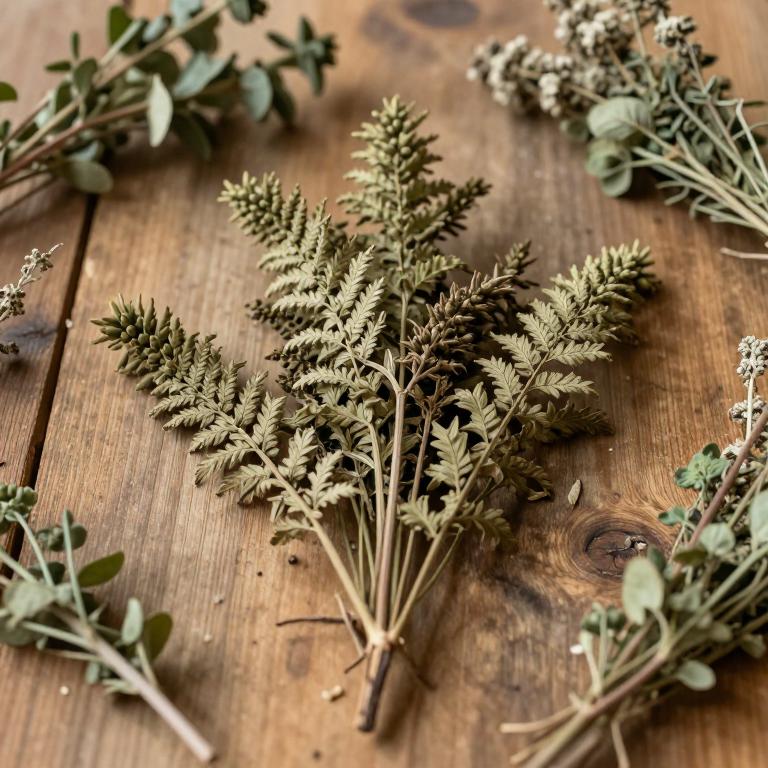
, scientifically known as Osmunda claytoniana, is commonly called the Interrupted Fern. This distinctive woodland plant is characterized by its unique spore-bearing fronds. While primarily valued for its aesthetic role in temperate ecosystems, it holds traditional significance in various cultures for its potential medicinal and ecological properties.
- Family
- Osmundaceae
- Native range
- Europe
- Parts used
- Not available
- Common names
- Not available
- Scientific synonyms
- Osmunda Claytoniana F. Dubia · Plenasium Interruptum · 10 more
Names and Synonyms
Scientific Names
Accepted name
Osmunda claytonianaSynonyms
- Osmunda claytoniana f. dubia
- Plenasium interruptum
- Plenasium claytonianum
- Plenasium claytonianum
- Osmundastrum claytonianum
- Struthiopteris claytoniana
- Claytosmunda claytoniana
- Osmunda basilaris
- Osmunda claytoniana f. tomentosa
- Osmunda claytoniana var. dubia
- Osmunda interrupta
- Osmunda monticola
Regional and Traditional Names
German:
- Claytosmunda claytoniana
French:
- Osmonde de Clayton
Sources: Wikidata
Taxonomical Classification
This plant belongs to the kingdom Plantae and is classified under the phylum Streptophyta within the class Equisetopsida. It is further categorized under the subclass Polypodiinae and the order Osmundales. Finally, it is a member of the family Osmundaceae and falls under the genus Osmunda.
| Rank | Classification |
|---|---|
| Kingdom | Plantae |
| Phylum | Streptophyta |
| Class | Equisetopsida |
| Subclass | Polypodiinae |
| Order | Osmundales |
| Family | Osmundaceae |
| Genus | Osmunda |
Sources: The World Checklist of Vascular Plants (WCVP)
Distribution
This plant, known as the Interrupted Fern, exhibits a wide geographical distribution across several different regions. In Middle Europe, its presence can be documented within the Netherlands. Moving across the Atlantic, the species is found in Western Canada, specifically in the province of Manitoba. The plant also inhabits various parts of Eastern Canada, including Labrador and New Brunswick. Additionally, its range extends to the island of Newfoundland in the eastern part of the country.
| Region | Area |
|---|---|
| Middle Europe | Netherlands |
| Western Canada | Manitoba |
| Eastern Canada | Labrador |
| Eastern Canada | New Brunswick |
| Eastern Canada | Newfoundland |
| Eastern Canada | Nova Scotia |
| Eastern Canada | Ontario |
| Eastern Canada | Prince Edward I. |
| Eastern Canada | Québec |
| North-Central U.S.A. | Illinois |
Sources: The World Checklist of Vascular Plants (WCVP)
Botanical Identification
Ecology
The ecology of Osmunda claytoniana is fundamentally defined by its preference for shaded, moist environments, most notably within the stable microclimates of a forest habitat. As a terrestrial fern, it thrives in the understory of deciduous and mixed woodlands, where the dense canopy provides the necessary filtered light and prevents excessive transpiration. This species is highly dependent on consistent soil moisture and is frequently found in areas characterized by rich, organic leaf litter, along the margins of streams, or in seepage areas where the ground remains damp. The forest floor provides the structured shade and stable humidity levels required for its gametophytes to develop and for its fertile fronds to successfully complete their reproductive cycles.
- Habitat :
- forest
Life history
The life history of Osmunda claytoniana is characterized by its status as a perennial plant, meaning it lives for more than two years and undergoes seasonal cycles of growth and dormancy. As a long-lived vascular plant, it establishes itself through a robust rhizome system that allows it to persist in moist, shaded environments year after year. In the spring, new fronds emerge from the underground rhizomes, expanding into large, spreading clusters of foliage that facilitate photosynthesis during the growing season. The reproductive phase occurs when the plant produces specialized fertile pinnae, which release spores into the environment to facilitate dispersal and the establishment of new individuals. Throughout its life cycle, the plant relies on its perennial nature to survive unfavorable conditions, regrowing from its established rootstock each subsequent season.
- Lifecycle :
- perennial
Morphology
The morphology of Osmunda claytoniana is characterized by a growth form typical of a non-woody herb and forb, reaching an average plant height of approximately 1.2 m. As a self-supporting species, it does not function as a climber, liana, or vine, and it maintains an independent existence rather than acting as a parasite. The plant is primarily terrestrial in its habitat, avoiding obligate epiphytic or aquatic lifestyles, though it may exist in semiaquatic environments. Its structure is entirely non-woody, lacking any significant lignified tissue.
- Aquatic :
- terrestrial
- Climber :
- self-supporting
- Epiphyte :
- terrestrial
- Growth form :
- herb
- Growth form :
- forb
- Parasite :
- independent
- Plant height mean:
- 1.2 m
- Woodiness :
- non-woody
Physiology
The physiology of Osmunda claytoniana is characterized by a specialized metabolic framework designed to thrive in moist, shaded forest environments. Central to its energy production is its photosynthetic pathway, which utilizes the C3 mechanism; this process involves the direct fixation of atmospheric carbon dioxide through the enzyme RuBisCO during the Calvin cycle, making it highly efficient in cool, temperate, and high-moisture habitats where transpiration rates are moderated. The plant's water relations are governed by a robust vascular system capable of transporting nutrients through tracheids, which facilitates efficient hydration in damp substrates. Furthermore, its physiological resilience is supported by a complex system of rhizomes that serve as vital storage organs for starch, allowing the plant to maintain metabolic activity and support new growth during seasonal transitions.
- Photosynthetic pathway :
- C3
Reproduction
The reproduction of Osmunda claytoniana does not involve traditional flowers, as it is a pteridophyte that utilizes spores for propagation rather than seeds. While the plant does not follow a flowering schedule, its reproductive cycle is closely tied to its seasonal growth patterns. Based on the specified temporal parameters, the biological activity related to its reproductive emergence typically begins around May, with the peak period of development continuing through June. During this window, the plant produces specialized structures called sporangia located on the underside of its fertile fronds, which release microscopic spores into the environment to facilitate dispersal and the colonization of moist, shaded habitats.
- Flowering time :
- May
- Flowering time :
- Jun
Sources: Global Inventory of Floras and Traits (GIFT)
Chemicals
Osmunda claytoniana has 1 reported phytochemicals identified across 0 scientific publications and several other databases. The most consistently reported chemicals include Flavonoids.
| Chemical | Supporting sources | Consensus |
|---|---|---|
| Flavonoids | 1 supporting sources | ★☆☆☆☆ |
Flavonoids
- Journal of ethnopharmacology
Conditions
Osmunda claytoniana has 1 reported investigations on conditions identified across 0 scientific publications and several other databases. The most consistently reported conditions include Staphylococcus aureus.
| Condition | Supporting sources | Consensus |
|---|---|---|
| Staphylococcus aureus | 1 supporting sources | ★☆☆☆☆ |
Staphylococcus aureus
- Journal of ethnopharmacology