Oryza coarctata
Oryza coarctata · Accepted scientific name
Scientific literature: Very Sparse (13 studies) · ★☆☆☆☆
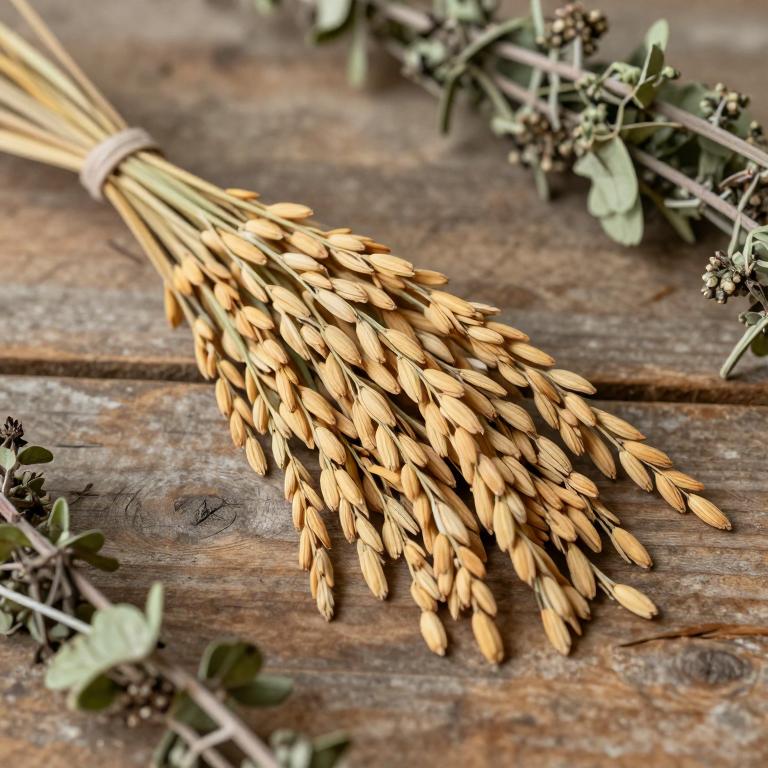
Oryza coarctata, scientifically known as Oryza coarctata, is a unique wild rice species native to coastal and saline environments. Beyond its botanical interest, this plant holds significant medicinal potential. Researchers explore its bioactive compounds for antioxidant and antimicrobial properties, offering promising insights into traditional herbal remedies and modern pharmacology.
- Family
- Not available
- Native range
- Asia-Tropical
- Parts used
- Not available
- Common names
- Not available
- Scientific synonyms
- Not available
Names and Synonyms
Scientific Names
Accepted name
Oryza coarctataDistribution
This plant exhibits a broad geographical range across several regions of South and Southeast Asia. Within the Indian Subcontinent, it is widely documented to grow in Bangladesh. It also maintains a significant presence throughout various parts of India. Furthermore, its distribution extends to the neighboring territory of Pakistan. Finally, the species can be found within the Indo-China region, specifically in Myanmar.
| Region | Area |
|---|---|
| Indian Subcontinent | Bangladesh |
| Indian Subcontinent | India |
| Indian Subcontinent | Pakistan |
| Indo-China | Myanmar |
Sources: The World Checklist of Vascular Plants (WCVP)
Botanical Identification
Life history
The life history of Oryza coarctata is characterized by its classification as a geophyte, a growth form that allows it to persist through unfavorable environmental conditions via underground storage organs. As a perennial species often found in coastal or saline habitats, its life cycle involves a strategic reliance on these subterranean structures to survive periods of drought or extreme salinity. The plant's development transitions through various stages of vegetative growth, utilizing its specialized life form to maintain a persistent presence in its niche, even when the aerial parts may be suppressed. This geophytic strategy ensures that the plant can rapidly regenerate and complete its reproductive cycle when seasonal conditions become favorable, facilitating its long-term survival and spread within its specific ecological landscape.
- Life form :
- geophyte
Morphology
The morphology of Oryza coarctata is characterized by its growth form as a non-woody herb, specifically categorized as a graminoid. This plant is primarily terrestrial in its ecological habit, though it can exist within semiaquatic environments. It functions as an independent organism, showing no parasitic tendencies, and does not exhibit epiphytic behavior, remaining rooted in the ground. In terms of its structural support, the plant is self-supporting, lacking the climbing mechanisms associated with lianas or vines, and maintains a consistent herbaceous stature throughout its life cycle.
- Aquatic :
- terrestrial
- Climber :
- self-supporting
- Epiphyte :
- terrestrial
- Growth form :
- herb
- Parasite :
- independent
- Woodiness :
- non-woody
Sources: Global Inventory of Floras and Traits (GIFT)
Chemicals
Oryza coarctata has 1 reported phytochemicals identified across 0 scientific publications and several other databases. The most consistently reported chemicals include Betulin.
| Chemical | Supporting sources | Consensus |
|---|---|---|
| Betulin | 1 supporting sources | ★☆☆☆☆ |
Betulin
- Dr. Duke
Activities
Oryza coarctata has 12 reported activities identified across 0 scientific publications and several other databases. The most consistently reported activities include AntiHIV, Anticarcinomic, Antifeedant, Antiflu, Antiinflammatory.
| Activity | Supporting sources | Consensus |
|---|---|---|
| AntiHIV | 1 supporting sources | ★☆☆☆☆ |
| Anticarcinomic | 1 supporting sources | ★☆☆☆☆ |
| Antifeedant | 1 supporting sources | ★☆☆☆☆ |
| Antiflu | 1 supporting sources | ★☆☆☆☆ |
| Antiinflammatory | 1 supporting sources | ★☆☆☆☆ |
| Antitumor | 1 supporting sources | ★☆☆☆☆ |
| Antiviral | 1 supporting sources | ★☆☆☆☆ |
| Aphidifuge | 1 supporting sources | ★☆☆☆☆ |
| Cytotoxic | 1 supporting sources | ★☆☆☆☆ |
| Hypolipemic | 1 supporting sources | ★☆☆☆☆ |
AntiHIV
- Dr. Duke
Anticarcinomic
- Dr. Duke
Antifeedant
- Dr. Duke
Antiflu
- Dr. Duke
Antiinflammatory
- Dr. Duke
Antitumor
- Dr. Duke
Antiviral
- Dr. Duke
Aphidifuge
- Dr. Duke
Cytotoxic
- Dr. Duke
Hypolipemic
- Dr. Duke