Cat's Whiskers
Orthosiphon aristatus var. aristatus · Accepted scientific name
Scientific literature: Extensive (177 studies) · ★★★★☆
Cat's Whiskers, scientifically known as Orthosiphon aristatus var. aristatus, is a versatile medicinal herb native to Southeast Asia. Renowned for its diuretic properties, it is traditionally used to treat kidney stones, urinary tract infections, and diabetes. Its distinctive, slender white flowers make it as beautiful as it is therapeutically potent.
- Family
- Lamiaceae
- Native range
- Asia-Temperate
- Parts used
- Leaf
- Common names
- Cat'S Whiskers · Java Tea
- Scientific synonyms
- Clerodendranthus Stamineus · Orthosiphon Spiralis · 5 more
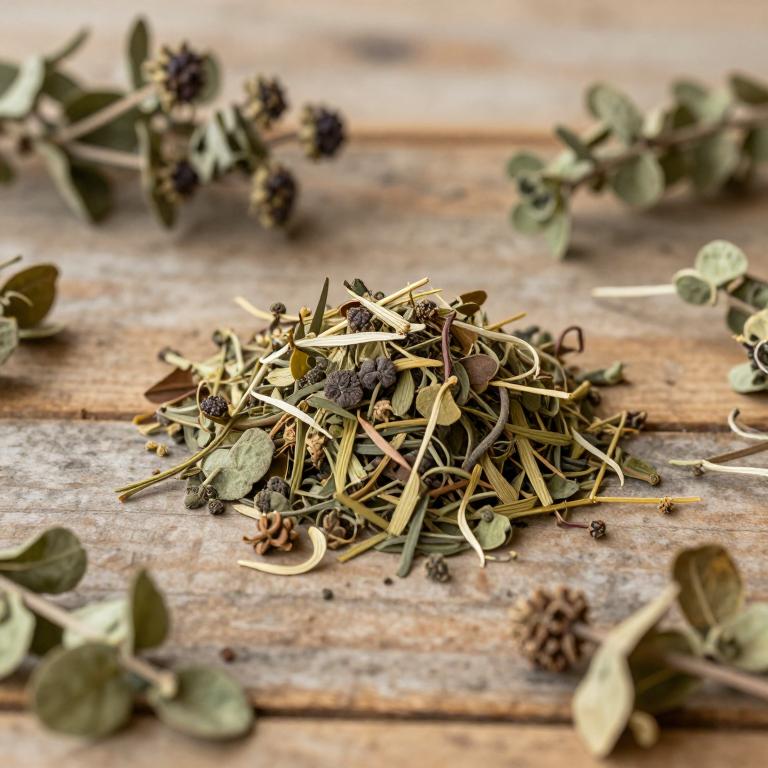
Names and Synonyms
Common Names
- Cat's Whiskers
- Java Tea
Scientific Names
Accepted name
Orthosiphon aristatus var. aristatusSynonyms
- Clerodendranthus stamineus
- Orthosiphon spiralis
- Orthosiphon stamineus
- Clerodendranthus spicatus
- Orthosiphon tagawae
- Trichostema spirale
- Clerodendrum spicatum
Regional and Traditional Names
Spanish:
- Té de Java
Sources: Wikidata, Catalogue of Life
Taxonomical Classification
This plant belongs to the kingdom Plantae and the phylum Streptophyta, falling under the class Equisetopsida and subclass Magnoliidae. Within the order Lamiales and the family Lamiaceae, it is classified under the genus Orthosiphon. Specifically, the variety aristatus identifies this particular medicinal species within its taxonomic hierarchy.
| Rank | Classification |
|---|---|
| Kingdom | Plantae |
| Phylum | Streptophyta |
| Class | Equisetopsida |
| Subclass | Magnoliidae |
| Order | Lamiales |
| Family | Lamiaceae |
| Genus | Orthosiphon |
Sources: The World Checklist of Vascular Plants (WCVP)
Distribution
This plant exhibits a broad distribution across several distinct regions of Asia. In China, it can be found throughout the South-Central, Southeast, and Hainan areas. Its presence extends to the island of Taiwan within Eastern Asia. Additionally, the species is recorded in the Indian Subcontinent, specifically in the Assam region. Together, these locations highlight a wide geographical range spanning from Southeast China to parts of India.
| Region | Area |
|---|---|
| China | China South-Central |
| China | Hainan |
| China | China Southeast |
| Eastern Asia | Taiwan |
| Indian Subcontinent | Assam |
| Indian Subcontinent | Bangladesh |
| Indian Subcontinent | India |
| Indian Subcontinent | Sri Lanka |
| Indo-China | Cambodia |
| Indo-China | Laos |
Sources: The World Checklist of Vascular Plants (WCVP)
Plant Parts
Orthosiphon aristatus var. aristatus has 1 reported plant parts identified across 6 scientific publications and several other databases that are studied for medicinal purposes. The most consistently reported plant part include leaf.
| Plant part | Supporting sources | Consensus |
|---|---|---|
| Leaf | 6 supporting sources | ★★★☆☆ |
Leaf
- Fitoterapia
- Current computer-aided drug design
- Saudi journal of biological sciences
- Journal of pharmaceutical and biomedical analysis
- Scientific reports
View 1 additional sources
- Pharmacognosy magazine
Chemicals
Orthosiphon aristatus var. aristatus has 74 reported phytochemicals identified across 6 scientific publications and several other databases. The most consistently reported chemicals include rosmarinic acid, Flavonoids, caffeic acid, Eupatorin, Flavonoid.
| Chemical | Supporting sources | Consensus |
|---|---|---|
| rosmarinic acid | 8 supporting sources | ★★★★☆ |
| Flavonoids | 6 supporting sources | ★★★☆☆ |
| caffeic acid | 5 supporting sources | ★★★☆☆ |
| Eupatorin | 4 supporting sources | ★★☆☆☆ |
| Flavonoid | 3 supporting sources | ★★☆☆☆ |
| Sinensetin | 3 supporting sources | ★★☆☆☆ |
| polyphenols | 3 supporting sources | ★★☆☆☆ |
| Norstaminol A | 2 supporting sources | ★☆☆☆☆ |
| OLEANOLIC ACID | 2 supporting sources | ★☆☆☆☆ |
| Staminolactone A | 2 supporting sources | ★☆☆☆☆ |
rosmarinic acid
- Molecules (Basel, Switzerland)
- Chemical & pharmaceutical bulletin
- Journal of ethnopharmacology
- Drug metabolism letters
- Scientific reports
View 3 additional sources
- Turkish journal of pharmaceutical sciences
- Zhong yao cai = Zhongyaocai = Journal of Chinese medicinal materials
- Nutrition and cancer
Flavonoids
- Frontiers in pharmacology
- Journal of pharmacy & bioallied sciences
- Journal of ethnopharmacology
- Journal of agricultural and food chemistry
- Pharmacognosy magazine
View 1 additional sources
- Molecules (Basel, Switzerland)
caffeic acid
- Molecules (Basel, Switzerland)
- Chemical & pharmaceutical bulletin
- Journal of ethnopharmacology
- Journal of pharmaceutical and biomedical analysis
- Scientific reports
Eupatorin
- Fitoterapia
- Hypertension research : official journal of the Japanese Society of Hypertension
- European journal of pharmacology
- Journal of ethnopharmacology
Flavonoid
- Frontiers in pharmacology
- Journal of ethnopharmacology
- Saudi journal of biological sciences
Sinensetin
- Hypertension research : official journal of the Japanese Society of Hypertension
- Journal of ethnopharmacology
- Cardiovascular & hematological disorders drug targets
polyphenols
- Molecules (Basel, Switzerland)
- Journal of agricultural and food chemistry
- Pharmacognosy magazine
Norstaminol A
- Organic letters
- Chemical & pharmaceutical bulletin
OLEANOLIC ACID
- Chemical & pharmaceutical bulletin
- Scientific reports
Staminolactone A
- Organic letters
- Chemical & pharmaceutical bulletin
Activities
Orthosiphon aristatus var. aristatus has 24 reported activities identified across 6 scientific publications and several other databases. The most consistently reported activities include Antioxidant, Antidiabetic, Antihypertensive, Antimicrobial, Antiproliferative.
| Activity | Supporting sources | Consensus |
|---|---|---|
| Antioxidant | 8 supporting sources | ★★★★☆ |
| Antidiabetic | 3 supporting sources | ★★☆☆☆ |
| Antihypertensive | 3 supporting sources | ★★☆☆☆ |
| Antimicrobial | 3 supporting sources | ★★☆☆☆ |
| Antiproliferative | 2 supporting sources | ★☆☆☆☆ |
| Cytotoxic | 2 supporting sources | ★☆☆☆☆ |
| Diuretic | 2 supporting sources | ★☆☆☆☆ |
| Hepatoprotective | 2 supporting sources | ★☆☆☆☆ |
| Anorexic | 1 supporting sources | ★☆☆☆☆ |
| Antiadhesive | 1 supporting sources | ★☆☆☆☆ |
Antioxidant
- Journal of pharmacy & bioallied sciences
- Saudi journal of biological sciences
- Journal of ethnopharmacology
- Journal of agricultural and food chemistry
- Journal of pharmaceutical and biomedical analysis
View 3 additional sources
- Molecules (Basel, Switzerland)
- Scientific reports
- Pharmacognosy magazine
Antidiabetic
- Journal of pharmacy & bioallied sciences
- Current computer-aided drug design
- Integrative medicine research
Antihypertensive
- Hypertension research : official journal of the Japanese Society of Hypertension
- Frontiers in pharmacology
- Pharmacognosy magazine
Antimicrobial
- Journal of pharmacy & bioallied sciences
- Saudi journal of biological sciences
- Molecules (Basel, Switzerland)
Antiproliferative
- Fitoterapia
- Saudi journal of biological sciences
Cytotoxic
- Journal of pharmacy & bioallied sciences
- Pharmacognosy magazine
Diuretic
- Journal of pharmaceutical and biomedical analysis
- Pharmacognosy magazine
Hepatoprotective
- Journal of agricultural and food chemistry
- Evidence-based complementary and alternative medicine : eCAM
Anorexic
- Frontiers in pharmacology
Antiadhesive
- Journal of ethnopharmacology
Conditions
Orthosiphon aristatus var. aristatus has 4 reported investigations on conditions identified across 6 scientific publications and several other databases. The most consistently reported conditions include Alzheimer's disease, epilepsy, neuroinflammation, oxidative stress.
| Condition | Supporting sources | Consensus |
|---|---|---|
| Alzheimer's disease | 1 supporting sources | ★☆☆☆☆ |
| Epilepsy | 1 supporting sources | ★☆☆☆☆ |
| Neuroinflammation | 1 supporting sources | ★☆☆☆☆ |
| Oxidative stress | 1 supporting sources | ★☆☆☆☆ |
Alzheimer's disease
- Frontiers in pharmacology
Epilepsy
- Frontiers in pharmacology
Neuroinflammation
- Frontiers in pharmacology
Oxidative stress
- Frontiers in pharmacology
Preparations
Orthosiphon aristatus var. aristatus has 40 reported preparations identified across 6 scientific publications and several other databases. The most consistently reported preparations include OS ethanolic extract, "kidney tea", 50% Ethanol extract, Cat's whiskers tea, Ethanolic Extract.
| Preparation | Supporting sources | Consensus |
|---|---|---|
| Os ethanolic extract | 2 supporting sources | ★☆☆☆☆ |
| "kidney tea" | 1 supporting sources | ★☆☆☆☆ |
| 50% ethanol extract | 1 supporting sources | ★☆☆☆☆ |
| Cat's whiskers tea | 1 supporting sources | ★☆☆☆☆ |
| Ethanolic extract | 1 supporting sources | ★☆☆☆☆ |
| Java tea | 1 supporting sources | ★☆☆☆☆ |
| Meoh extract | 1 supporting sources | ★☆☆☆☆ |
| Meoh extract of the aerial part | 1 supporting sources | ★☆☆☆☆ |
| Os 50% ethanol extract | 1 supporting sources | ★☆☆☆☆ |
| Os 50% methanol extract | 1 supporting sources | ★☆☆☆☆ |
Os ethanolic extract
- BMC biotechnology
- BMC complementary and alternative medicine
"kidney tea"
- Journal of agricultural and food chemistry
50% ethanol extract
- Drug and chemical toxicology
Cat's whiskers tea
- Nutrition and cancer
Ethanolic extract
- Frontiers in pharmacology
Java tea
- Nutrition and cancer
Meoh extract
- Journal of natural products
Meoh extract of the aerial part
- Chemical & pharmaceutical bulletin
Os 50% ethanol extract
- Pharmacognosy magazine
Os 50% methanol extract
- Pharmacognosy magazine