rock pine
Orostachys japonica · Accepted scientific name
Scientific literature: Very Sparse (7 studies) · ★☆☆☆☆
Rock pine, scientifically known as Orostachys japonica, is a resilient perennial prized in traditional herbal medicine. Thriving in rocky, mountainous terrains, this hardy plant offers unique therapeutic properties. Often utilized for its restorative qualities, it remains a vital subject of ethnobotanical study for those exploring natural healing traditions.
- Family
- Crassulaceae
- Native range
- Asia-Temperate
- Parts used
- Not available
- Common names
- Rock Pine
- Scientific synonyms
- Orostachys Japonica F. Polycephala · Orostachys Polycephala · 12 more
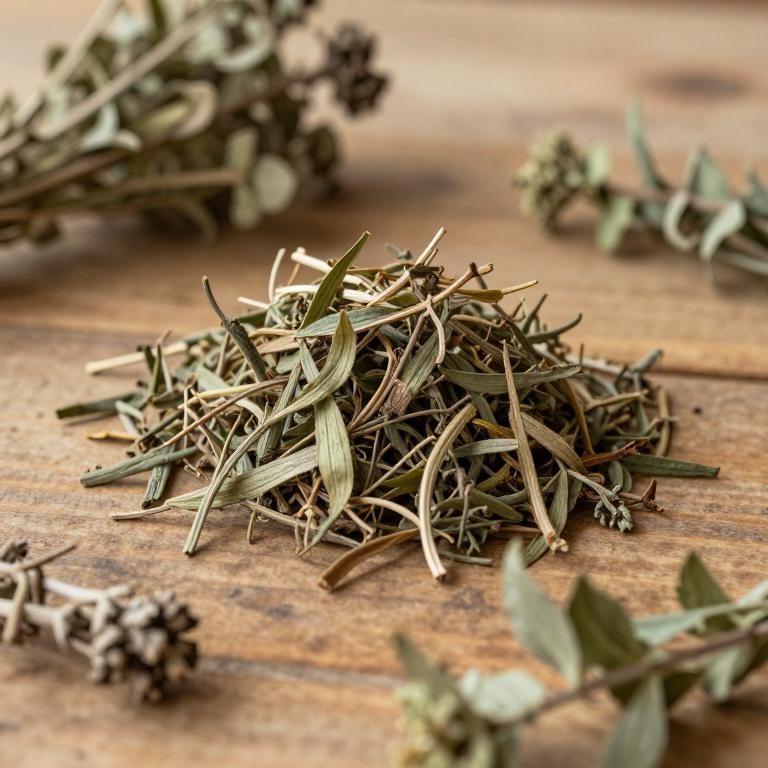
Names and Synonyms
Common Names
- rock pine
Scientific Names
Accepted name
Orostachys japonicaSynonyms
- Orostachys japonica f. polycephala
- Orostachys polycephala
- Orostachys japonica var. polycephala
- Cotyledon japonica
- Orostachys kanboensis
- Sedum japonicola
- Sedum polycephalum
- Cotyledon polycephala
- Orostachys japonica var. erubescens
- Sedum malacophyllum var. japonicum
- Orostachys erubescens var. polycephalum
- Sedum erubescens var. japonicum
- Sedum erubescens var. polycephalum
- Orostachys erubescens var. japonica
Regional and Traditional Names
Spanish:
- pino de roca
Sources: Wikidata, Catalogue of Life
Taxonomical Classification
This plant belongs to the kingdom Plantae within the phylum Streptophyta and is classified under the class Equisetopsida. It is further categorized into the subclass Magnoliidae and the order Saxifrages, falling under the family Crasulaceae. Finally, it is identified by its specific genus, Orostachys, and its species name, japonica.
| Rank | Classification |
|---|---|
| Kingdom | Plantae |
| Phylum | Streptophyta |
| Class | Equisetopsida |
| Subclass | Magnoliidae |
| Order | Saxifragales |
| Family | Crassulaceae |
| Genus | Orostachys |
Sources: The World Checklist of Vascular Plants (WCVP)
Distribution
This plant is widely distributed across several key regions within East Asia. In China, its presence spans from the northern reaches of Manchuria to the North-Central areas. It also inhabits the diverse landscapes found throughout China Southeast. Beyond mainland China, the species is naturally occurring in Japan. Finally, its geographical range extends to include the Korean Peninsula.
| Region | Area |
|---|---|
| China | Manchuria |
| China | China North-Central |
| China | China Southeast |
| Eastern Asia | Japan |
| Eastern Asia | Korea |
Sources: The World Checklist of Vascular Plants (WCVP)
Botanical Identification
Morphology
The morphology of Orostaechys japonica is characterized by its distinct growth form as a herb. In terms of its structural composition, the plant exhibits a non-woody nature, lacking the lignified tissues typically found in more robust woody species.
- Growth form :
- herb
- Woodiness :
- non-woody
Sources: Global Inventory of Floras and Traits (GIFT)
Chemicals
Orostachys japonica has 2 reported phytochemicals identified across 0 scientific publications and several other databases. The most consistently reported chemicals include kaempferol, quercetin.
| Chemical | Supporting sources | Consensus |
|---|---|---|
| kaempferol | 1 supporting sources | ★☆☆☆☆ |
| quercetin | 1 supporting sources | ★☆☆☆☆ |
kaempferol
- Nutrients
quercetin
- Nutrients
Activities
Orostachys japonica has 3 reported activities identified across 0 scientific publications and several other databases. The most consistently reported activities include Antimetastatic, Antiproliferative, Antitumor.
| Activity | Supporting sources | Consensus |
|---|---|---|
| Antimetastatic | 1 supporting sources | ★☆☆☆☆ |
| Antiproliferative | 1 supporting sources | ★☆☆☆☆ |
| Antitumor | 1 supporting sources | ★☆☆☆☆ |
Antimetastatic
- Nutrients
Antiproliferative
- Nutrients
Antitumor
- Nutrients
Conditions
Orostachys japonica has 2 reported investigations on conditions identified across 0 scientific publications and several other databases. The most consistently reported conditions include Tumors, cancer.
| Condition | Supporting sources | Consensus |
|---|---|---|
| Tumors | 1 supporting sources | ★☆☆☆☆ |
| Cancer | 1 supporting sources | ★☆☆☆☆ |
Tumors
- Nutrients
Cancer
- Nutrients