majoram
Origanum · Accepted scientific name
Scientific literature: Very Sparse (17 studies) · ★☆☆☆☆
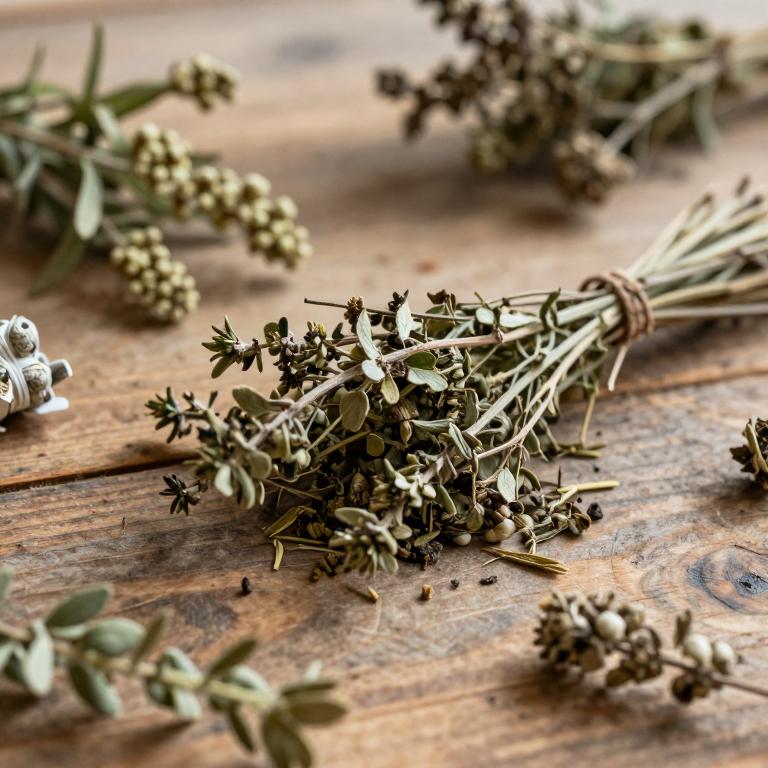
Marjoram, scientifically known as Origanum, is a versatile perennial herb celebrated for its aromatic leaves and potent medicinal properties. Rich in antioxidants and essential oils, it is traditionally used to support digestive health, reduce inflammation, and alleviate stress. This culinary staple offers profound therapeutic benefits for holistic wellness.
Names and Synonyms
Common Names
- majoram
- oregano
- Marjoram
- Marjorams
Scientific Names
Accepted name
OriganumSynonyms
- Onites
- Beltokon
- × Majoranamaracus
- Majorana
- Amaracus
- Zatarendia
- Marum
- Oroga
- × Origanomajorana
- Hofmannia
Regional and Traditional Names
Spanish:
- Schizocalyx
- Oroga
- Amaracus
- Zatarendia
- Dictamnus
- Beltokon
- Origanomajorana
- Majorana
- Majoranamaracus
- Hofmannia
- Marum
- Onites
- Orégano
German:
- Dost
- Orant
- Dost
Sources: Wikidata, Catalogue of Life
Taxonomical Classification
This plant belongs to the kingdom Plantae and the phylum Streptophyta, falling under the class Equisetopsida and subclass Magnoliidae. Within the order Lamiales and family Lamiaceae, it is classified under the genus Origanum.
| Rank | Classification |
|---|---|
| Kingdom | Plantae |
| Phylum | Streptophyta |
| Class | Equisetopsida |
| Subclass | Magnoliidae |
| Order | Lamiales |
| Family | Lamiaceae |
| Genus | Origanum |
Sources: The World Checklist of Vascular Plants (WCVP)
Distribution
This plant is widely recognized for its presence across several regions in Northern Europe. It can be found growing naturally throughout the country of Denmark. Furthermore, its distribution extends to the northern landscapes of Finland and Norway. The species is also commonly documented within the territories of Great Britain and Ireland. Together, these locations highlight the specific northern geographical range of the Origanum genus.
| Region | Area |
|---|---|
| Northern Europe | Denmark |
| Northern Europe | Finland |
| Northern Europe | Great Britain |
| Northern Europe | Ireland |
| Northern Europe | Norway |
| Northern Europe | Svalbard |
| Northern Europe | Sweden |
| Middle Europe | Austria |
| Middle Europe | Belgium |
| Middle Europe | Czechia-Slovakia |
Sources: The World Checklist of Vascular Plants (WCVP)
Plant Parts
Origanum has 1 reported plant parts identified across 1 scientific publications and several other databases that are studied for medicinal purposes. The most consistently reported plant part include leaf.
| Plant part | Supporting sources | Consensus |
|---|---|---|
| Leaf | 1 supporting sources | ★☆☆☆☆ |
Leaf
- Nigerian journal of clinical practice
Chemicals
Origanum has 3 reported phytochemicals identified across 1 scientific publications and several other databases. The most consistently reported chemicals include CARVACROL, P-CYMENE, THYMOL.
| Chemical | Supporting sources | Consensus |
|---|---|---|
| CARVACROL | 2 supporting sources | ★☆☆☆☆ |
| P-CYMENE | 1 supporting sources | ★☆☆☆☆ |
| THYMOL | 1 supporting sources | ★☆☆☆☆ |
CARVACROL
- Nigerian journal of clinical practice
- Molecules (Basel, Switzerland)
P-CYMENE
- Molecules (Basel, Switzerland)
THYMOL
- Molecules (Basel, Switzerland)
Activities
Origanum has 3 reported activities identified across 1 scientific publications and several other databases. The most consistently reported activities include Anticarcinogenic, Antifungal, Antimicrobial.
| Activity | Supporting sources | Consensus |
|---|---|---|
| Anticarcinogenic | 1 supporting sources | ★☆☆☆☆ |
| Antifungal | 1 supporting sources | ★☆☆☆☆ |
| Antimicrobial | 1 supporting sources | ★☆☆☆☆ |
Anticarcinogenic
- Molecules (Basel, Switzerland)
Antifungal
- Molecules (Basel, Switzerland)
Antimicrobial
- Molecules (Basel, Switzerland)
Conditions
Origanum has 6 reported investigations on conditions identified across 1 scientific publications and several other databases. The most consistently reported conditions include bronchitis, dermatitis, gastritis, infections, inflammation.
| Condition | Supporting sources | Consensus |
|---|---|---|
| Bronchitis | 1 supporting sources | ★☆☆☆☆ |
| Dermatitis | 1 supporting sources | ★☆☆☆☆ |
| Gastritis | 1 supporting sources | ★☆☆☆☆ |
| Infections | 1 supporting sources | ★☆☆☆☆ |
| Inflammation | 1 supporting sources | ★☆☆☆☆ |
| Wounds | 1 supporting sources | ★☆☆☆☆ |
Bronchitis
- Medicines (Basel, Switzerland)
Dermatitis
- Medicines (Basel, Switzerland)
Gastritis
- Medicines (Basel, Switzerland)
Infections
- Medicines (Basel, Switzerland)
Inflammation
- Medicines (Basel, Switzerland)
Wounds
- Medicines (Basel, Switzerland)
Preparations
Origanum has 6 reported preparations identified across 1 scientific publications and several other databases. The most consistently reported preparations include essential oils, EOs, Essential oils, Origanum oils, essential oil.
| Preparation | Supporting sources | Consensus |
|---|---|---|
| Essential oils | 3 supporting sources | ★★☆☆☆ |
| Eos | 1 supporting sources | ★☆☆☆☆ |
| Essential oils | 1 supporting sources | ★☆☆☆☆ |
| Origanum oils | 1 supporting sources | ★☆☆☆☆ |
| Essential oil | 1 supporting sources | ★☆☆☆☆ |
| High polarity extracts | 1 supporting sources | ★☆☆☆☆ |
Essential oils
- International journal of environmental health research
- Natural product communications
- Bollettino della Societa italiana di biologia sperimentale
Eos
- Saudi pharmaceutical journal : SPJ : the official publication of the Saudi Pharmaceutical Society
Essential oils
- Current medicinal chemistry
Origanum oils
- Journal of intercultural ethnopharmacology
Essential oil
- Plants (Basel, Switzerland)
High polarity extracts
- Plants (Basel, Switzerland)