Origanum vulgare subsp. virens
Origanum vulgare subsp. virens · Accepted scientific name
Scientific literature: Very Sparse (9 studies) · ★☆☆☆☆
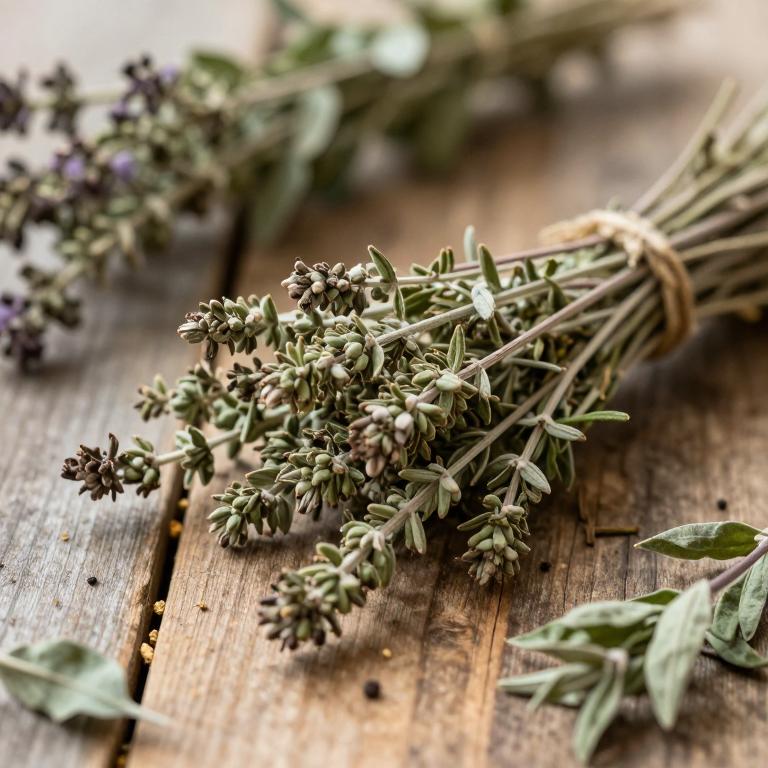
scientifically known as Origanum vulgare subsp. virens, is a distinctive perennial herb within the Lamiaceae family. Renowned for its aromatic foliage and therapeutic potential, this subspecies possesses potent antimicrobial and antioxidant properties. Traditionally utilized in folk medicine, it offers significant pharmacological interest for treating respiratory and digestive ailments.
- Family
- Lamiaceae
- Native range
- Europe
- Parts used
- Not available
- Common names
- Not available
- Scientific synonyms
- Origanum Vulgare Var. Macrostachyum · Origanum Macrostachyum · 5 more
Names and Synonyms
Scientific Names
Accepted name
Origanum vulgare subsp. virensSynonyms
- Origanum vulgare var. macrostachyum
- Origanum macrostachyum
- Origanum virens
- Origanum virescens
- Origanum bastetanum
- Origanum virens var. spicatum
- Origanum vulgare var. virens
Sources: Wikidata
Taxonomical Classification
This plant belongs to the kingdom Plantae and is classified within the phylum Streptophyta and the class Equisetopsida. Following its placement in the subclass Magnoliidae and the order Lamiales, it is categorized under the family Lamiaceae. Finally, it is identified by the genus Origanum as the subspecies virens.
| Rank | Classification |
|---|---|
| Kingdom | Plantae |
| Phylum | Streptophyta |
| Class | Equisetopsida |
| Subclass | Magnoliidae |
| Order | Lamiales |
| Family | Lamiaceae |
| Genus | Origanum |
Sources: The World Checklist of Vascular Plants (WCVP)
Distribution
This plant exhibits a wide distribution across several distinct regions in the Mediterranean and Atlantic areas. Within Southwestern Europe, it can be found inhabiting the territories of Portugal and Spain. Its presence also extends to the Balearic Islands located in the same European region. Moving toward North Africa, the species is documented within the borders of Morocco. Finally, its range reaches into Macaronesia, specifically occurring in the Azores.
| Region | Area |
|---|---|
| Southwestern Europe | Baleares |
| Southwestern Europe | Portugal |
| Southwestern Europe | Spain |
| Northern Africa | Morocco |
| Macaronesia | Azores |
| Macaronesia | Canary Is. |
| Macaronesia | Madeira |
Sources: The World Checklist of Vascular Plants (WCVP)
Chemicals
Origanum vulgare subsp. virens has 6 reported phytochemicals identified across 0 scientific publications and several other databases. The most consistently reported chemicals include CARVACROL, EOS, Linalool, P-CYMENE, THYMOL.
| Chemical | Supporting sources | Consensus |
|---|---|---|
| CARVACROL | 1 supporting sources | ★☆☆☆☆ |
| EOS | 1 supporting sources | ★☆☆☆☆ |
| Linalool | 1 supporting sources | ★☆☆☆☆ |
| P-CYMENE | 1 supporting sources | ★☆☆☆☆ |
| THYMOL | 1 supporting sources | ★☆☆☆☆ |
| polyphenols | 1 supporting sources | ★☆☆☆☆ |
CARVACROL
- Plants (Basel, Switzerland)
EOS
- Chemistry & biodiversity
Linalool
- Plants (Basel, Switzerland)
P-CYMENE
- Plants (Basel, Switzerland)
THYMOL
- Plants (Basel, Switzerland)
polyphenols
- Plant foods for human nutrition (Dordrecht, Netherlands)
Activities
Origanum vulgare subsp. virens has 2 reported activities identified across 0 scientific publications and several other databases. The most consistently reported activities include Antioxidant, Antiviral.
| Activity | Supporting sources | Consensus |
|---|---|---|
| Antioxidant | 2 supporting sources | ★☆☆☆☆ |
| Antiviral | 1 supporting sources | ★☆☆☆☆ |
Antioxidant
- Plant foods for human nutrition (Dordrecht, Netherlands)
- Foods (Basel, Switzerland)
Antiviral
- Foods (Basel, Switzerland)
Preparations
Origanum vulgare subsp. virens has 2 reported preparations identified across 0 scientific publications and several other databases. The most consistently reported preparations include Hydroethanolic Extracts, essential oils.
| Preparation | Supporting sources | Consensus |
|---|---|---|
| Hydroethanolic extracts | 1 supporting sources | ★☆☆☆☆ |
| Essential oils | 1 supporting sources | ★☆☆☆☆ |
Hydroethanolic extracts
- Foods (Basel, Switzerland)
Essential oils
- Chemistry & biodiversity